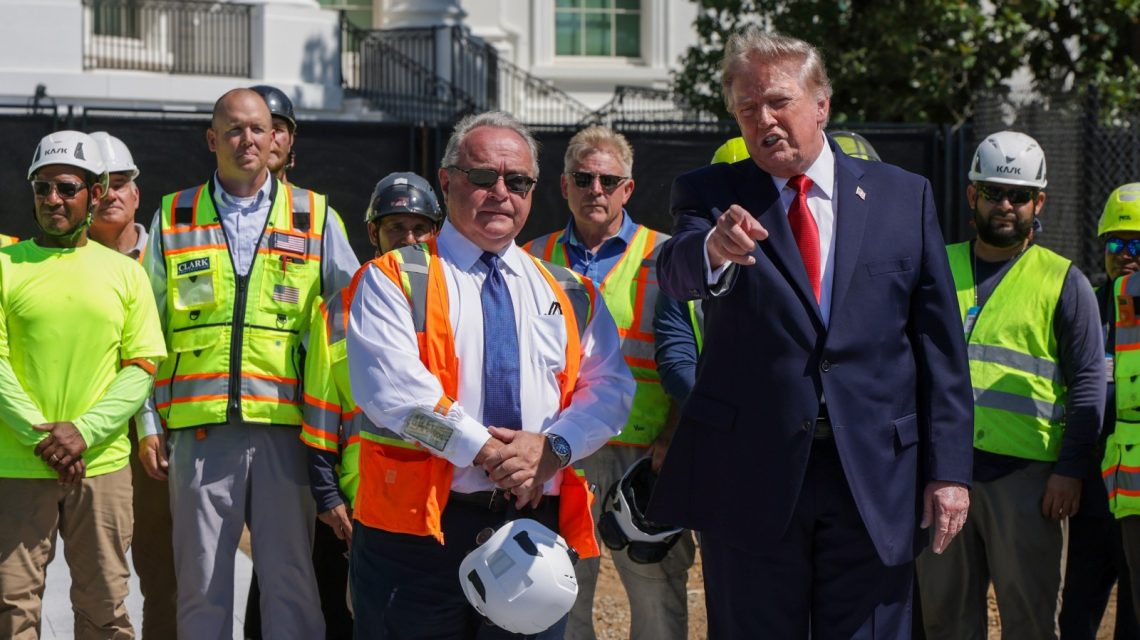
In January 2025, President Donald Trump made his return to the White House, emphasizing a commitment to address America’s housing affordability crisis. He proposed deregulation, increased home construction, and mass deportations of undocumented immigrants as solutions to expand housing supply and reduce costs.
A year before, Trump had vowed to boost homeownership during his second term, aiming to help families join the property ladder despite challenges such as rising home prices, high mortgage rates, insurance premiums, and taxes. He stated at a HUD event via video that with his expertise as a former builder and real estate developer, millions more American families could achieve homeownership.
However, nearly two years into his term, results have been mixed. The administration has focused on deregulation, immigration enforcement, and limiting institutional investors, but these efforts have not substantially increased homebuilding.
The inventory of homes on the market is modestly higher than when Trump took office. However, this increase is attributed to weaker demand and properties taking longer to sell, rather than a surge in new constructions.
When Trump entered office again, the housing market was dealing with years of underbuilding, worsening the shortage estimated between 2.8 million to 10 million units nationwide. Inventory had slightly recovered from pandemic-era lows, particularly in states like Florida and Texas, yet remained below pre-pandemic levels in other regions.
Redfin data from January 2025 shows 1,400,188 active home listings, rising modestly to 1,473,056 by December. New listings decreased slightly from 383,208 in January to 376,281 in December.
Construction data remained sluggish, with Census Bureau reports indicating 1.5 million building permits, 1.4 million housing starts, and 1.6 million completions as of January 2025. Single-family housing starts dropped 8.4 percent from the previous month to 993,000, and by year-end, these rates remained largely unchanged.
Has Housing Inventory Improved Since Trump’s Return?
During Trump’s first year back, the number of homes for sale improved modestly. Inventory reflects more listings, but not necessarily more new housing supply. Homes take longer to sell, contributed to by high mortgage rates and prices deterring buyers.
Some regions, especially the South, saw cooled home-price growth amid increased property listings. As of July, Redfin reported 1,462,921 homes for sale nationwide, a 0.65 percent decrease from the previous year.
July construction data brought more bad news for homebuyers. Building permits were at a rate of 1.5 million annually, with housing starts and completions both at 1.2 million. Single-family starts fell to their lowest level since November 2022.
Why Aren’t Builders Building More?
Homebuilders face challenges balancing the housing shortage with unsold homes accumulating. High construction costs and affordability issues persist.
NAHB Chairman Bill Owens noted elevated construction costs and mortgage rates deter buyers. The latest NAHB/Wells Fargo Housing Market Index found builder confidence increased to 35 in August but remained subdued due to economic uncertainty.
These factors question claims of expanding housing supply. While existing homes may be more available, new single-family homebuilding has waned.
What Can Americans Expect Next?
Despite deregulatory efforts, builders still confront financing, labor, and construction-cost obstacles, limiting new projects. High mortgage rates continue affecting affordability.
Inventory may increase in regions where homes sell slowly, but this won’t resolve the structural shortage. Access to more homes remains the core issue, as affordable options are crucial. Although existing inventory is modestly higher, new construction lags, continuing the affordability challenge from the 2024 election.
 The Impact of Arts and Closure on Democracy
  U.S. Ambassador Comments on Iran War Duration Amid Political Concerns
  US-China Relations Under Scrutiny: Expert Warns of Escalating Tensions
  No Timeline for End of Iran Conflict
  German Chancellor Merz Vows to Pursue Reforms Despite Election Setbacks
  The Technology Rivalry: Trump’s Meeting with Xi and the AI Ecosystem Clash