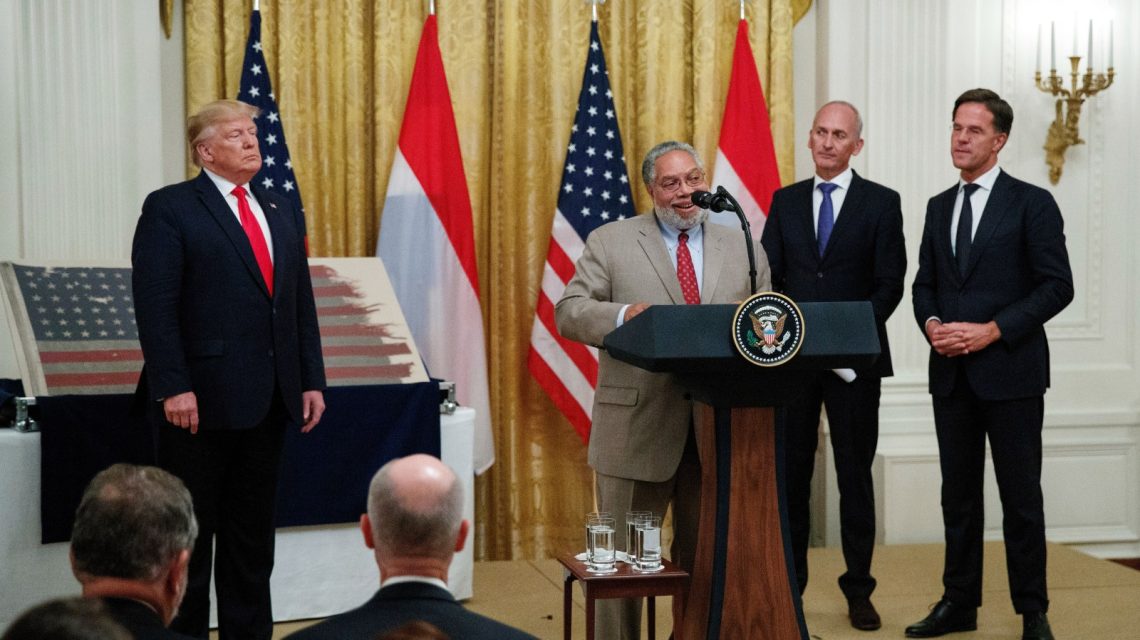
Lonnie G. Bunch III, the first African American secretary of the Smithsonian Institution, has announced he will retire at the end of 2026. Bunch’s tenure as secretary began in 2019, leading the largest museum complex in the U.S. His departure follows a challenging year marked by scrutiny from President Donald Trump’s administration.
The Smithsonian stated Bunch will leave after seven years of service. Bunch expressed mixed emotions and gratitude in his retirement announcement. Newsweek reached out to the White House for comments regarding his decision.
Senator Catherine Cortez Masto commended Bunch’s dedication to history and his over 30 years at the Smithsonian. She hopes the next secretary will show equal commitment to the arts, culture, science, and history.
Bunch, 73, is a distinguished historian and museum executive with a career spanning more than four decades. He gained prominence as the founding director of the National Museum of African American History and Culture in Washington, D.C., which opened in 2016.
His appointment as secretary was historic as he became the first African American to lead the institution in its nearly 180-year history. As secretary, Bunch oversaw a network of 21 museums, the National Zoo, and several research centers.
Reasons Behind Bunch’s Departure
The Smithsonian did not specify a reason for Bunch’s retirement beyond his personal decision. However, his announcement comes amidst significant pressure from the Trump administration.
In July 2026, a White House report criticized Smithsonian leadership for alleged ideological biases, prompting tensions with administration officials. Trump directed officials to label some museum exhibits as inaccurate. The Smithsonian leadership, including Anthea Hartig from the National Museum of American History, rejected these claims.
Trump Administration’s Influence
The Trump administration aimed to influence how American history is presented as the country approached its 250th anniversary. An executive order signed by Trump pushed cultural institutions to align with American ideals, prompting reviews across Smithsonian museums.
The administration proposed reducing federal support for some programs and initiated reviews of content in various museums. This effort extended to National Park Service sites, leading to content removal and revisions, ultimately resulting in legal challenges.
Future of the Smithsonian
Despite administrative pressures, the Smithsonian operates independently of the executive branch. Museum directors report to the secretary, while the Smithsonian Board of Regents provides oversight. The board includes prominent figures such as Vice President JD Vance and Chief Justice John Roberts.
John Roberts praised Bunch’s leadership, highlighting his pursuit of excellence in narrating American history. With Bunch stepping down, a crucial search for his successor begins as debates over historical narratives continue.
The Associated Press contributed to this report. Editors Samantha Beech and Gray R. Thomas were involved in this story.
 Patrick Clancy Shares Insights into Tragic Family Loss
  Midair Altercation on Bangladesh to London Flight
  Revival of Organized Labor in 2026
  Community Relief Efforts at New Orleans Free Store
  Girl Scout Troop 35579 Project: Pet Pantry for Woodland Park
  Children’s YouTube Star Ms. Rachel Draws Scrutiny Over Links to Palestinian Photojournalist