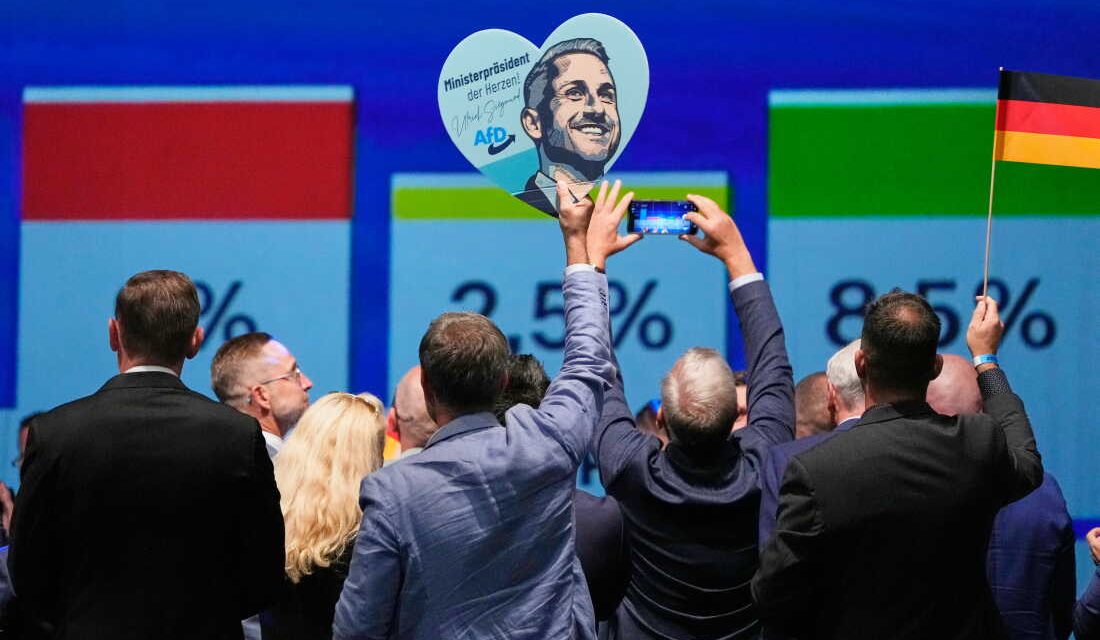
In the recent state election in Saxony-Anhalt, Germany’s far-right Alternative for Germany (AfD) party has claimed a significant victory. The AfD more than doubled its previous vote share, reaching 43.8%, according to preliminary final results. This performance marks their strongest showing in any German state election since the Nazi era, signaling potential political upheaval.
Although AfD fell short of an absolute majority to form a government, the possibility of collaboration with the BSW, a small left-wing populist party, could help them achieve a parliamentary majority. BSW garnered 5.3% of the vote, enough to form a coalition with AfD. Such a coalition remains a contentious topic, given that most main parties, including the Christian Democratic Union (CDU), Social Democrats (SPD), Greens, and the Left party, refuse to partner with AfD.
Ulrich Siegmund, AfD’s candidate for state governor, emphasized that this result sends a message to Berlin, suggesting a desire for a return to a ‘secure’ Germany. Meanwhile, CDU candidate Sven Schulze congratulated AfD but expressed uncertainty about forming a ‘firewall’ coalition to exclude them. Such a coalition would involve the CDU partnering with the far-left Die Linke, a move the CDU opposes.
Nationally, Alice Weidel, AfD’s co-chair, claimed the party is experiencing substantial growth, crediting Siegmund’s campaign strategy. A former marketing executive, Siegmund’s style appeals to younger audiences with upbeat messaging through social media and public appearances.
“Remigration is more than deportation,” Siegmund stated, targeting Ukrainians without jobs as part of this policy.
The AfD’s platform in Saxony-Anhalt includes controversial proposals like mass deportations, segregation in schools, and a revised history curriculum. The policies reflect the party’s radical stance as classified by domestic intelligence.
The election has attracted international attention. Former President Trump and Russian envoy Kirill Dmitriev praised the results, while opposition came from figures like Polish Prime Minister Donald Tusk and France’s Europe Minister Benjamin Haddad. These reactions highlight the election’s impact beyond Germany.
AfD’s climb to nearly gaining power in Saxony-Anhalt marks a polarizing moment for European politics, causing concern over rising far-right influence.
 Gorillaz and Macklemore Respond to Controversy Over Israel-Palestine Statements
  Investigation into Lion Deaths in Tanzania
 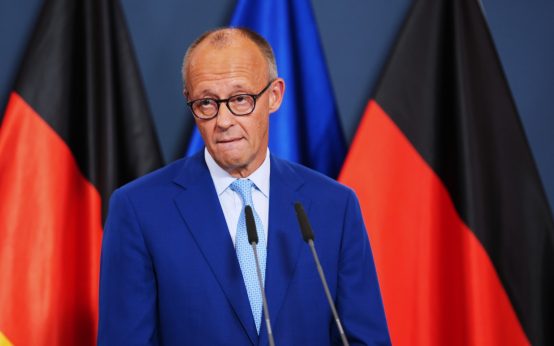 Merz Stays Resolute Amid Electoral Shifts in Germany
 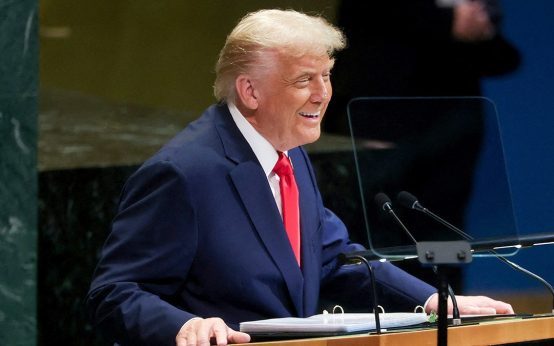 U.S.-Iran Relations and Diplomacy at Upcoming U.N. Assembly
 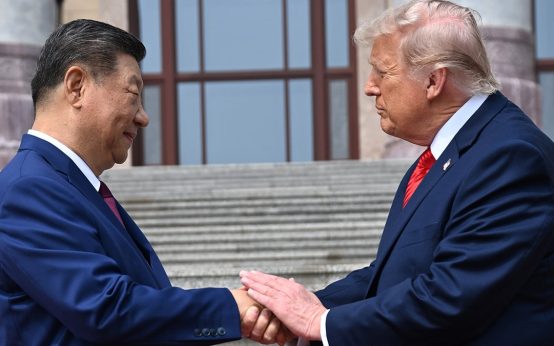 US-China Relations Under Scrutiny: Expert Warns of Escalating Tensions
  Extradition of Suspects in Haitian President’s Assassination