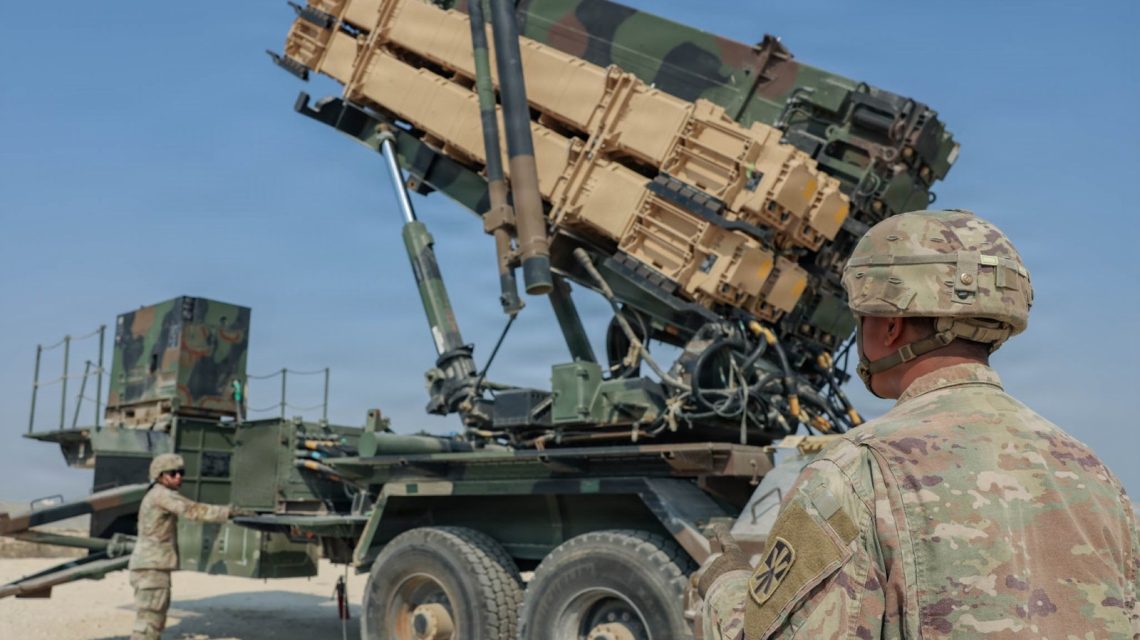
President Trump Defends U.S. Military Strategy
President Donald Trump has defended the financial impact that the war on Iran has had on the United States, especially concerning military stockpiles, by stating that weapon production can be sustained indefinitely. Trump attributed the current situation to his predecessor’s approach to the Ukraine conflict, claiming previous administration allocated greater resources to Ukraine.
Statements from Trump Regarding U.S. Military Capacity
On Truth Social, Trump expressed that the U.S. possesses an extensive reserve of ammunition, exceeding potential needs for any conflict. He emphasized the ongoing production of munitions, preparing for unforeseeable contingencies while prioritizing domestic stockpiling over sales to allies. Trump criticized the Biden administration for awarding significant aid to Ukraine without charges, suggesting the aid surpassed what has been used against Iran. He noted that these costs could have been shouldered by Europe.
The United States has vast amounts of ammunition, far more than needed for any potential conflict. – President Donald Trump
The Complexity of Dual War Commitments
Comparing the U.S. commitments to both the Ukraine and Iran conflicts requires a nuanced understanding due to their disparate demands. Analysts express concerns about the strain on the defense industrial base.
Christopher Chivvis, a former U.S. intelligence official and current senior fellow at the Carnegie Endowment for International Peace’s American Statecraft Program, highlighted concerns about U.S. resources being stretched thin and potential vulnerabilities exploited by adversaries like China and Russia. Chivvis labeled Trump’s claim of ‘virtually unlimited’ munitions as unrealistic and criticized the decision to engage with Iran, which he argued has weakened military readiness and strategic deterrence capabilities.
Department of War’s Perspective
Despite these criticisms, Chief Pentagon Spokesman Sean Parnell asserted that the U.S. military holds significant power, equipped with a wide array of capabilities to ensure protection. This statement highlighted the U.S. military’s ability to operate across various combat zones while maintaining comprehensive defense capacity.
U.S. Aid Distribution and Military Engagement
During Biden’s administration, the U.S. devoted substantial funds to Ukraine following Russia’s invasion. The Department of Defense, later renamed the Department of War, registered about $66 billion in security aid, alongside over $130 billion in additional assistance.
U.S. aid included artillery shells, rockets, missile systems like HIMARS and NASAMS, and other military equipment, showcasing significant resource allocation for Ukraine.
Iran Conflict and Munitions Use
The Iran conflict witnessed intense U.S. military activity, marked by the firing of numerous cruise missiles and interceptors. The military deployed precision and air-defense munitions at rapid rates.
According to the Center for Strategic and International Studies, the U.S. fired substantial volumes of key weapons, indicating a high operational intensity. The financial implications of operating such sophisticated military resources in Iran have been significant.
Cost Implications
Retired U.S. Rear Admiral Mark Montgomery identified inaccuracies in comparing military involvement rates, particularly concerning the Patriot systems used in both conflicts. He asserted that there is no overlap among most of the weapons supplied to Ukraine versus those expended in Iran.
Defense Secretary Pete Hegseth estimated the ongoing cost of the Iran conflict at $37.5 billion, with requests for approximately $70 billion in additional operation-related funds. The aggregated expenses tied to the conflict, including indirect costs like higher living expenses and gas prices, could surpass $100 billion, as projected by multiple sources.
Human Costs and Strategic Constraints
The wars in Iran and Ukraine involve fundamentally different U.S. roles, with the former representing a direct confrontation with a longstanding adversary. The Pentagon recorded U.S. service member casualties directly linked to Iranian engagements, whereas no combat deaths have been publicized during Ukraine operations.
Analysts convey apprehension about a rising U.S. military death toll amidst dual operational demands. Jennifer Kavanagh of the RAND Corporation pointed out the limitations in defensive capabilities, emphasizing constraints in protecting forces amid parallel engagement in Iran and supporting Ukraine.
Kavanagh warned that prolonged conflicts would affect U.S. military readiness, extending the timeline before the nation can adequately prepare for significant confrontations with strategic rivals.
 Investigation into Lion Deaths in Tanzania
  Merz Stays Resolute Amid Electoral Shifts in Germany
  The Impact of Arts and Closure on Democracy
  U.S. Ambassador Comments on Iran War Duration Amid Political Concerns
  U.S.-Iran Relations and Diplomacy at Upcoming U.N. Assembly
  US-China Relations Under Scrutiny: Expert Warns of Escalating Tensions