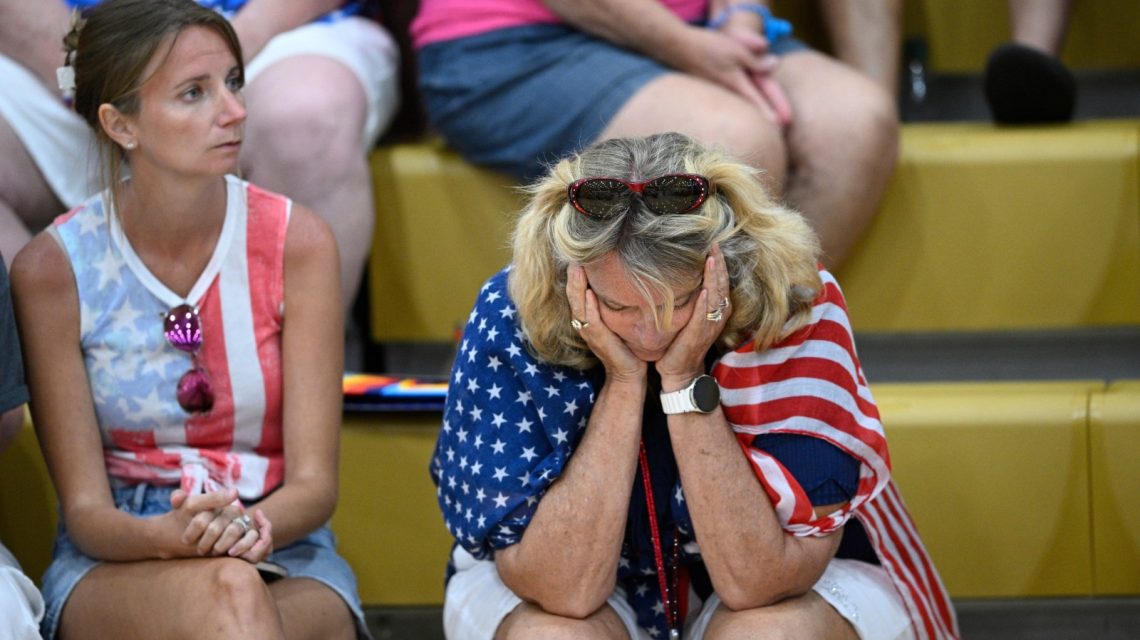
President Donald Trump’s approval among white voters has decreased by 7 percentage points since the summer began, according to ActiVote polling. Other surveys also indicate weakening support among this crucial electoral group.
Change in Approval Ratings
In June, ActiVote found that white respondents were nearly split on Trump’s job performance, with 47% approving and 49% disapproving. By July, approval dropped 8 points to 39%, while disapproval increased to 54%. August’s poll showed 40% approval and 54% disapproval.
The August poll included responses from 1,000 ActiVote users between August 1 and August 31. Participants used a five-star rating system which ActiVote converted to approval and disapproval percentages. The July poll involved 767 respondents, and June’s had 478 participants.
This trend indicates a shift among a demographic that has consistently supported Trump. In the 2024 presidential election, 55% of white voters voted for Trump, according to a Pew Research Center analysis. White voters comprised 71% of the 2024 electorate.
Broader National Trends
Trump’s declining approval among white voters reflects his overall national ratings. An Economist/YouGov poll from August 28-31 found 36% of Americans approved of Trump’s job performance, while 60% disapproved. A Quinnipiac University poll from July 23-27 showed Trump’s approval at the lowest level of his second term.
These findings coincide with economic concerns and opposition to U.S. involvement in Iran. Quinnipiac’s survey indicated 60% of voters opposed military action in Iran and 49% felt financially worse off than the previous year.
Other Poll Findings
Data from an Economist/YouGov poll conducted July 25-27 showed Trump’s net approval among white Americans at minus 14, a new low according to YouGov. Among white Americans without college degrees, 43% approved and 52% disapproved. The net approval for this group fell from plus 27 to minus 6 during Trump’s second term.
In August, the situation worsened. An Economist/YouGov poll from August 7-10 recorded a net approval of minus 19 among white Americans, the lowest YouGov noted for Trump.
Implications for Midterms
White voters have been a steadfast support base for Trump. Pew Research Center found Trump won 54% of white voters in 2016 and 55% in both 2020 and 2024. Despite not being on November’s ballot, the decline in Trump’s approval ratings may impact Republican turnout and support.
According to D. Stephen Voss, a political science professor at the University of Kentucky, Republican candidates often require backing from less consistent Republican voters and independents, beyond their base. “President Trump’s low numbers are likely to affect Republican candidates,” Voss said. “This time, he’s losing support in unusual voter groups, seeing declines in rural areas and among white voters without college degrees.”
Such a change, if it persists, might challenge Republicans in long-held districts.
Trump’s Continued Republican Support
An Emerson College poll conducted August 16-17 found 86% of Republicans still approve of Trump’s performance. Nationally, 40% of likely voters approved, while 56% disapproved. Economist/YouGov polling from August 14-17 found 80% Republican approval, with 95% approval among those identifying as MAGA supporters.
Trump’s Response to Polls
Trump has attacked polls showing a decline in his approval. On August 30, he criticized the polls on Truth Social.
“THE FAKE POLLS USED BY OUR CROOKED MEDIA ARE OUT OF CONTROL, AND SOMETHING MUST BE DONE ABOUT IT. FCC TO THE RESCUE! President DJT,” he wrote.
A White House spokesperson referred Newsweek to this post when contacted about recent poll numbers.
On August 24, Trump criticized polls as “Fake Polls,” accusing Democrats of “attempting demoralization operations” to suppress Republican voting.
“They’re releasing demoralization operations to deter Republicans from voting,” Trump wrote. “But actual Polls are impressive, and our country’s spirit has never been higher.”
 Ken Paxton’s Campaign Funding and Polls
  Inside the Secret Deals Powering the President’s Push to Deport Migrants to Countries Not Their Own
  Independence of Research from Political Agendas
  Sen. Roger Marshall Denies Allegations of Political Attack
  Concerns About Food Safety Reach Critical Levels
  Court Blocks Trump’s Mail-Ballot Rules Ahead of Elections