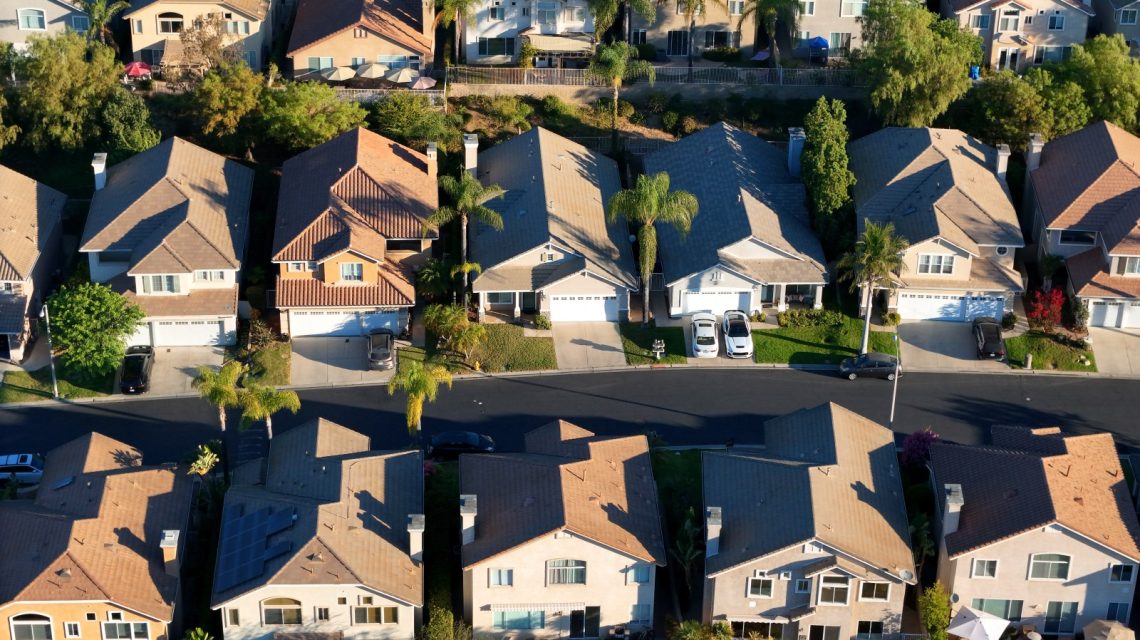
The U.S. housing market faced another difficult month, characterized by shrinking demand and rising borrowing costs. Despite these challenges, experts remain hopeful that September may bring improvements, though the outcome is uncertain. Jake Krimmel, a senior economist at Realtor.com, identifies three key factors that will influence homeowners and buyers in the coming month:
- Delistings: Whether sellers will continue to remove properties from the market as they adapt to post-pandemic changes.
- Price Cuts: Sellers might reduce asking prices to entice hesitant buyers, given the low demand.
- Geography: Regional variations that have marked the market in recent years may begin to fade, as indicated by recent data.
A Chilly Late-Summer Market: Insights from August Data
The latest data shows that rising mortgage rates and increasing home prices contributed to a slowdown in the U.S. housing market during August. According to Realtor.com, pending home sales dropped 0.2 percent year-over-year. While modest, this decline ended an eight-month streak of annual sales gains, which reached 4.1 percent in May.
Additionally, contract signings fell by 3.7 percent compared to last year, marking the second consecutive decrease due to higher mortgage rates pressuring buyers. Homes stayed on the market for a median of 60 days, extending three days from July but mirroring data from the previous year.
Affordability issues and economic uncertainty challenge Americans amid the ongoing war in Iran, raising mortgage rates from 5.98 percent in late February to 6.66 percent in August, as reported by Freddie Mac. Krimmel shared with Newsweek that this summer’s record-high temperatures did not favor house-hunting, exacerbated by the seasonal slowdown and unfavorable rate environment.
Since early July, mortgage rates have climbed over 20 points. Rising rates for six straight months increased the average from 6.05 percent in February to 6.67 percent by August. Krimmel noted the disappearance of year-over-year rate advantages, with August’s rates higher than June’s by roughly 10 basis points. Despite these dog days of summer or genuine market signs, housing activities are slowing temporarily.
Promising Developments for Buyers: Fewer Delistings and Greater Inventory
Despite reluctance among buyers, August offered some positive news. Listing prices continued to fall, albeit at a slower rate than July. The national median list price reached $424,500 in August, down 1 percent from July and 1.3 percent from last year. This represented the tenth consecutive month of annual listing price declines, with the pace halving from July’s 2.4 percent drop.
Sellers, lowering price expectations, chose not to withdraw from the market as they did the previous year, when many preferred delisting over selling below desired prices. Delistings decreased by 12.6 percent year over year in August, following earlier declines in June and July. Krimmel emphasized the significance of price cuts, pending sales, and delistings in gauging sellers’ sentiments.
Sellers exhibited more patience compared to last year’s delisting wave, aiding in avoiding a repeat of 2025’s severe pullbacks. Active listings grew by 3.6 percent year over year to 1,140,000 in August, the fastest growth rate so far this year. Nonetheless, national inventory remains 11.1 percent below pre-pandemic levels, underscoring the ongoing housing shortage.
September House-Hunters Face Warning: ‘Moving in the Wrong Direction’
Krimmel cautioned of unfavorable changes for buyers in August. Price cuts and pending sales have shifted adversely, with the national August price-cut rate surpassing last year’s level for the first time in 2026, and pending sales turned negative year-over-year for the first time in eight months. These signs of weakened demand coincide with elevated mortgage rates.
Experts will closely monitor three aspects this month:
- Delistings compared to 2025: Whether September will see a rise, particularly concentrated in certain areas.
- Price-cut strategies: Sellers have reduced prices less frequently and deeply, nearly halving repeat cuts from last July, leading to smaller discounts since 2022.
- Geographical trends: Increased softness in the Midwest and Northeast, where inventory and price cuts are rising.
The acute housing shortage in the Midwest and Northeast has spared these regions from price corrections seen in the South and West, which had higher inventory levels and diminishing demand post-pandemic.
In August, price cuts were least common in the Northeast (14.1 percent) and Midwest (19.6 percent), and more common in the South (21.4 percent) and West (22 percent), according to Realtor.com. Nonetheless, the Northeast and Midwest exceeded their respective year-ago price-cut rates, while the South and West closed gaps below last year’s pace, suggesting a less pronounced regional divide in the housing market.
Median list prices fell by 3 percent in the Northeast, 2.3 percent in the South, and 2.1 percent in the West, while remaining flat in the Midwest. On a price-per-square-foot basis, the Midwest rose by 1.8 percent, whereas the Northeast (-0.7 percent), South (-2.8 percent), and West (-1 percent) declined.
 Former Chicago Federal Prosecutor Sells Lincoln Park Mansion
  Jevon Carter Sells Chicago Townhome in West Town Neighborhood
  Luxury Home in River Forest with Elegant Features
  Disclosing Neighborhood Rumors: A Decision to Consider
  Historic Church Transformed Into Los Angeles Boutique Hotel
  Amazon Offers Discounts to Employees at Whole Foods