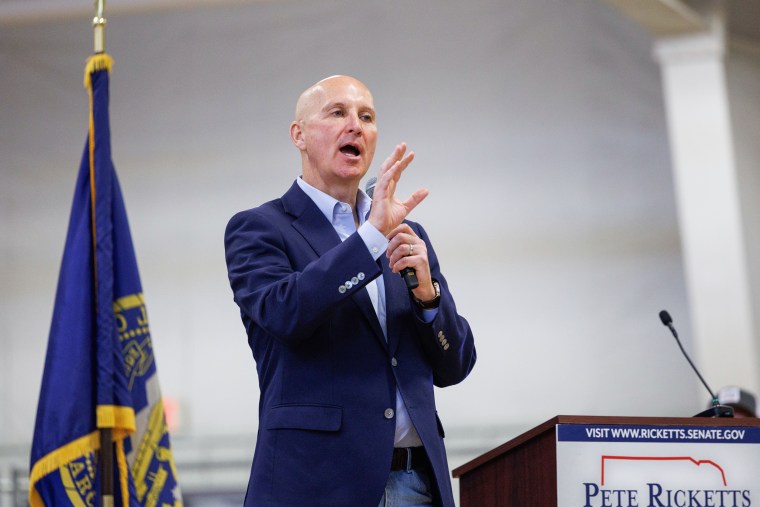
In a recent debate at the Nebraska State Fair, Sen. Pete Ricketts, R-Neb., challenged his independent opponent Dan Osborn, repeatedly referring to him as “Democrat Dan.” Ricketts aimed to link Osborn’s campaign to democratic socialists. The debate marked the beginning of numerous Senate races occurring nationwide over the next two months. Though Nebraska generally hosts less scrutinized political contests, the matchup between Osborn and Ricketts might offer a tighter race compared to the state’s usual partisan campaigns.
During the debate, which might be the only encounter between the candidates before Election Day, Osborn worked to differentiate himself from both dominant parties. He avoided fully breaking ties with any side, despite the previous Democratic nominee, Cindy Burbank, withdrawing and the state Democratic Party chair backing him. Osborn, who earlier ran in 2024 and narrowly lost to GOP Sen. Deb Fischer, emphasized his independence from political parties.
“I don’t need to caucus with either party,” Osborn said. “Nobody’s got a monopoly on a good idea. I will work with Republicans to get things passed, but it’s about delivering for Nebraska. That’s what I intend to do, is to work for the people of Nebraska, not a party boss.”
Ricketts sought to highlight the contrasts between himself and Osborn, particularly targeting Osborn’s stance on “Medicare for all.” He argued that Osborn would not have supported President Donald Trump’s tax reductions and associated legislative measures like the “Big Beautiful Bill.”
Osborn presented a different perspective, discussing the strategic advantage he could have offered as an independent senator. “Yes, I would have voted against the state that the current Big Beautiful Bill Act is in,” Osborn said. “But since we’re delving in hypotheticals, that act was passed by a tiebreaker for JD Vance. So, if I would have beaten Deb Fischer and operated as a true independent in Washington, D.C., that would have been leverage. That would have been leverage to deliver for Nebraska.”
Another prominent debate theme involved PAC contributions and “dark money” from unidentified donors in both campaigns. Ricketts accused Osborn of relying on campaign funds sourced from locations like Washington, D.C., New York, and California, as well as contributions from prominent Democrats such as Sen. Elizabeth Warren.
“Democrat Dan keeps trying to insinuate that somehow I can be part of this billionaires club or whatever,” Ricketts said. “The truth is, I can’t be bought. He already has. He’s been paid for by those liberal out-of-state interests who are funding his campaign.”
Osborn acknowledged the influence of “dark money” in the election system, admitting his benefit from undisclosed donors supporting his campaign. He criticized the anonymous donor funds used to promote his candidacy. “I don’t know who these people are, and they raise money in my name, and those are the ones that run ads,” Osborn said. “If it doesn’t say, ‘I’m Dan Osborn’ or ‘I’m Pete Ricketts, I approve this message,’ that’s dark money working.”
The debate comprised three segments, focusing on tariffs and the cost of living, the U.S. Immigration and Customs Enforcement agency, the conflict in Iran, and the role of campaign financing and artificial intelligence.
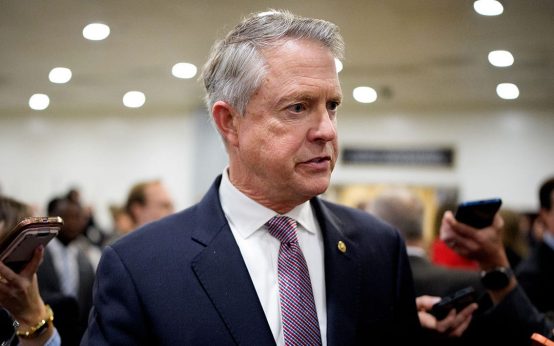 Sen. Roger Marshall Denies Allegations of Political Attack
  Concerns About Food Safety Reach Critical Levels
 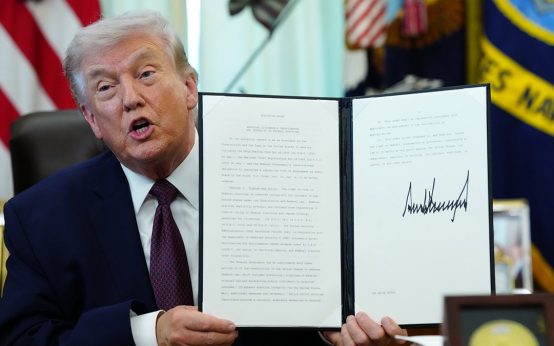 Court Blocks Trump’s Mail-Ballot Rules Ahead of Elections
  A Mother’s Tragic Journey Under Abortion Ban
  U.S. Strategic Goals Remain Unmet Amid Prolonged Conflict
  The Impact of Arts and Closure on Democracy