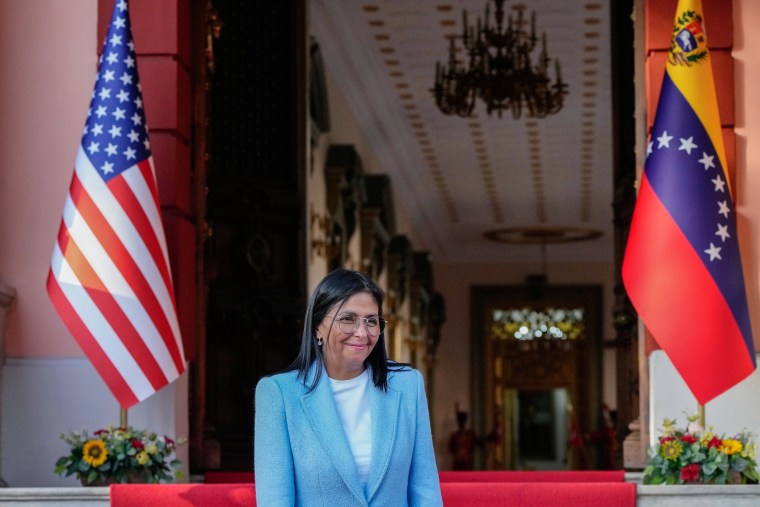
The White House announced a partnership with North American Blue Energy Partners (NABEP) as part of President Donald Trump’s strategy to explore Venezuela’s oil sector. This arrangement provides the Pentagon a stake in approximately 20% of the nation’s substantial oil reserves.
This deal, which Trump hailed as historic, raises skepticism among analysts due to Venezuela’s struggling oil production. Despite doubts, Trump’s administration promotes it as an opportunity to establish a major oil power in the Western Hemisphere.
The agreement involves the creation of a private company through a joint venture with NABEP, which is owned by Venezuelan businessman Alejandro Betancourt. NABEP is already Venezuela’s second-largest operator, trailing only Chevron. Acting President Delcy Rodríguez has granted them 100-year rights over 17 oil fields with 65 billion barrels of proven reserves, most previously under Russian or Chinese control.
Under this arrangement, the Pentagon will have a 35% ownership stake, and the State Department has secured a purchase guarantee for 20% of the output at cost. NABEP plans a $100 billion investment in new oil infrastructure.
Betancourt, involved in Venezuela’s oil industry for over 15 years, stated the deal aims to harness Venezuela’s resources for mutual benefit. His company employs over 5,000 people and contracts more than 10,000 others.
The White House claims the deal incurs no cost to the U.S. and includes veto power over board members, most of whom are U.S. citizens. The agreement with NABEP falls under U.S. law and court jurisdiction.
Despite the optimistic outlook, former U.S. energy advisers warn of political risks. Future administrations in either country could challenge the deal, and revitalizing Venezuela’s energy sector will take time. Trump acknowledged that lower gas prices won’t happen overnight, suggesting a two-year timeframe isn’t long.
Rodríguez expressed support for the deal, viewing it as a pathway to rejuvenate Venezuela’s oil sector. She defended the country’s sovereignty amidst criticism of the resource handover.
U.S. lawmakers seek further information. Rep. Rick Crawford desires more details from the Trump administration. Sen. Jack Reed criticizes using the military for private oil ventures and demands legal accountability.
Trump plans to meet with major and small oil refiners to discuss increasing U.S. capacity to convert crude into gasoline, especially as prices soar due to the Iran war. Interior Secretary Doug Burgum, Energy Secretary Chris Wright, and Jarrod Agen, the director of the White House National Energy Dominance Council, will attend this meeting.
 A Mother’s Tragic Journey Under Abortion Ban
  U.S. Strategic Goals Remain Unmet Amid Prolonged Conflict
  The Impact of Arts and Closure on Democracy
 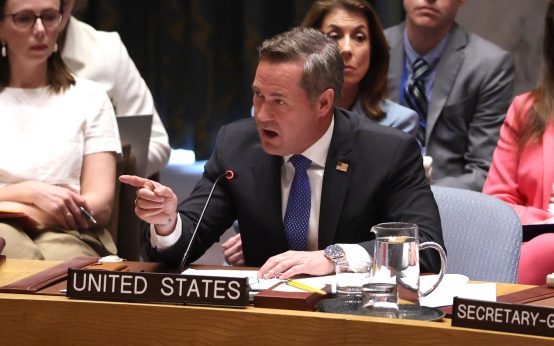 U.S. Ambassador Comments on Iran War Duration Amid Political Concerns
 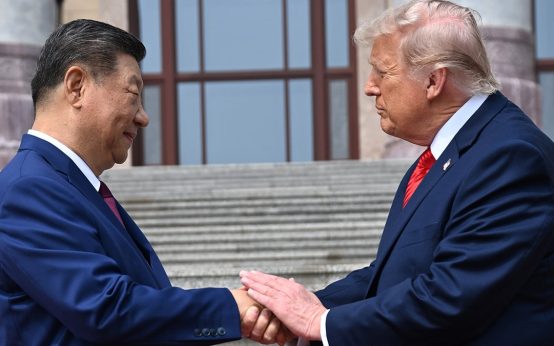 US-China Relations Under Scrutiny: Expert Warns of Escalating Tensions
  No Timeline for End of Iran Conflict