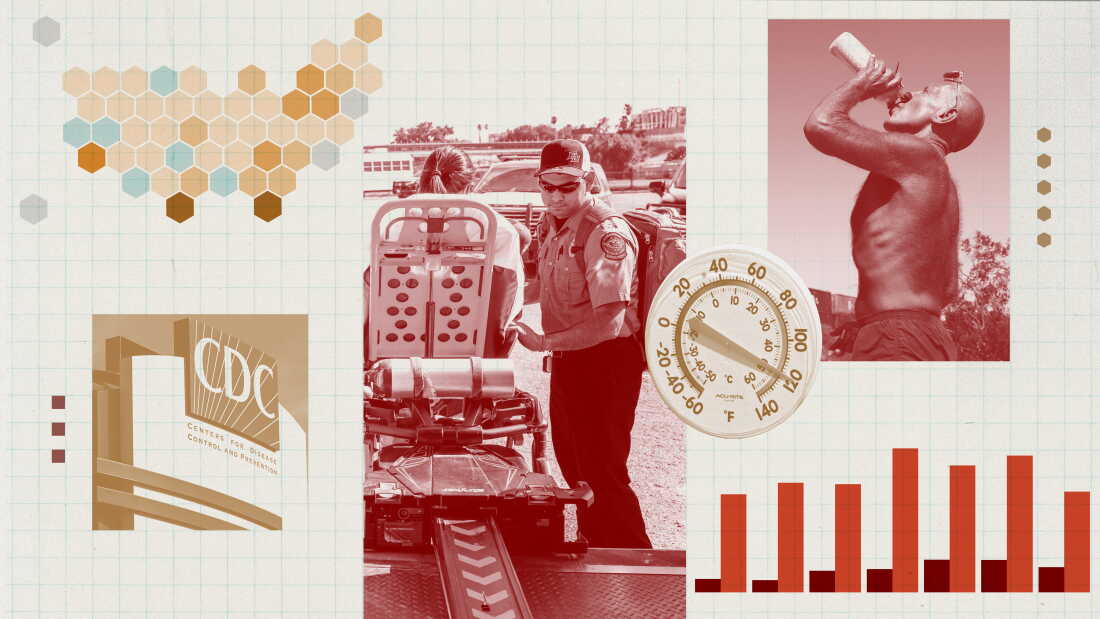
Every year, thousands of Americans lose their lives due to heat, yet these deaths often go unreported and undercounted. Heat waves have escalated as human-driven climate change intensifies, resulting in death tolls that the official records fail to capture accurately. Inconsistencies and incompleteness in data collection contribute to a significant undercount of heat-related fatalities.
NPR collaborated with Boston University to address this discrepancy, aiming to provide a comprehensive national count. This two-year investigation involved the development of a statistical model, scrutinizing nearly every county in the U.S. The forthcoming publication of the complete analysis in a scientific journal promises to shed more light on the issue.
Why Accurate Assessment Matters
Understanding the extent of heat-related deaths, along with identifying who is affected, where, and why, is crucial for devising effective, life-saving interventions. Quinn Adams, a research scientist at Boston University, underscores the need for precision in measuring the problem to protect lives better.
Our ultimate goal is to ensure people recognize and properly address the risks posed by heat.
In addition to the statistical analysis, NPR’s efforts also aimed to identify individual cases that remain uncounted by official records, revealing the human stories behind the overlooked data.
Three Key Takeaways
Significant Undercount
Current estimates provided by the Centers for Disease Control and Prevention (CDC) regarding heat-related deaths—from 2004 to 2018 average about 700 annually—remain drastically lower than reality. Estimates show an average of 9,000 deaths annually due to heat for the years between 2018 and 2025, a quintuple of the official average.
Growing Heat Risks
Human-induced climate change has prolonged heat wave seasons by 45 days since the 1960s, while the number of heat waves in major cities doubled since the 1980s. Heat domes frequently expose millions to unsafe conditions, a trend projected to intensify.
Dr. Sameed Khatana from the University of Pennsylvania highlights how heat can exacerbate existing conditions, transforming health threats like cardiovascular disease from manageable to lethal.
Heat acts silently yet lethally, often worsening diseases such as heart conditions, leading to unacknowledged deaths.
National Risks
The NPR-BU investigation reveals significant disparities between officially reported and actual heat-related death figures across various states. For instance, in Michigan, reported deaths are tenfold underestimated. Florida presents an even starker difference of 40 times fewer reported deaths than expected.
Infrastructure inadequacies contribute to these fatalities, especially in regions historically less accustomed to heat. The absence of air conditioning is notably higher in states not traditionally considered hot.
Improving Counts
While the CDC reports an upward trend in official national heat-related death figures, the improvement stems partly from worse heat conditions and refined counting practices in specific areas. Maricopa County sets an example with its rigorous protocol for identifying heat’s subtle impacts on mortality.
Countless entities, such as Los Angeles and Houston, report low heat-related deaths despite considerable numbers per investigation estimates. Challenges in precise identification remain due to complex procedures and lack of protocols among doctors certifying causes of death.
The Urgency to Act
Heat affects anyone, anywhere in the United States, which underlines the urgency for protection strategies. Raising awareness and understanding this threat on a larger scale are essential to improving preventive measures.
NPR continues its deep dive into this issue, aiming to illuminate lesser-known risks and prompt action to save lives.
Research and Methodology
This study, assisted by a Nova Institute fellowship and Dennis A. Hunt Fund support, analyzed mortality in 530 counties from 2018 to 2025, excluding 2020 data impacted by the COVID-19 pandemic.
Temperature data from the ERA5-Land global dataset helped identify dangerous weeks, using space-time stratified analysis to correlate heat with increased mortality. Adjustments accounted for each county’s usual climate, enhancing result accuracy.
Data Sources
Mortality data was sourced from the CDC’s WONDER database and analyzed using the cityClimateHealth R package, reflecting comprehensive methodologies to estimate heat-responsible deaths nationwide.
 How Battery Innovations Transform Renewable Energy
  Data Centers Stir Controversy in Texas Amid Growth Boom
  Urgent Archaeological Efforts in Quinhagak Stay Ahead of Erosion
  Concerns Rise Over NIPSCO Permit In Jasper County
  Reader Reactions on Grizzlies and Data Centers
  Managing the Crisis of Drying Rivers