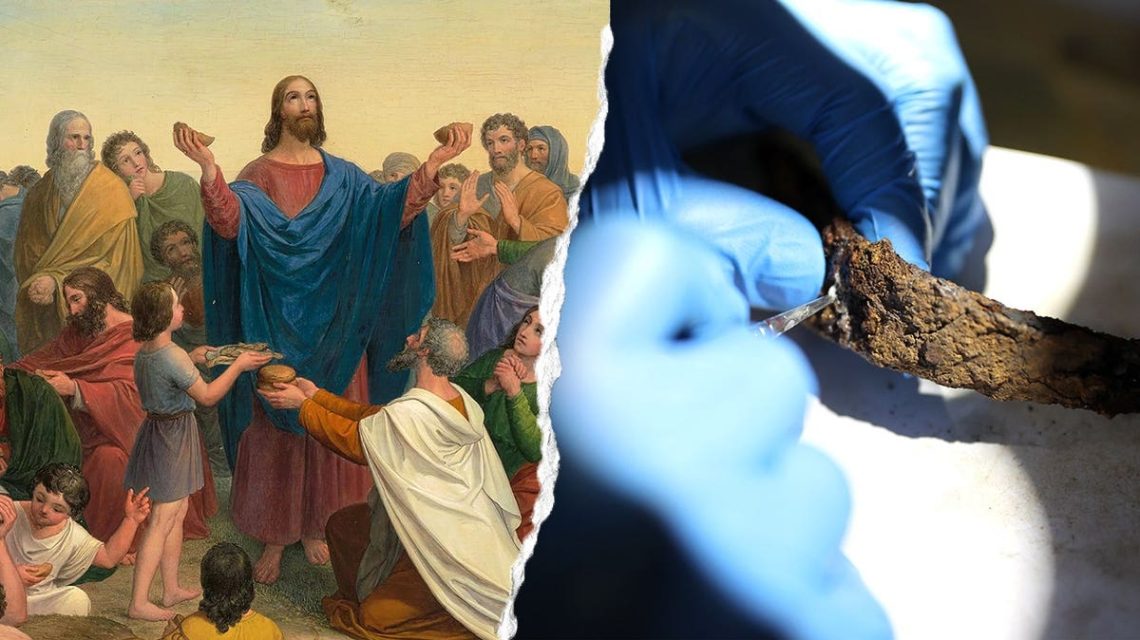
Archaeologists working in Turkey have made a significant discovery at the Türkmen Karahöyük site in Konya, central Turkey. They unearthed a 1,500-year-old Christian amulet featuring a sheet of gold that is as thin as paper. The find was highlighted by Anadolu Agency earlier in the summer.
An international team of around 60 researchers from 13 countries was involved in the excavation. The amulet dates back to the fourth or fifth centuries A.D., an important era in the development of Christianity. Inside its copper case, there’s a 0.1-millimeter gold sheet that reportedly contains a passage from the Bible, although the specific passage remains unidentified.
Images show the amulet as a compact, dark artifact with significant corrosion. Researchers have been meticulously examining and cleaning it. According to Michele Rüzgar Massa, the excavation co-director, such amulets are rare, with only one similar instance recorded in Germany. Massa suggested the amulet might have served as a protective charm, potentially belonging to a young child.
“In other words, you can think of it like an evil-eye charm,” Massa noted.
Aside from the amulet, the team discovered other ancient artifacts. These include a stone seal with a hieroglyphic Luwian inscription. The Luwians were an ancient civilization in Anatolia present during the Bronze and Iron Ages. This particular seal dates back to around 1500-1400 B.C. They also found two copper seals and a clay seal impression.
According to Massa, the stone seal bears the name “Kurunti-ziti,” associated with Kurunta, a significant deity in the Hittite culture. He explained that this person likely held a lesser rank within the bureaucratic and state hierarchy.
“We can say that this was a major administrative center around 1500-1400 B.C.,” Massa stated.
Deputy excavation director Hüseyin Erpehlivan emphasized the site’s archaeological importance in Anatolia.
“Konya is located right in the center of Anatolia, in a region where cultures intersect,” Erpehlivan said. “Türkmen Karahöyük is not an excavation focused on a single period.”
Erpehlivan also highlighted the site’s significance as a multi-layered settlement. It contains artifacts from various periods, including the Late Hellenistic, Iron Age, and Bronze Age.
This discovery is one of several notable finds with biblical connections that have recently emerged from Turkey. Earlier this summer, archaeologists found a rare 2,500-year-old marble statue among the ruins of Sardis, an ancient city mentioned in the Book of Revelation. Additionally, an ancient mosaic was discovered at Smyrna, an archaeological site in modern İzmir, Turkey.
 The Cost of Challenging Beijing
 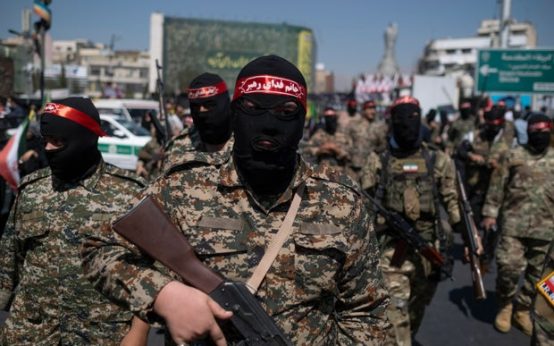 Tensions Escalate in Iran Conflict as Global Leaders Weigh Options
  White House Approves F-35 Sales to Saudi Arabia Amidst Regional Tensions
 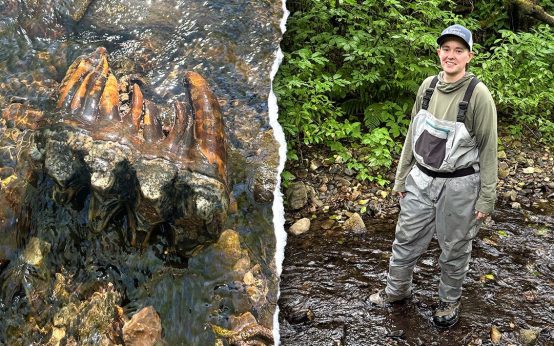 Ice Age Mastodon Tooth Unearthed in California Creek
  Inside the Secret Deals Powering the President’s Push to Deport Migrants to Countries Not Their Own
  Navigating the Challenges of Third-Country Deportations