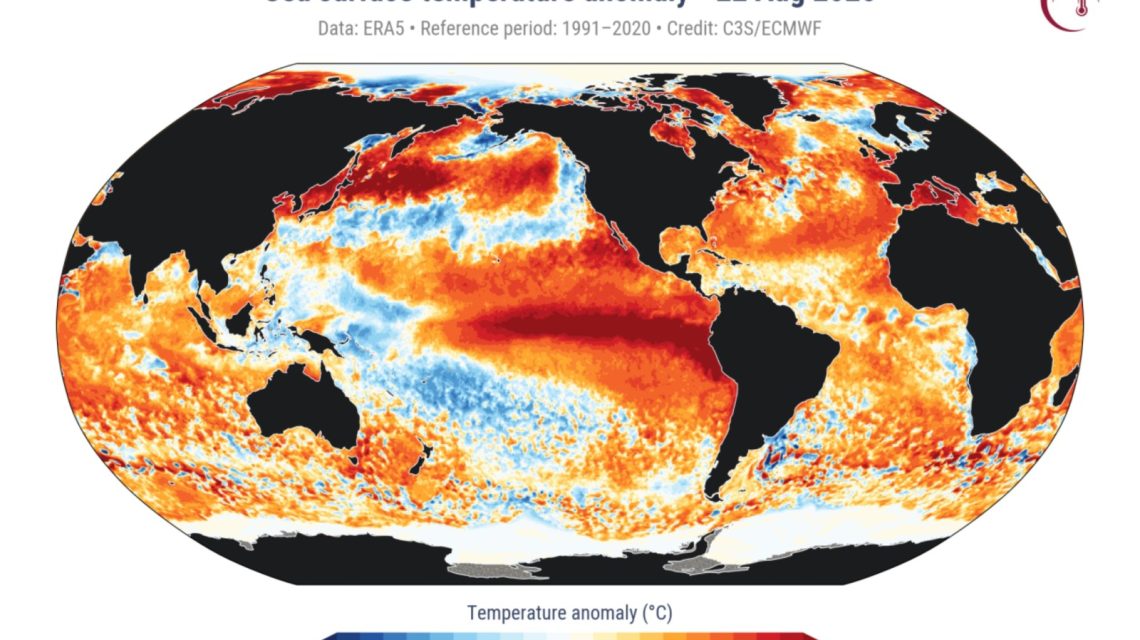
The global average ocean surface temperature has reached a new high, coinciding with the intensification of El Niño.
The average sea-surface temperature across oceans worldwide hit 21.1 degrees Celsius, or 70 degrees Fahrenheit, on Saturday. This was reported by the European Union’s Copernicus Climate Change Service, surpassing the earlier record of 21.09 C set in March 2024.
Copernicus stressed the unusual timing of this record, noting that global ocean temperatures typically peak in March and April. However, this record occurred in August.
Meteorologist Alex DaSilva from AccuWeather highlighted that the record includes oceans outside polar regions and signifies warmth spread across multiple basins.
“El Niño plays a significant role in the Pacific Ocean, making record highs more likely during its occurrence. The Atlantic basin is also notably warm, contributing to this global temperature record,” DaSilva stated in an email.
Copernicus previously reported persistent above-average temperatures outside polar areas over the past three years. In June, temperatures already set records, aligning with El Niño’s emergence in the equatorial Pacific.
Ocean Temperature Record Explained
The highest daily average temperature outside polar regions touched 21.1 C on August 22, 2026. Copernicus indicated this surpassed the previous record of 21.09 C. The August record in 2023 was 20.98 C.
Samantha Burgess from the European Centre for Medium-Range Weather Forecasts stated, “This record signals increasing stress on oceans. El Niño is amplifying heat, alongside decades of human-induced warming. Rising ocean temperatures heighten risks to marine ecosystems and coastal communities.”
The impact is evident as marine heatwave days globally have more than tripled since the early 1990s, affecting marine ecosystems and their dependent communities.
DaSilva noted the records held by previous years, mentioning El Niño’s persistence from late 2023 into 2024. La Niña followed after.
“Typically, oceans are warmest in March and August. While warming may continue briefly, significant records are unlikely in September,” DaSilva observed.
The Strength and Impact of El Niño
El Niño, part of the El Niño-Southern Oscillation (ENSO), is a climate pattern shifting biennially or every seven years. It results in anomalously warm waters in the central and eastern equatorial Pacific, weakened trade winds, and altered tropical rainfall patterns. These changes impact global weather and climate.
NOAA’s Climate Prediction Center reported on August 13 a strong El Niño development with over a 90 percent chance of a powerful event during Northern Hemisphere’s fall and winter into 2027. They forecast a 69 percent probability of a historic event surpassing previous strength since 1950 between October and December 2026.
DaSilva anticipated potential new records when seasonal peaks return. “The potential strength of El Niño this fall could result in another sea-surface temperature record next March,” DaSilva said, reflecting on March 2024’s previous record-setting moment.
 EPA Dismantles Greenhouse Gas Rules, Causing Concern
  How Battery Innovations Transform Renewable Energy
  Data Centers Stir Controversy in Texas Amid Growth Boom
  Urgent Archaeological Efforts in Quinhagak Stay Ahead of Erosion
  Concerns Rise Over NIPSCO Permit In Jasper County
  Reader Reactions on Grizzlies and Data Centers