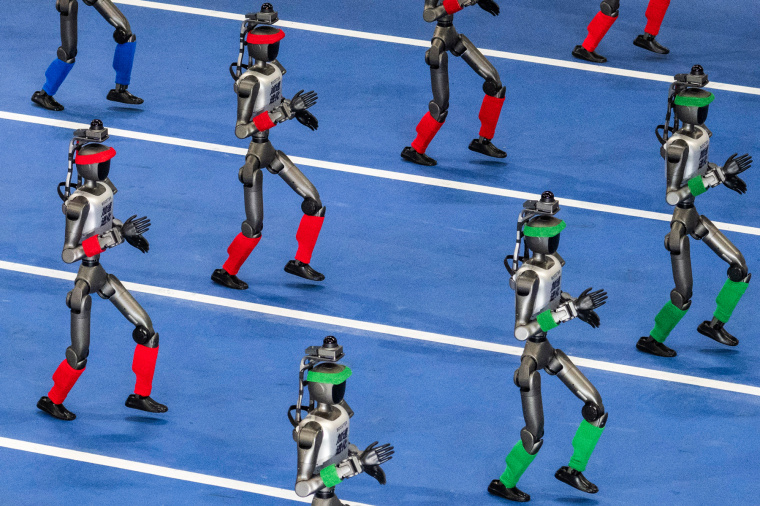
Recent achievements in humanoid robotics have captured attention. China’s humanoid robots have demonstrated speeds surpassing even the fastest human runners. Now, they face new challenges: can they excel in packaging and warehouse operations while performing precise tasks such as connecting cables? These tests will evaluate their ability to work like humans in less publicized roles.
The World Humanoid Robot Games, a five-day event in Beijing, began with both sports-inspired and task-oriented competitions. These games are heavily promoted by Chinese state media and feature 51 events, including 30 sports challenges and 21 scenario-based contests. Over 40% of these require robots to operate completely autonomously, said Huawei, a tech partner in the games.
In a remarkable feat, two robots completed a 100-meter sprint faster than Usain Bolt’s world record of 9.58 seconds. This is a significant improvement from 2025 when the top robot time exceeded 20 seconds. However, stopping remains a challenge, as evidenced by robots crashing into a mat placed beyond the finish line.
Another humanoid robot demonstrated impressive performance by running 400 meters in 39.7 seconds, outrunning South African Wayde van Niekerk’s record of 43.03 seconds. Spectator and robotics investor Xu Qiaosheng noted the increased demands on battery management and thermal dissipation due to heightened intensity. He stated this development holds great importance for China’s industrial sector.
Beyond speed, the games include events like tug-of-war and weightlifting, and infuse traditional Chinese sports such as Tai Chi and pitch-pot with futuristic elements. These events could shed more light on the practical applications of robotic innovation.
Robots will face real-world challenges such as handling imperfect objects, accurately positioning themselves, applying controlled force and recovering from errors without human help. These tasks test their ability to identify objects and navigate complex scenarios.
Lumos Robotics CEO Yu Chao mentioned the games’ potential to enhance hardware and serve as an industry showcase. However, he emphasized that long-term value hinges on solving real-world problems. “Only when it can work in those end scenarios does it have real value,” Yu stated.
In addition to familiar sports, robots will compete in tasks related to EV charging, restaurant operations, emergency response and hand dexterity. Industrial assembly and material loading are also on the roster. A cable connection challenge will test vision, mechanical alignment and force control.
Beijing-based startup Galbot plans an autonomous humanoid tennis match, featuring robots in singles and doubles play with tasks like ball tracking, serving and returning shots.
Hua Rong, chief marketing officer at Zeroth, expressed the true test comes post-demonstrations. “The competition will be whether, after the product is sold, it can really solve users’ problems,” she said.
 Trump Suggests Renaming AI to ‘Super Intelligence’
  The Rise of Data Centers and AI Development
  How China Uses AI to Challenge U.S. Dominance
 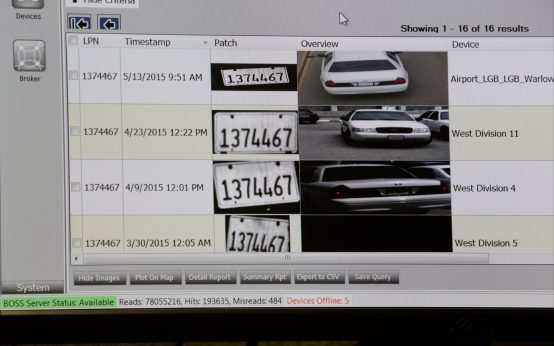 Controversy Surrounding Automated License Plate Readers (ALPRs)
 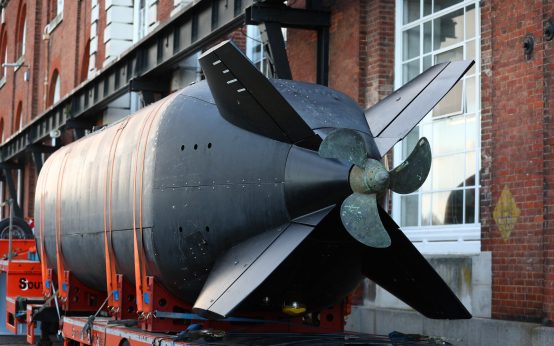 U.K. Test-Fires U.S. Torpedo from XV Excalibur
 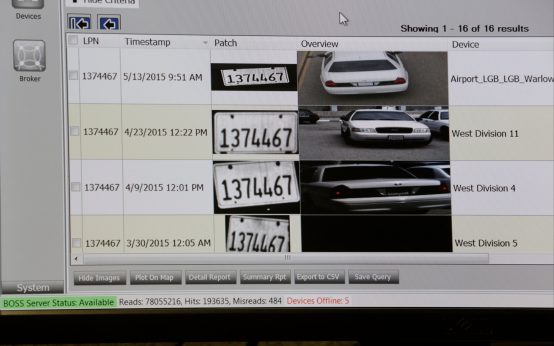 The Rise and Controversy of Automated License Plate Readers