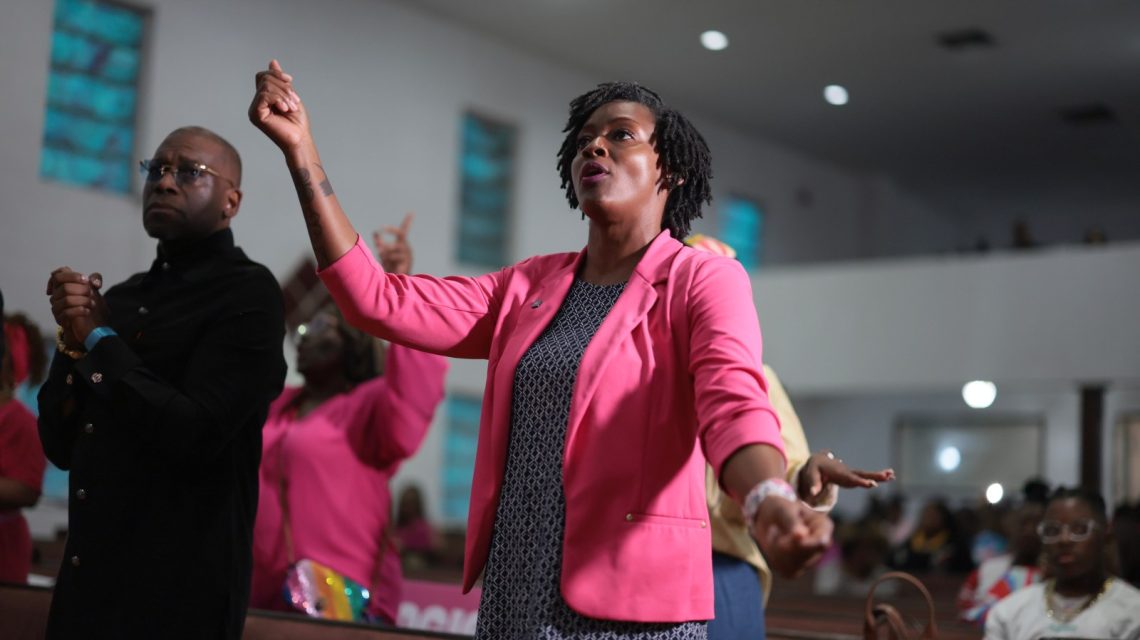
Angie Nixon, a state representative from Jacksonville and a member of the Democratic Socialists of America (DSA), secured a significant victory in Florida’s Democratic Senate primary. Her win over retired Army Lieutenant Colonel Alex Vindman surprised political operatives from both parties. If Nixon triumphs in November, she would become the first DSA member elected to the U.S. Senate from a state whose political identity largely rejects socialism.
Nixon’s victory introduces a democratic socialist candidate in a state with a substantial Cuban American population, a community historically opposed to the political ideology that many fled. Before the primary, Nixon campaigned in Miami’s Little Havana neighborhood, interacting with the local community and discussing issues over Cuban coffee.
Nixon will compete against Republican Senator Ashley Moody. Moody was appointed to the seat in 2025 after Marco Rubio took up the post of Secretary of State. Moody has already highlighted key issues for the upcoming election. She co-sponsored the DEMOCRACIA Act along with Florida’s other GOP Senator, Rick Scott, aiming to freeze Cuban officials’ assets and deny them entry.
Conversely, Nixon criticized the U.S. embargo on Cuba, describing it as a failed policy that contributes to hunger among Cubans. She called for restoring the Obama administration’s engagement policy with Havana and criticized the Cuban government. Nixon also accused Moody of prioritizing Department of Homeland Security funds towards deporting Cubans.
Cuban American Concerns
Nixon’s primary victory complicates the perception of socialism among Florida voters. County-level returns showed Nixon leading in areas populated by Cuban Americans, such as Miami-Dade County, despite Vindman’s campaign focus on his family’s Soviet Union history. Nixon also performed well in Osceola and Orange counties, which have significant Puerto Rican populations.
A University of North Florida poll conducted before the primary indicated Moody leading Nixon by 8 percentage points, with a portion of voters undecided. Experts from the University of Virginia’s Sabato’s Crystal Ball suggest the race leans safely Republican.
Cuban Americans constitute a significant demographic in Florida, with 1.9 million individuals statewide and 900,000 residing in Miami-Dade County alone. A Miami Herald poll revealed that 79 percent support U.S. military intervention in Cuba, while 36 percent favor overthrowing the Cuban government.
The Florida International University’s Latino Public Opinion Forum showed that Cuban Americans and Florida Latinos generally favor tougher policies towards Venezuela and Cuba. Meanwhile, other Latino demographics, including Puerto Rican, Mexican American, and Central American voters, disapprove of aggressive approaches to Latin America.
Florida Democratic Party Chair Nikki Fried acknowledged the challenge socialism presents due to the exile population in the state. FIU’s Cuba Poll found support for the embargo had risen to 60 percent by 2020, with substantial backing for a pressure-centric approach toward regime change in Havana.
Nevertheless, UnidosUS found that Cuban respondents prioritized cost of living and inflation as the primary issue, putting less emphasis on immigration compared to other concerns like housing and health care.
Republican Challenges
Despite Republican dominance in voter registration across 59 of Florida’s 67 counties, complications persist regarding immigration enforcement. While Cuban Americans favor military intervention in Cuba, they largely disapprove of deporting Cubans.
The state is firmly Republican; no Democrat has won the governorship in over thirty years, and Republicans maintain significant advantages across Florida.
Prospects for Democrats
Eduardo Gamarra, a political science professor at FIU, articulates doubts about Nixon’s prospects in defeating Moody in November but emphasizes her campaign’s contribution to understanding the Democratic electorate in Florida. Nixon’s win reflects primary dynamics where candidates can succeed by mobilizing a dedicated base. She selectively endorsed popular DSA proposals rather than its entire platform, such as Medicaid for All.
Gamarra suggests a broader Democratic strategy to align with issues that resonate beyond the base, particularly focusing on healthcare, food and gasoline costs, unemployment, and economic opportunities. Nixon’s campaign may reveal lessons for Democrats on embracing topics appealing to a wider electorate.
Florida’s Political Lean
No Democrat has held the governorship for over three decades, and the last statewide Democratic victor was Nikki Fried in 2018. The state’s Republican tilt remains evident, supported by Cuban American political power. National polls indicate socialism is not yet favorable, as more voters view it as a liability.
Despite changes in attitudes, socialism faces more resistance outside the Democratic base. Polls show varying perceptions of socialism among Democrats, independents, and other groups.
The Race On PAC’s Andrea Pringle sees Nixon’s win as a call for Democrats to adapt their approach to prioritize working people and resist external pressures defining political campaigns.
Nixon’s future efforts and the lasting implications of her assembled coalition could potentially redefine Democratic strategies in Florida approaching 2028. The sustainability of her campaign against statewide opposition will determine the effectiveness of her primary victory.
 Kushner’s Diplomatic Role and Travels Under Scrutiny
  Data Centers at Center Stage in Texas Senate Race
  Scrutiny on Senator Susan Collins Amid Husband’s Lobbying Ties
  Democrats Gain Momentum in Key Senate Races Ahead of Midterms
  Republican Support for Trump Shows Decline Ahead of Midterms
  Republican Candidates Challenge Incumbents in Cook County’s MWRD Election