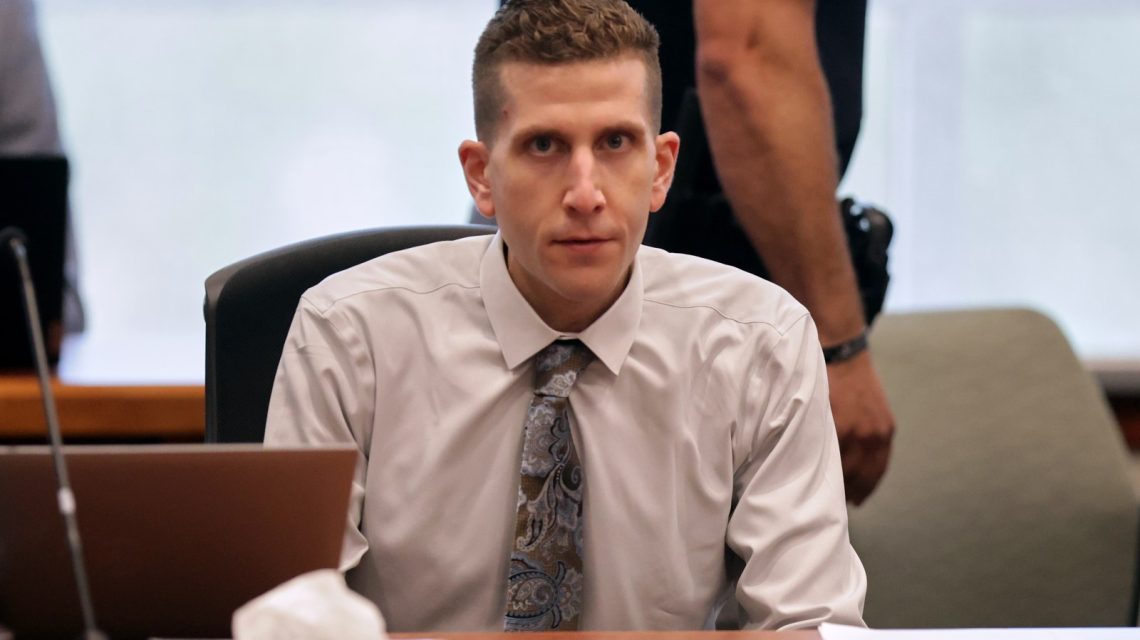
Bryan Kohberger’s mental health disorders could play a role in his attempt to withdraw his guilty plea and proceed to trial for the murders of four University of Idaho students. Kohberger, 31, confessed to killing Kaylee Goncalves, Ethan Chapin, Xana Kernodle, and Madison Mogen. This confession was made in July of last year, just before his scheduled trial for the murders at a rental house near the university’s campus in Moscow, Idaho, in November 2022. He is currently serving four consecutive life sentences.
Recently, Kohberger filed a petition for post-conviction relief. He requests a court to allow him to retract his guilty plea and go to trial. He claims his attorneys improperly represented him and coerced him into a plea that removed the death penalty option. Prosecutors have not yet responded, but Idaho Attorney General Raúl R. Labrador stated his office is prepared to ensure justice is served.
Neuropsychological Evaluation Insights
Newly unsealed court records detail the neuropsychological evaluation Kohberger underwent post-arrest. Dr. Rachel Orr, a clinical neuropsychologist, assessed Kohberger and diagnosed him with autism spectrum disorder. His defense cited these findings in an unsuccessful attempt to eliminate the death penalty as an option.
Neama Rahmani, a former federal prosecutor and current president of West Coast Trial Lawyers, shared with Newsweek that these diagnoses might not be enough to convince a judge to allow Kohberger to retract his guilty plea. However, they could be crucial if Kohberger argues that the diagnoses hindered his full comprehension of the plea consequences.
Diagnoses and Their Implication
Dr. Orr assessed Kohberger between October 2024 and January 2025, diagnosing him with several disorders, including:
- Autism Spectrum Disorder (Level 1), without intellectual or language impairment
- Attention-Deficit/Hyperactivity Disorder (ADHD), partially in remission
- Obsessive-Compulsive Disorder (OCD)
- Avoidant/Restrictive Food Intake Disorder (ARFID)
Kohberger also met criteria in the past for Developmental Coordination Disorder (DCD), Anorexia Nervosa, Unspecified Depressive Disorder, and Opioid Use Disorder.
Impact on a Potential Trial
Rahmani stated that it’s unlikely Kohberger will succeed in retracting his guilty plea or that his diagnoses will be relevant if a trial occurs. Disorders like Autism, ADHD, OCD, and ARFID do not pertain to his guilt or the murder charges.
Laurie Levenson, a criminal law professor at Loyola Law School and former federal prosecutor, noted that Kohberger’s difficulty in adjusting to imprisonment might drive his desire for a trial. If retried, prosecutors would likely utilize any evaluations in the murder trial context.
Diagnoses at Sentencing
Kohberger’s plea deal removed the death penalty consideration, so his diagnoses were not pivotal at sentencing. If he withdraws his plea, gets convicted, and faces new sentencing, his mental health could be considered as mitigating factors. Rahmani mentioned these could influence jurors in deciding between life imprisonment or death.
His lawyers had previously argued against the death penalty based on his autism diagnosis, calling it cruel and unusual punishment. However, Judge Steven Hippler sided with prosecutors, citing U.S. Supreme Court precedent that only intellectual disability exempts someone from the death penalty. Kohberger, diagnosed without intellectual impairment, failed to show autism as equivalent to such a condition.
Evaluation Findings
Dr. Ty Milton, assistant professor of psychology and counseling, commented to Newsweek that while Kohberger’s evaluations were thorough and the diagnoses clinically significant, they do not justify violent behavior. Milton explained the interplay of autism, OCD, and ADHD can affect handling stress and decision-making but does not imply incapacity to comprehend legal decisions.
The key issue in Kohberger’s plea challenge is whether his disorders impacted his judgment. The evaluations provide a basis to explore these questions, though they do not prove his diagnoses influenced decision-making.
Next Steps
Idaho prosecutors are expected to reply to Kohberger’s petition for post-conviction relief soon. Idaho law typically allows the state 30 days to respond following docketing, with potential deadline extensions. Since the petition was filed on July 27, responses could come by late August. Judge Steven Hippler will then determine if the petition is dismissed or if further proceedings, like an evidentiary hearing, will occur.
For further details, contact Newsweek editors Ben Kelly and Gray R. Thomas regarding this story.