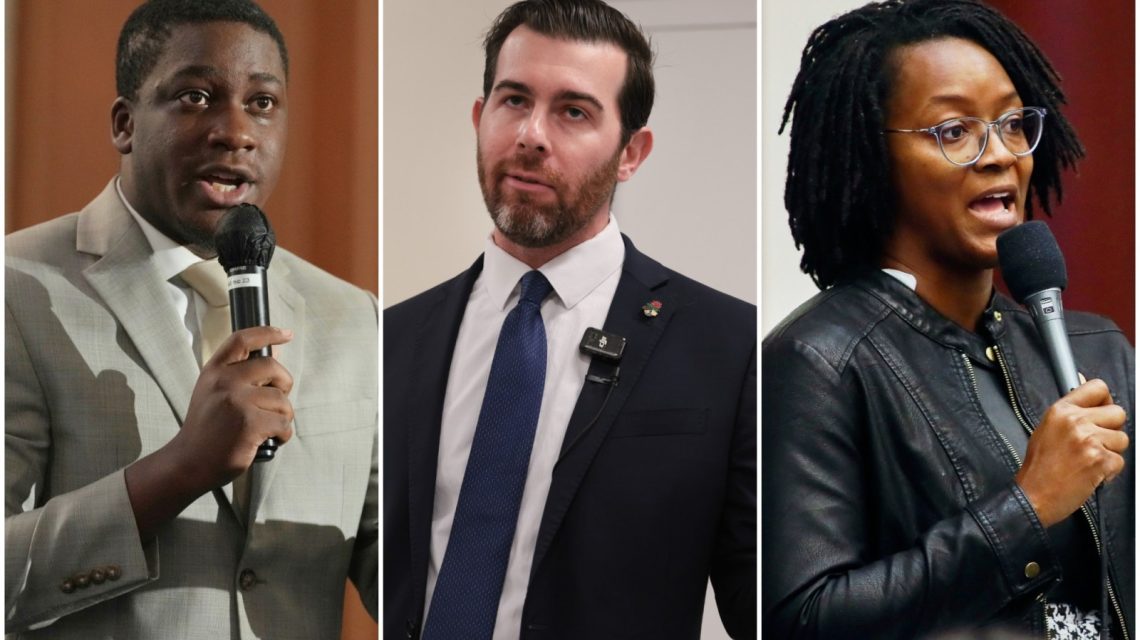
This week, Democrats face a key test in Florida as insurgent candidates challenge established party figures ahead of the midterm elections. Three notable contenders are questioning the concept of ‘electability,’ advocating for more diverse representation and policies within the party.
The Challengers
Oliver Larkin confronts U.S. Representative Jared Moskowitz in the 25th Congressional District. Elijah Manley competes against U.S. Representative Debbie Wasserman Schultz in the 20th District. Meanwhile, Florida State Representative Angie Nixon challenges retired U.S. Army Lieutenant Colonel Alexander Vindman for the Senate nomination.
Rashida Tlaib, a prominent Democratic Socialist, rallies support for these candidates, though her presence has sparked controversy. Florida Republican Representative Randy Fine criticized her visit, citing her opposition to Jewish Democrats.
Diverse Political Identities
The three candidates present varied political stances. Larkin identifies as a democratic socialist, Manley as a progressive and economic populist, and Nixon with specific policy endorsements rather than national groups like the DSA.
Conservative media highlight the socialist ties of these candidates, potentially influencing voter perceptions.
Electability Debate
In interviews, Larkin and Manley criticize the party’s use of ‘electability’ criteria, arguing it favors establishment candidates and disadvantages progressive voices. They contend the criteria often undermine candidates of color and women.
Manley questions whether persuading so-called ‘middle’ voters is effective, suggesting that clear, bold choices might engage the Democratic base more intensely.
Polls and Prediction Markets
Statistics indicate challenges for the insurgents. Moskowitz and Wasserman Schultz hold strong positions in prediction markets. Nixon’s campaign shows mixed signals, with some surveys indicating a tighter race and others suggesting she trails significantly.
Fundraising disparities are significant. Nixon lags behind Vindman, who has substantial financial support from small donors.
National Context
This year, DSA-backed candidates have seen successes, but not without setbacks. A recent loss in Wisconsin provided ammunition for critics of democratic socialists.
The state’s Latino population, particularly Cuban Americans, may shape electoral dynamics. Polling indicates mixed reception to socialism among Latino voters in Florida.
Looking Forward
Democrats face pressing questions about their electoral strategy. Republicans are eager to capitalize on internal divisions over progressive candidates.
The outcome in Florida could signal broader trends within the party and influence November’s general elections. Electability remains a contested term as the primaries draw near.
 Democrats Push Judicial Reforms Ahead of Midterms
 Young Cuban American Promotes Democratic Socialism in Miami
  Brandon Herrera: The Controversial Gun Influencer in Texas Politics
  Debate on Progressive Politics and the Era of ‘Woke 1’
  One Nation’s Popularity Rises Amid Economic Concerns