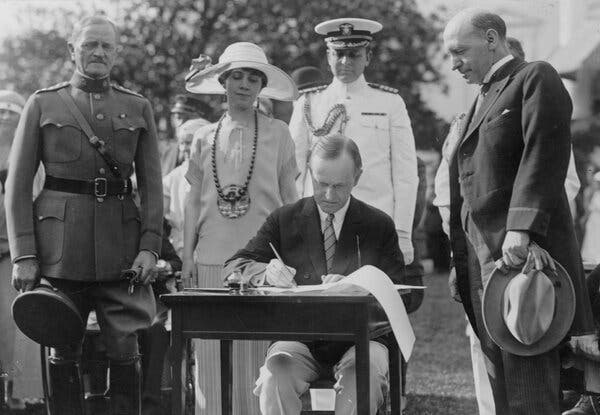
In 1924, the U.S. Congress enacted immigration restrictions reflecting fears about crime, demographics, and economic issues. These measures set quotas limiting newcomers from places like Italy, Poland, and Russia and barred immigrants from Asia. The law capped annual immigration at 150,000, contrary to Emma Lazarus’s vision in her poem.
Representative Albert Johnson, a Republican from Washington, stated that the U.S. should no longer function as an asylum. This historical viewpoint finds echoes in recent policies under President Trump.
Many historians note similarities between past and present policies. President Trump has tightened borders, primarily using his authority. With new administrative powers upheld by the Supreme Court, he has significantly restricted immigration.
Trump’s policies include banning asylum at the southern border and ending deportation protections for individuals from nations affected by disasters and conflict. His administration has blocked refugee entry, aside from a group of mostly white South Africans, and imposed restrictions on long-term immigration from parts of the Middle East and Africa. An attempt to limit green cards for those perceived as a burden on public benefits was also made.
Trump has deported many individuals and encouraged voluntary departure under threats of deportation to dangerous countries. These actions reflect a drastic shift in U.S. immigration policy.
 Steve Hilton’s California Dream: Wooing Latino Voters
  Indiana Legislators Advocate for Unemployment Benefits for Locked-Out Workers
  Analysis of Urgent Reforms in the U.S. Presidential Nomination Process
  Search Underway for Missing Aircraft Near Nantucket
  Trump Pressures Lawmakers to Support Permanent Daylight Saving Time
  Tennessee Prison Chief Resigns After Failed Execution