Trump’s Executive Order on Childhood Vaccinations
President Donald Trump recently signed an executive order concerning childhood immunizations. During the announcement, he claimed that children receive vaccine doses comparable to a soda bottle’s volume. This assertion sparked a discussion about the reality of vaccine doses and their administration frequency.
Actual Vaccine Volumes
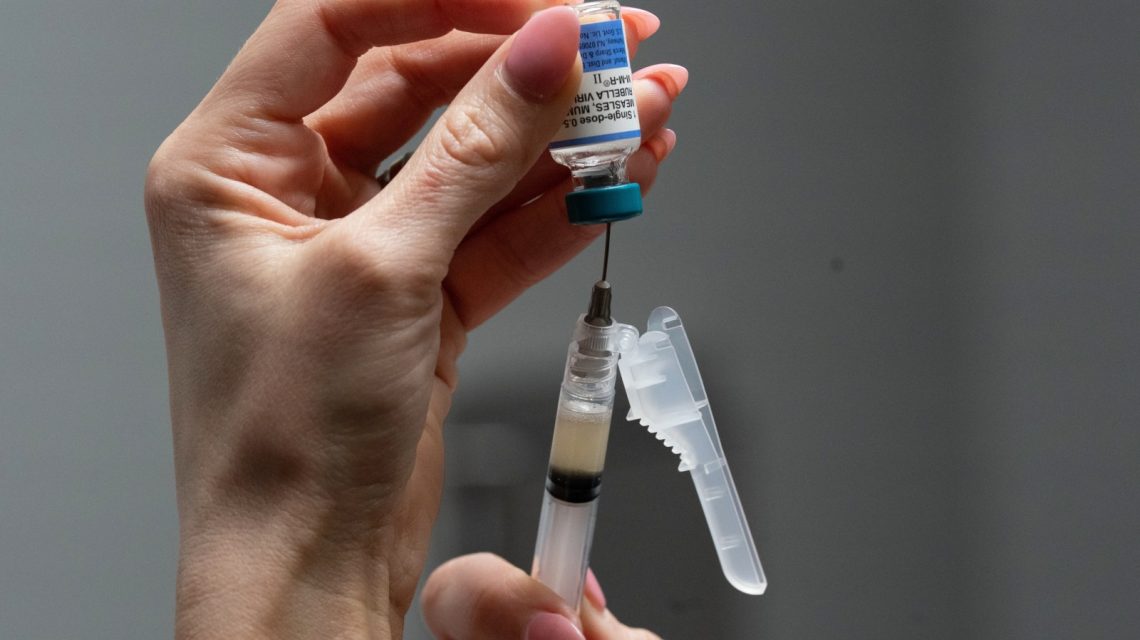
Trump’s statement does not accurately reflect the reality of vaccine dosages. According to Melissa Stockwell, a pediatrician at NewYork-Presbyterian Hospital, the actual vaccine amount is much less than described by Trump. Children receive vaccines totaling only a couple of tablespoons throughout their childhood, far less than a 12-ounce soda bottle.
Stockwell noted that for routine early childhood immunizations, the total volume is about two teaspoons, excluding flu and COVID-19 vaccines. Including these annual vaccines results in a total of roughly two tablespoons by age 17.
Impact on the Immune System
There are concerns among some that children are overwhelmed by vaccines. However, Stockwell argued that children’s immune systems encounter far more antigens from everyday infections than from vaccinations. A single bacterial infection exposes a child to thousands of antigens, while all childhood vaccines combined expose only about 160 to 170.
This view aligns with the broader medical consensus that modern vaccines contain fewer antigens than older versions while offering protection against more diseases.
Policy Considerations and Health Risks
Trump’s executive order proposes splitting combined vaccines, such as the measles, mumps, and rubella (MMR) vaccine, into separate shots. It also suggests moving certain vaccines from universal recommendations to a model involving parental decision-making. The White House argues this approach aligns with practices in some other developed countries.
However, health experts caution against these changes. They believe that separating vaccines leads to more appointments and increased chances of missed doses. This could leave children exposed to infectious diseases for longer periods.
Robert H. Hopkins Jr., MD, Medical Director for the National Foundation for Infectious Diseases (NFID), stated, “Protecting children from preventable infectious diseases must remain a national public health priority.”
Public Health Perspectives
Medical professionals and organizations strongly advocate for basing vaccine recommendations on scientific evidence. The NFID emphasized that vaccines are critical tools in preventing serious health issues among children. There is concern that policy changes could result in decreased vaccine uptake and increased outbreaks of preventable diseases.
For parents uncertain about vaccine information, pediatricians are emphasized as the primary, reliable sources for guidance. They possess the expertise to assess scientific evidence and help families make well-informed decisions regarding their children’s health.
The ongoing debate on Trump’s executive order highlights one clear fact: Children receive vaccines in volumes measured in teaspoons and tablespoons, not liters.
 VA Invests in Community Programs to Tackle Veteran Suicide
  More Funding Needed for Psychiatric Hospitals
  Improving Funding for Psychiatric Hospitals
  Trump Administration Distributes Refund Payments to ACA Enrollees
  Study Links Ultra-Processed Foods to Increased Health Risks
  Social Media Trends Influence Psychiatry Diagnostic Criteria