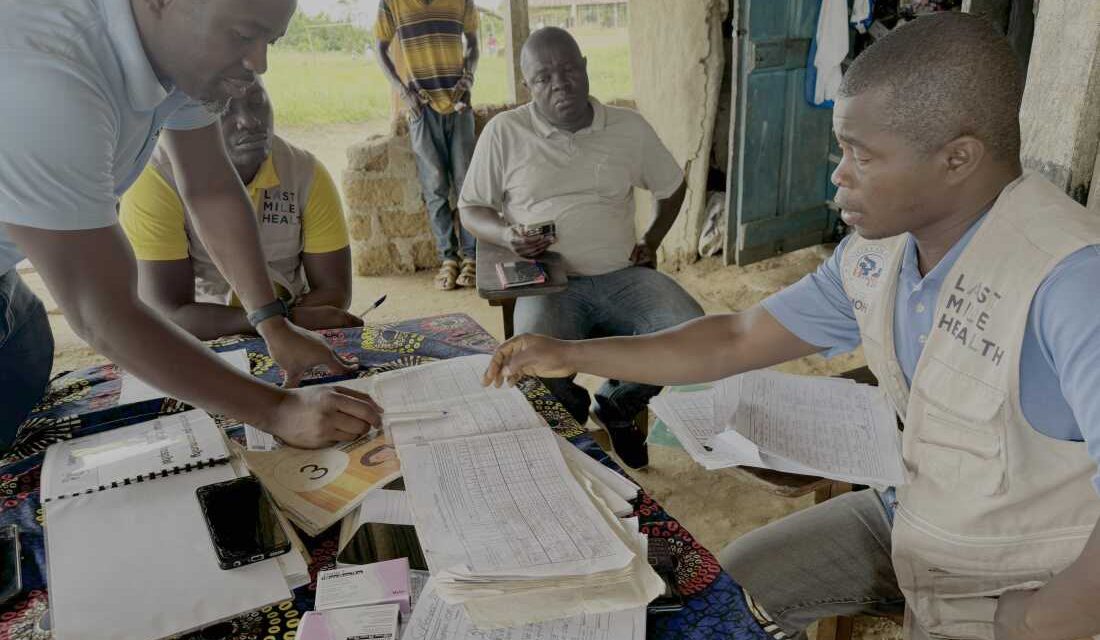
Genesis Whegelee works as a community health worker for Last Mile Health in Rivercess County, Liberia. Since 2018, he has been visiting households to monitor sick children, pregnant women, and others needing medical attention.
Dr. Raj Panjabi, born in Liberia and a physician at Brigham and Women’s Hospital in Boston, co-founded Last Mile Health after raising $6,000 from wedding guests in 2007. The organization aims to deliver healthcare to Liberia’s remote areas. The name Last Mile Health (LMH) reflects the mission of ensuring no one is beyond life-saving medical care.
Recently, LMH received the Conrad N. Hilton Humanitarian Prize, a $3 million award, recognizing its impact in alleviating human suffering. Dr. Panjabi’s vision was to bridge the gap to inaccessible regions through community health workers, trained to diagnose and treat diseases like malaria and help pregnant women plan for hospital deliveries.
LMH started with 17 workers, funded by the initial donation. It has since grown with government and philanthropic support. In 2010, LMH expanded to care for HIV/AIDS patients across Liberia and trained 1,300 community health workers during the 2014-16 Ebola epidemic. The COVID-19 pandemic response included distributing 6.2 million PPE and boosting vaccination rates to 81% in Liberia.
LMH now supports 20,000 community health workers assisting 32 million people across Liberia, Ethiopia, Malawi, and Sierra Leone. Despite these efforts, around two billion people globally need access to healthcare, notes LMH’s CEO Lisha McCormick. LMH aims to connect these communities with healthcare services.
Peter Laugharn, president and CEO of the Hilton Foundation, emphasized LMH’s critical role in addressing health system strains in remote regions. Dr. Panjabi highlighted the urgency of healthcare funding, citing a study predicting millions of additional global deaths by 2030 if funding trends persist.
Community health workers are proven to be cost-effective, delivering care at a median cost of $0.59 per person. Their effectiveness is backed by research, offering primary healthcare efficiently.
Genesis Whegelee’s experience as a community worker reflects LMH’s success. He visits households daily, tracking health needs, advising on sanitation, and providing medical care. For emergencies, he responds promptly, offering treatments like for malaria and referring cases needing clinic care.
Whegelee shares stories of his interventions, from treating a sick child to persuading a couple for hospital delivery. His work underscores community health workers as vital healthcare contacts.
The Hilton Foundation grant allows LMH to expand its reach to 50 million people by 2028 and continue developing community health worker programs like those in Africa Frontline First.
LMH helps professionalize community health workers, making them front-line practitioners providing essential services. McCormick reinforces LMH’s mission to ensure healthcare access for all, affirming the universal need for healthcare.
Diane Cole contributes to various publications, including The Wall Street Journal and The Washington Post. She authored the memoir After Great Pain: A New Life Emerges.
 Bruce Arians Promotes Prostate Cancer Awareness Through NFL’s Crucial Catch Initiative
  Trump to Speak with Putin Amid Suspected Plague Case in Russia
  Barriers to Accessing GLP-1s in the U.S.
  Support for Medicare for All Reaches Record High in 2026
  Dr. Drew Pinsky Warns About Behavioral Addictions Linked to Smartphones
  Death of Russian Scientist Raises Health Concerns