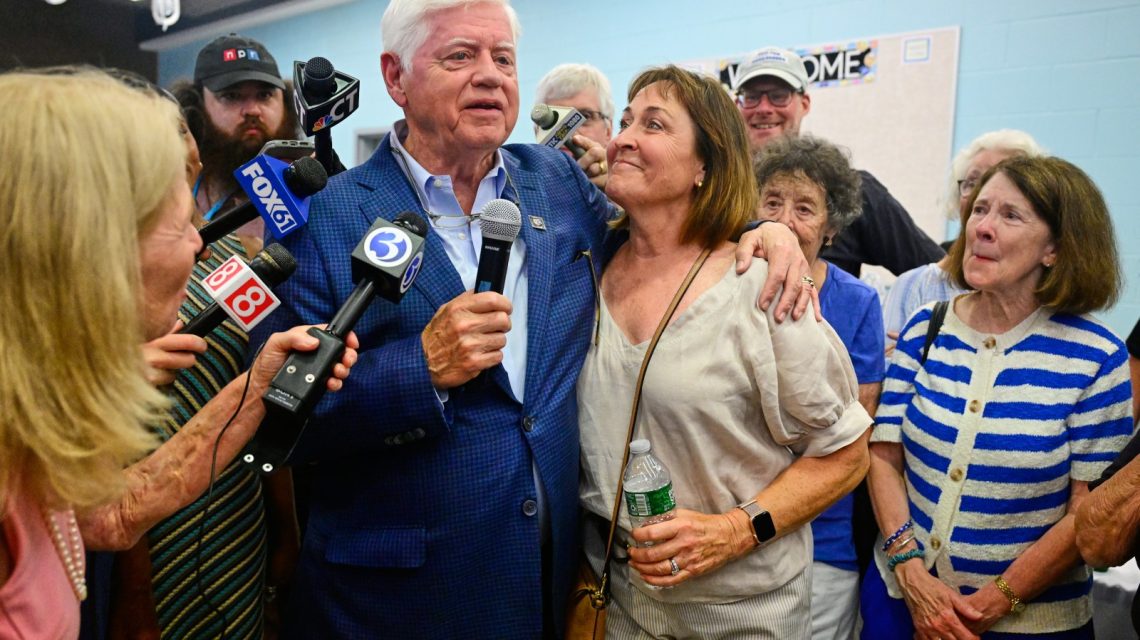
Longtime U.S. Representative John Larson lost his seat in Connecticut’s Democratic primary, reflecting a trend among Democratic voters favoring generational change. Larson, aged 78, was defeated by former Hartford Mayor Luke Bronin, 47, in Connecticut’s 1st Congressional District. This defeat symbolizes the ongoing debate within the party about leadership and the aging political class.
This year, Larson became the seventh House Democrat to lose a primary, equalling a 21st-century record set in 2012 when seven incumbents were ousted. The shift indicates voting patterns that favor new, often more progressive candidates. Some, like self-described democratic socialists, are gaining prominence by challenging older officeholders.
The Age Factor
The defeat of several older incumbents aligns with growing concerns over the age and fitness of political leaders. This was highlighted by President Joe Biden, 81, deciding against running again in 2024, followed by President Donald Trump securing a second term. Many successful candidates have promoted themselves as more relatable to a frustrated electorate seeking change.
Larson, who had served since 1999, faced increased scrutiny about his age, especially after a health-related incident in the House. Bronin’s campaign emphasized the need for younger voices, appealing to voters’ desire for change. Bronin stated that rejuvenating the party requires new energy and ideas.
Other notable incumbents, like Representatives Diane DeGette, Adriano Espaillat, and Al Green, lost to younger challengers. However, some seasoned lawmakers, including Ed Case and Brad Sherman, managed to fend off primary challenges.
A Progressive Revolt
The electoral defeats also signal the rising influence of the party’s progressive wing. In New York, challengers who ran to the political left successfully unseated Representatives Adriano Espaillat and Dan Goldman. These victories were supported by key local figures, including democratic socialist Zohran Mamdani, who emphasized electing ‘better Democrats’ prioritizing the needs of working people.
For Al Green, who was defeated in a runoff, the loss highlighted the age gap within the party. Christian Menefee, a younger opponent, capitalized on this divide amid district redistricting efforts.
What It Means for Democrats
The losses of incumbent Democrats appear to reflect a demand for reform but not necessarily an ideological overhaul. Northeastern University’s Costas Panagopoulos notes that the removal of older politicians signifies voters’ preference for change, which extends to dissatisfaction with figures like Biden and Trump. Fresh faces and ideas are crucial for voter engagement this cycle.
While incumbents usually retain nomination, high-profile exceptions have occurred. On the Democratic side, challenges relate partly to leftist critiques on issues such as political finance and generational change, said Boris Heersink of Fordham University.
Going forward, the Democratic National Committee’s summer meeting in Austin will be pivotal. Party leaders will assess primary outcomes to strategize for the general election on November 3, 2026, where all House seats and 35 Senate seats will be contested. The party’s response to younger candidates will influence not just November’s results, but also the lead-up to the 2028 presidential cycle.
 Political Strategists Karl Rove and David Axelrod Discuss Voting and Predictions
  The Trump Team Targets Military Leadership
  Trump’s Crypto Ventures Stir Controversy
  Maryland Bans Dynamic Pricing in Grocery Stores
  Democrats Eager to Flip Senate Amid Polling Challenges
  Challenges Faced by Republicans in the Upcoming Midterms