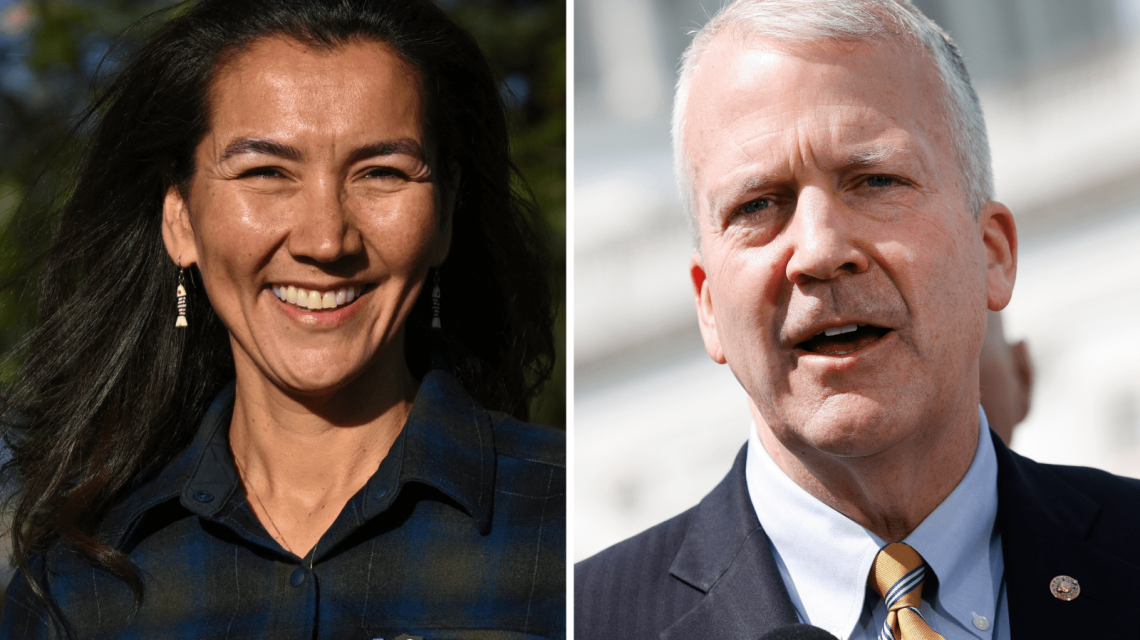
In the latest poll for the Alaska Senate race, Republican Senator Dan Sullivan appears narrowly behind Democrat Mary Peltola. The poll identifies this race as a key battlefront. The Democratic Party aims to regain control of both the House of Representatives and the Senate in the upcoming November midterm elections. However, the path to securing a majority in the Senate is challenging due to a difficult electoral map. Democrats must aim for victories in conservative states that heavily supported President Donald Trump, including Alaska.
Peltola, who served as the state’s at-large congressional district representative from 2022 to 2025, is a prominent candidate against Sullivan, who has been in office since 2015. Democrats believe the race could turn competitive, especially given Trump’s falling approval ratings nationally. Alaska’s election system uses ranked-choice voting, allowing voters to rank candidates by preference. If no candidate secures an outright majority in the first round, the process continues by eliminating the candidate with the lowest support until one exceeds 50%.
The latest poll from Alaska Survey Research shows Peltola leading within the margin of error, with 50.8% support compared to Sullivan’s 49.2% in the final round of ranked-choice voting. Conducted from August 2-5, 2026, it surveyed 1,371 likely voters and has a margin of error of ±3 percentage points. A March poll showed Peltola leading by over 4 points, and an April poll indicated her ahead with 50.2%, compared to Sullivan’s 43.6% and Republican James Ryan’s 6.2%.
Ivan Moore, the poll’s founder, noted on Bluesky, “Despite millions spent on influencing voter opinion in Alaska, opinions remain largely unchanged.”
A spokesperson for Peltola emphasized strong volunteer support in Alaska, stating, “Alaskans are ready to replace Dan Sullivan and elect Mary who prioritizes Alaska in the Senate.” Sullivan’s campaign had no immediate comment to Newsweek.
What Other Polls and Forecasts Indicate
A recent poll by The New York Times and Siena University presented Sullivan with a slight lead of 2 points in the initial round of ranked-choice voting, registering 47% support to Peltola’s 45%, with 5% undecided and 2% supporting other candidates. This poll surveyed 593 likely voters between June 15-29, 2026, with a ±5.4 percentage point margin of error.
Political forecasters regard the race as highly competitive. Both the Cook Political Report and Sabato’s Crystal Ball classify it as a toss-up with no clear party advantage. Analysts like Kyle Kondik and J. Miles Coleman from Sabato’s Crystal Ball refer to Peltola’s tight race in 2024, where she lost by less than 3 points against a backdrop of Trump winning Alaska by 13 points. They suggest it’s plausible for her to perform well given a favorable national climate for Democrats.
Alaska’s Political Landscape
Alaska traditionally leans Republican, but Democrats see potential this year with Peltola’s candidacy. Shifts in voter preferences make it a focus for Democratic efforts. Trump won Alaska by 13 points in the last election cycle, a decrease from previous margins. Republican dominance has been gradually declining, as seen in places like Anchorage moving from solid Republican support to a more competitive environment.
Despite its Republican background, Alaska maintains an independent streak. Its state Senate includes a coalition of Democrats and moderate Republicans. The state has elected Democrats in statewide offices previously, including Peltola. Even as the state voted Republican in 2008 federally, it elected Democrat Mark Begich for the Senate.
Key Timelines and Implications
A Democratic win in Alaska could shift the Senate majority in their favor come November. With Republicans holding 53-47, Democrats need to overturn four seats for control. Targets include North Carolina, Maine, and conservative states like Alaska. The upcoming general election decisions will shape the political future at the national level.
Important dates include January 3, 2027, for the Senate term commencement and the primary on August 18, 2026. Ranked-choice voting will be used for the general election on November 3, 2026, and vote certification will follow in November if needed.
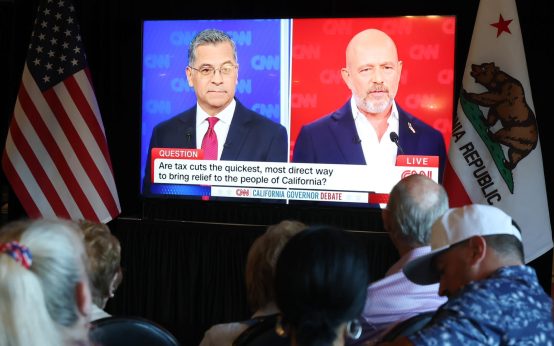 California Gubernatorial Debate: Becerra vs. Hilton
 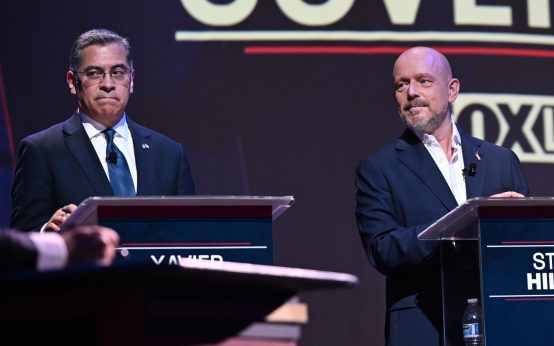 California Gubernatorial Debate: Becerra vs. Hilton
  California Gubernatorial Debate: Becerra vs. Hilton
 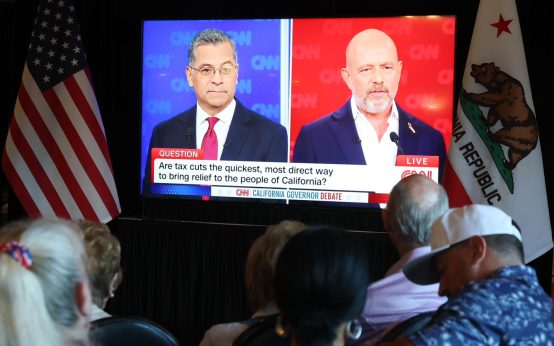 Key Moments and Insights from the Becerra-Hilton Gubernatorial Debate
 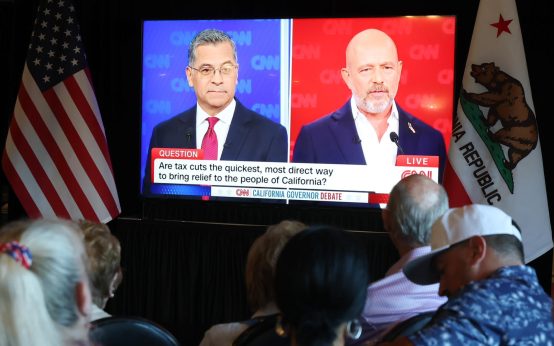 Becerra and Hilton Clash Over California’s Future in Heated Debate
  Keith Sonderling Confirmed as Labor Secretary