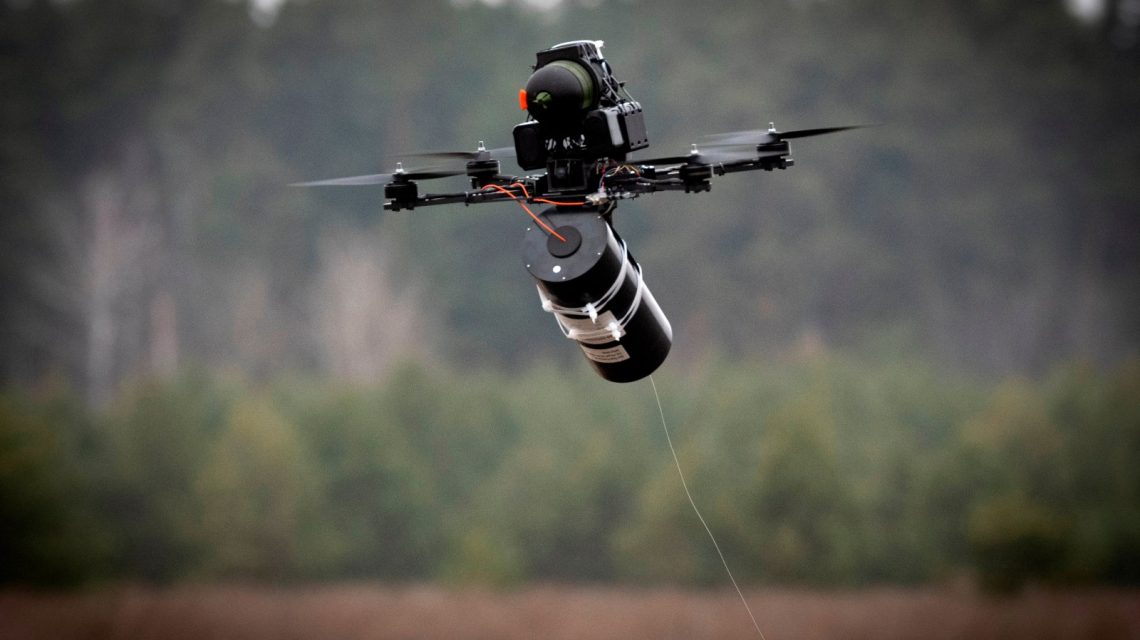
A drone carrying explosives detonated near a major international gas pipeline in Bulgaria after entering the country from Romania. This incident has led to increased border surveillance between these two NATO member countries. The explosion occurred shortly after 5 a.m., around 330 feet inside Bulgarian territory near the village of Kardam.
Prime Minister Rumen Radev reported that the blast took place in a sunflower field approximately 200 meters from a Romanian compressor station and 1 kilometer from Bulgaria’s compressor station on the Trans-Balkan gas pipeline. Fortunately, no casualties or damage to infrastructure occurred. Authorities cordoned off the area while investigating the incident.
Investigation into the Drone’s Origin
The origin of the drone and any potential connections to Russia or Ukraine were not immediately clear. According to the Bulgarian Defense Ministry’s preliminary analysis, the wreckage likely belonged to a Maya decoy drone, a model commonly utilized by Ukrainian armed forces. The ministry stated there is no indication that the incident was deliberate.
Neither Bulgaria nor Romania detected the drone before it detonated. Romania’s Defense Ministry noted that its radar systems did not register any aerial target crossing from Romanian airspace into Bulgaria.
Response and Security Measures
Prime Minister Radev announced plans to enhance surveillance by relocating anti-drone detection and countermeasure equipment from Bulgaria’s border with Turkey to its northern border with Romania. Bulgarian Defense Minister Dimitar Stoyanov intends to address the incident at an upcoming NATO North Atlantic Council meeting.
Minister Stoyanov commented that the size of the explosion and the amount of black smoke indicate that the drone carried a substantial amount of explosives. He noted the challenges of detecting such drones due to their relatively small size and low altitude flight paths.
Importance of the Trans-Balkan Pipeline
The Trans-Balkan pipeline is significant as it links Turkey and Ukraine through Bulgaria, Romania, and Moldova. This system can transport gas in both directions and serves as a potential supply route for Eastern European countries and Ukraine. The blast occurred near the Negru Vodă-Kardam interconnection point without damaging the pipeline or related infrastructure.
The pipeline’s importance has grown with regional energy diversification efforts and Ukraine’s need for access to gas from southern Europe. Greece, Bulgaria, Romania, Moldova, and Ukraine extend capacity along this route for deliveries heading north.
Russia’s Overnight Strikes on Ukraine
Russia conducted overnight attacks on Ukraine, launching six ballistic missiles and over 150 drones. These attacks resulted in the deaths of four individuals in Kyiv and its surroundings. Ukraine’s air defenses intercepted 135 drones; however, the ballistic missiles broke through their defenses.
Ukraine President Volodymyr Zelensky highlighted a three-year-old boy and his grandparents among those killed outside Kyiv. Zelensky emphasized the pressing issue of Patriot interceptor missile shortages and appealed for increased international support and harsher sanctions against Moscow.
Amid these developments, Ukraine executed long-range drone strikes on oil refineries in Russia’s Krasnodar and Samara regions. Kyiv has consistently targeted Russia’s energy sector, asserting that it sustains Moscow’s war operations.
 Xi Jinping’s Quest for Global Leadership and Succession Challenges
  Pope Leo XIV Draws Massive Crowd in Paris, Highlighting Enduring Catholic Influence
  Pacific Hurricanes Pose Flood Risk to Southern California
  Israel’s U.N. Ambassador’s Viral Video Reaches Iranian Audience
  Trump’s Remarks on Ukraine-Russia War Casualties and Peace Efforts
  Tony Blair Warns Europe to Maintain U.S. Alliance