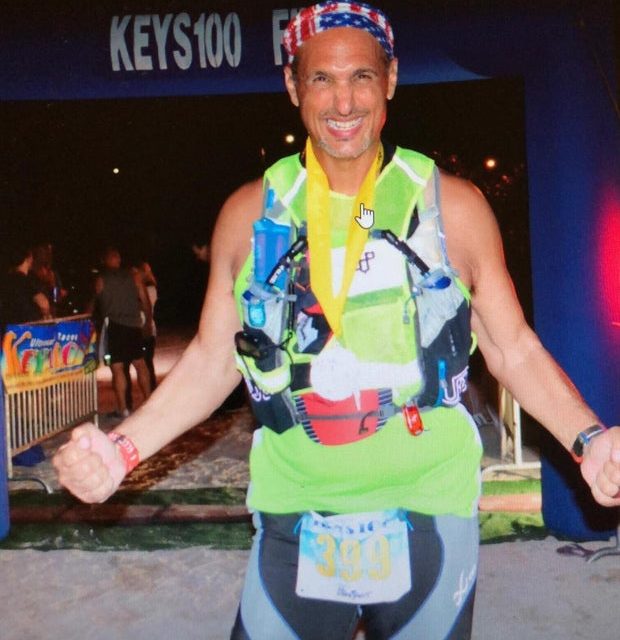
Todd Meiklejohn’s typical morning on August 8, 2025, began early. As a teacher in adult education, he was up at 6 a.m. for a meeting. His wife, who is a nurse, had left for the gym. While following his morning routine, he experienced sudden, severe pain. His vision blurred, and he lost control over the right side of his body. Although conscious, he was confused about his condition.
“I exited the bathroom and found myself paralyzed on the right,” Meiklejohn recalled. Despite efforts to stand, his strength was gone. The weakness was frightening for Meiklejohn, an accomplished athlete and cyclist. “I just kept falling,” he noted.
Quick Action and Medical Intervention
About 45 minutes after the fall, Meiklejohn’s wife returned home on her way to work and discovered him on the floor. She called 911 immediately. Medical professionals at the Miami Neuroscience Institute at Baptist Health diagnosed him with a massive stroke.
“Time is brain,” explained Dr. Guilherme Dabus, the interventional neuroradiologist who treated Meiklejohn.
A stroke occurs when blood flow to the brain is interrupted, depriving it of oxygen. Quick restoration of blood flow is critical to minimizing long-term damage. Dr. Dabus and his team opted for a mechanical thrombectomy, a procedure using a catheter to remove the clot. This step helps restore normal blood flow and can “almost resuscitate” the brain.
Meiklejohn underwent surgery within 38 minutes of the emergency call. Due to the rapid intervention, his brain sustained minimal permanent damage. He regained speech and movement on his right side shortly after surgery and left the hospital in less than 48 hours. Dr. Dabus described his recovery as “amazing.”
“I remember Dr. Dabus called me a miracle,” Meiklejohn said. “I’m fortunate to tell this story.”
Discovering the Underlying Cause
Once the immediate crisis passed, it was essential to understand why Meiklejohn, a fit man in his mid-50s, experienced such a severe stroke. Initial theories suggested a blood clot originating from his leg, but health history and tests ruled that out. Attention shifted to Meiklejohn’s heart.
Doctors discovered a heart defect known as patent foramen ovale (PFO) through scans. This condition, typically harmless, involves a small opening between the heart’s upper chambers. Dr. Eihab Ghantous from NYU Langone’s Adult Congenital Heart Disease Program noted that 20-30% of adults have PFOs without complications.
However, in rare cases, this gap can allow a clot to travel to the brain, Ghantous explained. Daily life often forms minor clots in the legs, usually filtered and dissolved in the lungs. But sometimes, a clot passes through a PFO, leading to a stroke.
Dr. Dabus confirmed this rare occurrence in Meiklejohn’s case. The clot was “almost ejected” from the heart to the brain.
Life After the Stroke
After detecting the PFO, Meiklejohn underwent minor surgery to close it. The procedure was a success, significantly reducing his risk of future strokes, Dr. Dabus assured. Since then, Meiklejohn has concentrated on recovery, regaining endurance and muscle tone. He returned to his job four weeks post-surgery and, within two months, completed a 100-mile bike ride.
Despite some leg scars, Meiklejohn closely monitors his blood pressure and heart rate, ensuring they remain normal. Reflecting on what could have been if his wife hadn’t arrived home in time, he expressed gratitude. “Thank God, she came back,” Meiklejohn remarked.
He aims to raise awareness about stroke treatment and the importance of a swift reaction. “A lot of people are affected, but until it happens to you, you have no idea,” Meiklejohn stressed.
 Lawsuit Filed Over Preeclampsia Death in Texas Amid Abortion Ban Controversy
  Illinois American Water Faces Opposition Over Proposed Rate Increase
  Porsha Williams Opens Up About Emergency Surgery and Health Challenges
  Discussing Weight-Loss Medication with Children: A Parent’s Approach
  Conjoined Twins Separated in Complex Surgery
  Genetic Mutation Linked to Elevated Lung Cancer Risk