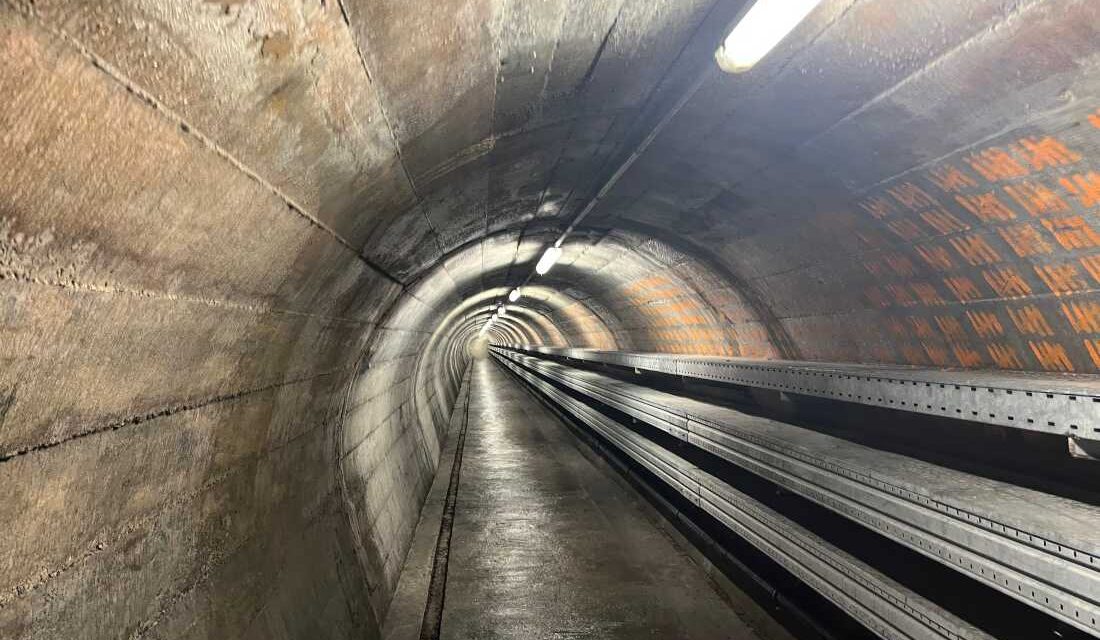
In Lucerne, Switzerland, a tunnel from the entrance of the Sonnenberg nuclear bunker leads to a complex deep underground. Known as the world’s largest underground nuclear bunker, it was constructed to shelter 20,000 people. The entrance, nestled in a children’s playground, features a thick blast-proof door and a narrow, illuminated tunnel.
A Cold War Legacy
Guide Zora Schelbert walks visitors down this tunnel to the bunker, built in the 1970s during the Cold War. The facility was designed to shelter a third of Lucerne’s population in the event of a nuclear conflict. If a war had erupted between the U.S. and the Soviet Union, officials believed neutral Switzerland would avoid direct strikes. However, the country would remain vulnerable to nuclear fallout from its neighbors. Diesel generators, equipped with two weeks’ worth of fuel, would power the bunker. Schelbert notes that the duration of stay now depends on external conditions, as seen in conflicts like Ukraine or Israel.
Continuing Preparedness
Switzerland chose to retain its bomb shelter network after the Cold War, providing every citizen with access to a shelter. Over 370,000 shelters exist across the country. In 2011, amid discussions to dismantle them, the Fukushima disaster in Japan reinforced the value of these shelters as a national reserve, says Daniel Jordi of Switzerland’s federal office of civil protection. Every residential building must have a bunker with blast doors and ventilation or contribute financially to a nearby state-maintained bunker. Citizens pay an initial fee for shelter maintenance and construction.
Bunkers in Peacetime
During peacetime, many bunkers serve alternative purposes, such as wine cellars, saunas, or storage. At the University of Bern, a bunker under the History Department stores items. Silvia Berger Ziauddin, an expert on Switzerland’s bunkers, explains the concept of these structures originating in World War I. Throughout the 20th century, Switzerland viewed itself as an island of calm amid chaos. This metaphor extended to the Cold War, emphasizing the importance of nuclear shelters.
Students learn about the bunkers through a civil defense curriculum, including activities like drawing shelters and spending a night in one. Berger Ziauddin observes that children perceive the shelters as places of security, depicting warmth and family in contrast to external chaos. She cautions that the reality of bunker life would differ greatly from children’s imaginations.
Challenges and Modern Use
The Sonnenberg bunker, equipped with a hospital and cells, faced challenges supporting 20,000 people. In 2002, the government reduced its capacity to 2,000. Its spaces, filled with bunk beds, have housed refugees and asylum seekers, a controversial use. The bunkers have never served their original purpose: nuclear fallout protection. The Swiss government continues to allocate funds for their maintenance, ensuring they’re ready if needed. Despite criticisms and protests from some housed in the shelters, the country’s commitment to preparedness remains steadfast.
 Controversy Surrounds Performances at Gillette Stadium
  Tucker Carlson’s Remarks on Britain and WWII Spark Backlash
  Police Divers Uncover Ancient Roman Artifacts in Sardinia Waters
  Conservative Activist Urges AI Safety Measures
  G7 Nations to Release 100 Million Barrels of Oil Amid Fuel Price Surge
  Attempted Hijacking on FlyDubai Flight to Tel Aviv