
The United States has underestimated the rate of munitions expenditure in conflicts with Iran. Over a ten-week war and subsequent confrontations, the Army depleted much of its stockpile of long-range ATACMS and Precision Strike Missiles. Additionally, there is a serious shortage of THAAD and Patriot air defense systems. The Navy’s supplies of Tomahawk land attack and Standard air defense missiles have also diminished. The Air Force faces a shortage of joint air-to-surface standoff missiles.
In response, the War Department is issuing long-term agreements to boost production of essential munitions like THAAD and Patriot. A notable contract involves Lockheed-Martin, focusing on high-rate production of Patriot missiles, potentially totaling $59 billion by 2032. This deal aims to triple production rates by the end of this decade. Lockheed-Martin plans to expand its workforce by 50% and upgrade or open 20 new plants.
An agreement with Raytheon’s parent company, RTX, focuses on increasing Tomahawks to over 1,000 annually from 60. Raytheon will also raise AMRAAM missile production from 1,200 to over 1,900 and expand Standard Missile SM-6 output from 300 to 500 annually. RTX will also enhance production of other missile types, though specific targets remain undisclosed.
Several factors contribute to these shortfalls. After the Cold War, policymakers believed that munitions needs would decrease. Consequently, munitions were often sacrificed to fund other defense programs. Previous conflicts, such as those in Iraq and with the Houthis, unexpectedly depleted stockpiles due to higher consumption rates than anticipated.
The Biden administration recognized that just-in-time production was insufficient and increased munitions production. Both the Trump administration and Congress further boosted resources. However, accelerating production is challenging, even with available funding. Subcontractors need investments for capacity expansion, and finding sufficient skilled workers is uncertain. Lockheed targets full Patriot production by 2030, but meeting interim goals will be difficult for many contractors.
America continues to face threats from nations like Russia, China, and Iran. Meanwhile, significant defense initiatives such as nuclear-powered submarine production, new battleship programs, and advanced defense systems stretch resources. There is a risk that post-conflict complacency may reprioritize munitions as a secondary concern.
Ensuring that future conflicts do not catch the U.S. unprepared is crucial. Both the administration and Congress need to maintain focus on munitions production so that the military remains equipped and ready.
Dov S. Zakheim is a senior adviser at the Center for Strategic and International Studies and vice chairman of the board for the Foreign Policy Research Institute. He served as undersecretary of Defense and comptroller from 2001 to 2004.
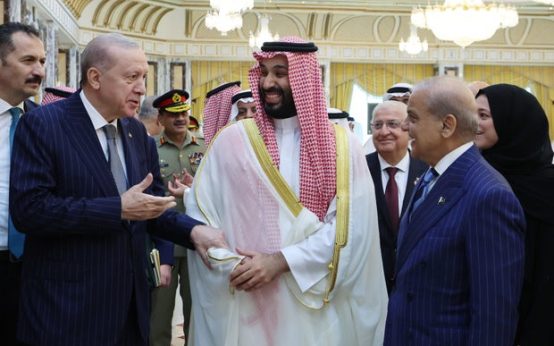 Saudi Arabia, Turkey, and Pakistan Sign Defense Agreement to Enhance Security Cooperation
  Controversy Surrounds Prince Harry’s Proposed Hybrid Role
  Trump Revives Feud with Rosie O’Donnell Using AI-Generated Image
  North Korea’s Heat Wave: Coping Strategies and Portrayal of Leadership
  Kochi’s Enduring Jewish Heritage
  Remains Discovered in Arizona Backyard Amid Missing Persons Investigation