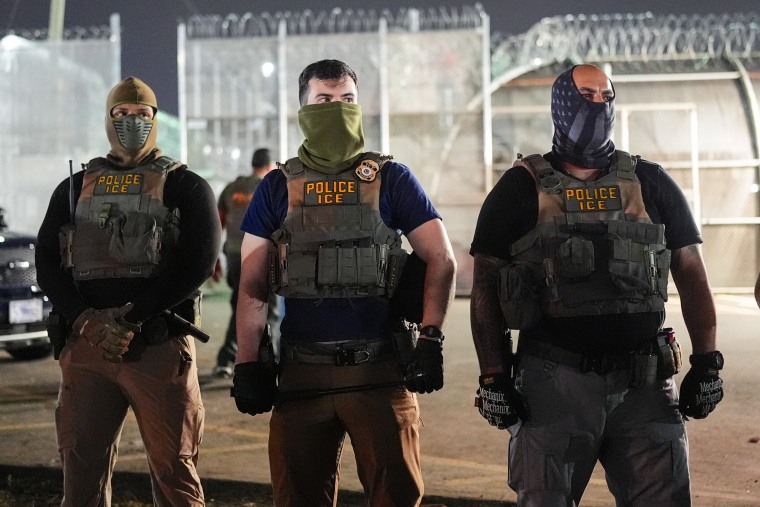
Immigration and Customs Enforcement (ICE) plans to equip its officers nationwide with body-worn cameras by the end of September, following years of delays. This move comes in the wake of increased pressure for accountability stemming from recent fatal shootings under former President Donald Trump’s immigration policies.
The agency’s body camera policy, however, raises concerns about transparency. The policy specifies that the release of footage will depend on whether it serves the agency’s “best interests.” This means that taxpayers, funding the cameras, might not have immediate access to footage of significant confrontations.
ICE will promptly release video of shootings and other encounters in which its agents cause death or serious injury only after determining “it is in the best interests of the agency” to do so.
The policy grants ICE’s director discretion to release footage that reflects positively on the agency while potentially withholding less favorable recordings. Christopher Schneider, a professor at Brandon University, notes that such selective releases are often not as clearly articulated in other law enforcement policies.
The policy mandates that cameras be activated during routine enforcement activities, including arrests, search warrants, and emergencies. After significant events like shootings, a committee reviews the footage and recommends whether to release it, subject to the director’s final decision.
While practices across the U.S. vary, in Chicago, for instance, body camera video of shootings is typically released within 60 days. In contrast, Philadelphia seldom releases such footage. Moreover, even when ICE releases videos, the policy requires officer features to be obscured to protect their privacy.
Despite numerous requests, ICE did not clarify what constitutes “specific and compelling circumstances” that would justify withholding footage. The selective release aligns with the broader trend in law enforcement to manage public perception.
ICE has invested significantly in this initiative, spending $30.9 million in July to purchase body camera equipment from Axon. This procurement began shortly after fatal shootings by ICE officers in Maine and Houston, none of which were captured on body cameras.
Body cameras are being deployed incrementally, with officers in Houston already training. Representative Henry Cuellar highlighted that at least one team member in every arrest scenario will need a camera.
Despite delays, ICE aims for wider camera deployment. This development follows years of slow implementation, notably under different administrations. Former ICE Chief of Staff Jason Houser criticized the delayed deployment, arguing it stems more from political pressure than a commitment to safety.
The agency’s slow adoption of body cameras raises questions about officer training and operational readiness. Houser contends that these issues are not merely technical but also reflect broader political and operational challenges.