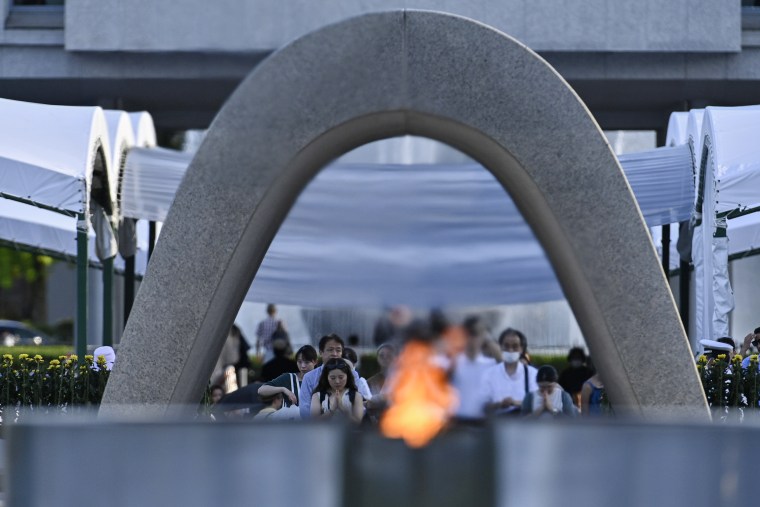
On Thursday, Hiroshima observed the 81st anniversary of the atomic bombing by the United States during World War II. During the commemoration, city mayor Kazumi Matsui criticized global powers for engaging in warfare and urged the cessation of justifying nuclear arsenals as deterrence tools.
“Downplaying the inhumanity of nuclear weapons and accepting the use of force to pursue one’s own prosperity risks cycles of violent retaliation that could ultimately result in another Hiroshima or Nagasaki,” Mayor Matsui declared.
Matsui emphasized that many political leaders still rely on nuclear deterrence as a realistic strategy, thereby legitimizing violence. This attitude further obscures the vision of a nuclear weapons-free world. In his peace declaration at the Hiroshima Peace Memorial Park ceremony, he implored citizens to learn from historical lessons and actively pursue peaceful actions.
Approximately 50,000 attendees, including representatives from about 120 nations and regions such as the United States and Iran, participated in the ceremony. A moment of silence was observed at 8:15 a.m., the exact time the atomic bomb was dropped by a U.S. B-29 aircraft.
Prime Minister Sanae Takaichi attended the memorial for the first time in her capacity as prime minister. She expressed her intent to adopt a “realistic approach” towards achieving a world in which nuclear weapons remain unused. The approach aligns with the United Nations framework aimed at preventing the spread of nuclear arms.
This year’s ceremony comes amid speculation that Takaichi’s government, known for its support of nuclear deterrence, may reconsider Japan’s postwar three non-nuclear principles in upcoming security and defense documents.
Takaichi has advocated for a review of these principles, particularly regarding the allowance of nuclear weapons into Japan’s territory. Although she affirmed Japan’s commitment to its non-nuclear policy, she didn’t guarantee its permanence.
Nuclear attack survivors have conveyed frustration over increasing international support for nuclear deterrence, including from Japan. Japan remains under the protective umbrella of U.S. nuclear power and frequently seeks assurance from Washington, rejecting the survivors’ plea to sign the Treaty on the Prohibition of Nuclear Weapons or to participate as observers.
The symbolic Flame of Peace was visible through the cenotaph arch for Hiroshima’s atomic bomb victims during the commemoration.
On August 6, 1945, the U.S. bombing of Hiroshima resulted in 140,000 casualties. A subsequent attack on Nagasaki claimed 70,000 lives. Japan surrendered on August 15, marking the end of both World War II and its long-standing aggression in Asia.
Currently, the number of survivors stands at 91,105, a quarter of its original count, with an average age surpassing 86. As the youngest survivors were too young during the attack, there is growing concern over fading memories.
United Nations Secretary-General António Guterres highlighted that Hiroshima teaches the horror of nuclear weaponry and the necessity of building a future where such threats become inconceivable.
“Hiroshima stands as an inspiring example of resilience, renewal, and hope. Across generations, its people remind us that, even after the darkest moments, we can choose — and build — a different future,” Guterres stated.
He called for prioritizing dialogue over division, collaboration over confrontation, and shared security over narrow self-interest.
 The Cost of Challenging Beijing
 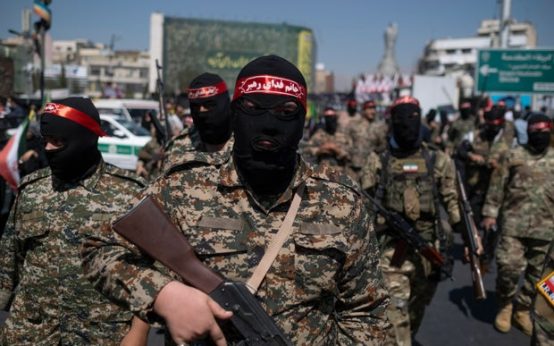 Tensions Escalate in Iran Conflict as Global Leaders Weigh Options
 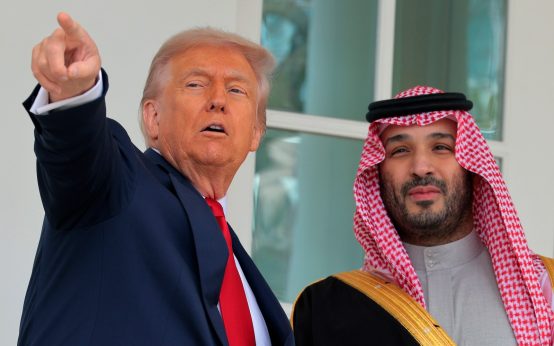 White House Approves F-35 Sales to Saudi Arabia Amidst Regional Tensions
  Inside the Secret Deals Powering the President’s Push to Deport Migrants to Countries Not Their Own
  Navigating the Challenges of Third-Country Deportations
  Midair Altercation on Bangladesh to London Flight