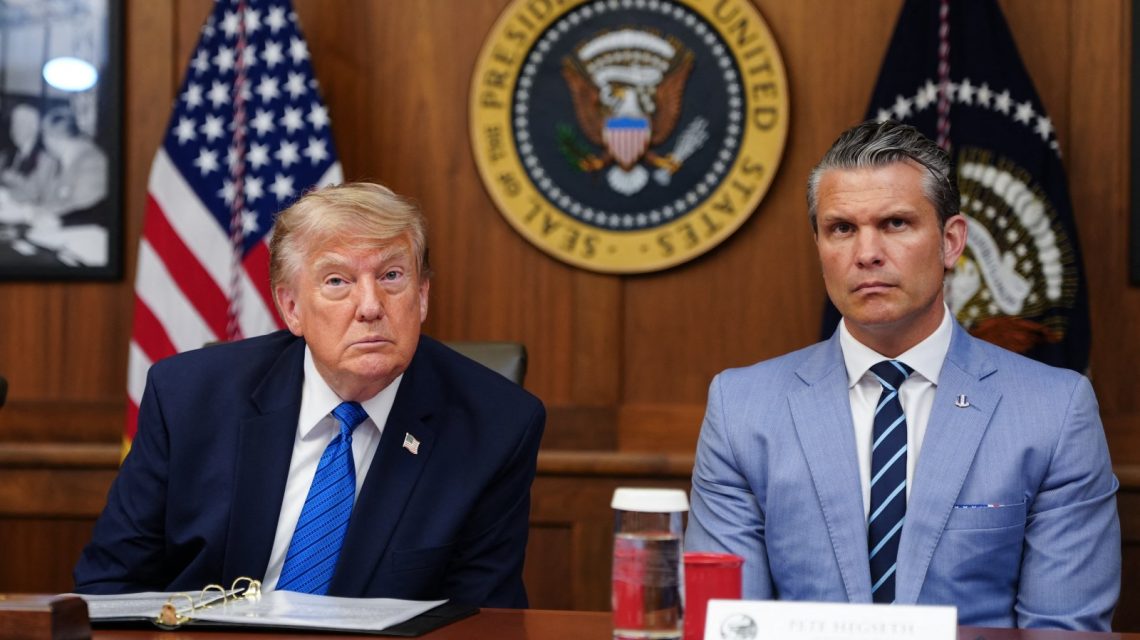
Defense Secretary Pete Hegseth is currently facing increasing criticism from Republicans on Capitol Hill. His public standing is weakening, fueled by a new Marquette Law School poll indicating his declining favorability amid growing scrutiny over his handling of the Iran war.
Senators Voice Discontent
Republican Senators have expressed their dissatisfaction. North Carolina Senator Thom Tillis stated Hegseth has “lost my confidence,” pointing to the forced retirement of senior military leaders and what he termed micromanagement at the Pentagon. Maine Senator Susan Collins, who leads the Appropriations Committee, described the departure of senior military officials as “deeply troubling.” West Virginia Senator Shelley Moore Capito and Iowa Senator Joni Ernst have noted that public patience with the unresolved conflict is diminishing.
Decline in Polls
Hegseth’s standing in public polling has slipped significantly. According to a Marquette Law School poll conducted from July 22-29, he tied with Trump for the lowest net favorability among administration figures, reaching minus 22 points. Hegseth received a 23 percent favorable rating and a 45 percent unfavorable rating. Moreover, 32 percent of respondents were not familiar enough with him to form an opinion, despite his months leading the Pentagon through the Iran war.
In contrast, an earlier poll conducted from May 20-26 showed better results among Republicans, with Hegseth having a net favorability of plus 36 points. At that time, 55 percent viewed him favorably, while 19 percent had an unfavorable view. However, he still ranked last among four Republican figures tested. Marquette has not released a new Republican-only breakdown since then.
Hegseth’s declining popularity aligns with a broader decrease in enthusiasm among Republican voters. In the July poll, 30 percent of Republicans claimed they were very enthusiastic about voting in November, a drop from 36 percent in May. Additionally, Republicans lagged behind Democrats in certainty of voting, with 65 percent compared to 70 percent.
Munitions Shortages and Internal Tensions
The shift in polling followed a report from The Washington Post detailing Trump’s frustration over the war. At Camp David, he reportedly demanded Hegseth explain why severe munitions shortages limiting U.S. military options against Iran had not been communicated. Two sources told the Post that Trump confronted Hegseth during a Cabinet meeting, believing the munitions issue had been resolved.
The Post indicated Hegseth blamed Deputy Defense Secretary Stephen Feinberg for the shortages and for not keeping Trump informed. Shortages in long-range guided missiles and air-defense interceptors were cited as reasons for holding off on large-scale strikes on Iran, according to sources.
The White House disputed this account. Press secretary Karoline Leavitt, present at Camp David, called the report “100% fake news” and stated, “it literally never happened.” She affirmed Trump’s “utmost confidence” in Hegseth. Pentagon spokesman Sean Parnell asserted Hegseth “did not mislead anyone about our munitions posture” and did not blame Feinberg.
Trump also responded on Truth Social, assuring that the U.S. has “massive amounts” of munitions and more are being produced and shipped as necessary. He added that those he accused of leaking the report are being “hunted down.” Newsweek reached out to both the White House and the Pentagon for further comment.
Ongoing Republican Criticism
The current tensions mark a shift for Hegseth, whose position had appeared stable after the successful operation against former Venezuelan leader Nicolas Maduro. Despite previous controversies such as the Signal chat breach known as Signalgate, Hegseth retained Trump’s public backing. Pentagon spokesman Parnell remarked that Hegseth “isn’t going anywhere” and will continue collaborating with Feinberg.
Dissatisfaction among Republicans has been growing for weeks. Months before his recent comments, Tillis expressed concerns regarding Hegseth’s management style and treatment of senior military leaders. In May, he issued a warning after reports suggested General Chris Donahue, commander of U.S. Army Europe and Africa, might be sidelined as part of Pentagon restructuring. Tillis accused Hegseth of making impulsive decisions and urged him to rely on experienced military professionals instead of “yes-men.”
The military has used significant portions of its munitions inventory since the war began on February 28. The Post reported that the U.S. fired over 850 Tomahawk cruise missiles, more than 1,000 Patriot and Terminal High Altitude Area Defense interceptors, and over 1,300 Army tactical ballistic missiles in the conflict’s first month alone, leading to a near-depletion of these stockpiles. Hegseth, Feinberg, and Joint Chiefs Chairman General Dan Caine have requested $67 billion from Congress to replenish stockpiles, a request yet to be addressed by Senate Republicans.
 A Mother’s Tragic Journey Under Abortion Ban
  U.S. Strategic Goals Remain Unmet Amid Prolonged Conflict
  The Impact of Arts and Closure on Democracy
 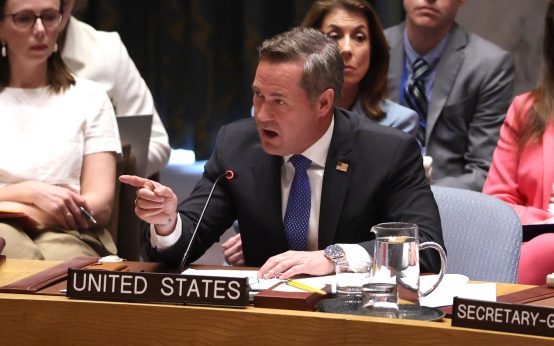 U.S. Ambassador Comments on Iran War Duration Amid Political Concerns
 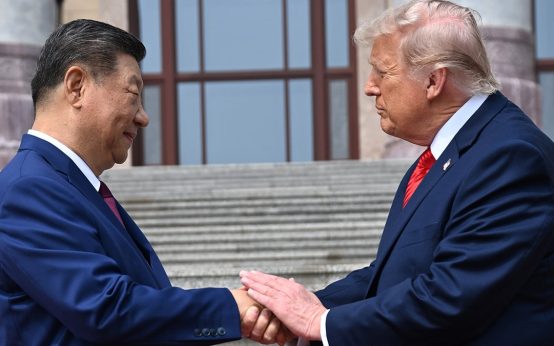 US-China Relations Under Scrutiny: Expert Warns of Escalating Tensions
  No Timeline for End of Iran Conflict