
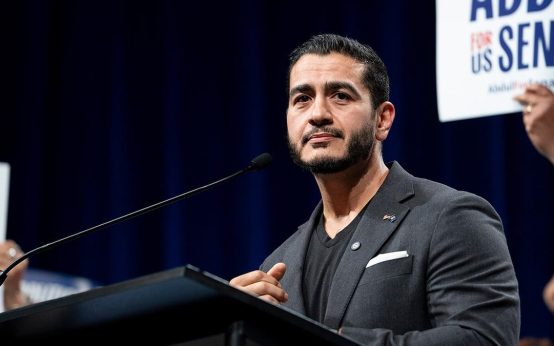
The recent political landscape highlights two Democratic candidates in the spotlight for their personal wealth and campaign narratives. Abdul El-Sayed, a far-left Michigan Senate candidate, faces criticism labeled as ‘champagne socialism.’ Reports indicate his expected 2025 household income stands at $686,069, surpassing the state’s median income significantly. El-Sayed’s association with streamer Hasan Piker, who has drawn controversy for comments on 9/11, further fuels the debate.
In California, Democratic House nominee Eric Jones, running in the 4th Congressional District, emphasizes affordability in his campaign. However, his financial status contrasts with his populist stance. Campaign finance disclosures reveal Jones holds assets between $18 and $86 million. Among these holdings is a Napa home valued at $4.6 million, complete with a pool, fine furnishings, and artwork estimated at $393,000 to $578,000.
Jones campaigns on issues of affordability, stating in an April video, ‘The cost of living continues to rise.’ Promising not to accept funds from corporate PACs or lobbyists, he pledges to focus on ending corruption and lowering living costs. His campaign highlights his upbringing in a military family struggling with financial stability, relying on Medicaid and food stamps to combat financial challenges.
His platform includes priorities on ending corruption, reducing living costs, and ensuring sustainable governmental resources. Progressive groups like Indivisible and Our Revolution, linked to Senator Bernie Sanders, back his campaign. Despite Sanders’ critiques of millionaire influence, Our Revolution endorses Jones, framing him as a leader for working people.
Jones accrued his wealth through a successful career in investing. After graduating from Yale, he joined Dragoneer Investment Group in 2013 and became its first non-founding partner by 27. Under his influence, Dragoneer grew from $180 million to managing $24 billion in assets. His financial disclosure mentions an $8 million salary from the group.
His home and lifestyle have been featured in high-profile publications, showcasing luxurious elements like a $60,000 ceramic sculpture and costly designer furniture. However, Jones argues for reducing corporate influence, criticizing a system favoring large corporations that evade taxes while record profits rise. He targets affordability challenges, stating, ‘Rent, groceries, utilities, health care, childcare — everything costs more while giant corporations post record profits and pay little or nothing in taxes.’
Confronted with his wealth’s potential clash with his campaign message, Jones emphasizes his roots in a rural, struggling family and his construction of businesses and jobs. He aims to represent those unable to escape medical debt and other financial burdens. Jones will challenge incumbent Rep. Mike Thompson, D-Calif., in the general election scheduled for November 3.
This examination of El-Sayed and Jones scrutinizes the balance between personal wealth and political messaging, as affluent candidates engaging with populist narratives often face public scrutiny.
 Lukashenko and Putin Share Light Moments While Strengthening Ties
  Kamala Harris on Possible 2028 Run Highlights Midterm Importance
  Lawmakers Urge End to U.S. Military’s Drug Boat Strike Campaign
  Investigation into Far-Left Groups Organizing Protests
  How China Uses AI to Challenge U.S. Dominance
  Michigan Senate Candidate Abdul El-Sayed Faces Criticism Over Comments