
Madrid is witnessing a significant influx of migrants entering Spain’s small territory of Ceuta in North Africa from Morocco, resulting in nine fatalities during the crossing. This development has led Spain to deploy military forces to reinforce border security. Videos from the scene depict crowds, primarily Moroccans, navigating the urban beach toward local roads. While young men dominate the images, families with women and children are also present.
Ceuta: An Autonomous Spanish City in Africa
Ceuta, along with Melilla located 400 kilometers east, are two Spanish territories situated on Africa’s northern Mediterranean coast. These cities are Spain’s only land borders with Africa and have been under Spanish control since 1580. Ceuta hosts a mixed populace comprising Christians and Muslims, alongside Spanish and Moroccan residents. Morocco does not recognize Ceuta and Melilla as Spanish territory, labeling them as occupied lands.
Migratory and Diplomatic Tensions
The city, home to 85,000 residents, has historically been at the center of diplomatic tensions between Spain and Morocco. A notable incident occurred in May 2021, when Morocco loosened border controls, leading to an influx of 8,000 migrants into Ceuta within two days. This action was seen as retaliation against Spain’s medical assistance to a pro-independence Western Sahara leader. The resulting tensions eased after Spain recalibrated its stance on Western Sahara and engaged in diplomatic discussions with Moroccan King Mohammed VI.
Migration Routes to Europe
With Spain serving as a gateway to Europe, Ceuta and Melilla are intensely fortified to deter migrants from Morocco and other African nations. Migrants reaching Ceuta or Melilla may face immediate return, while some are processed in shelters and allowed to apply for asylum in Spain. A common route involves swimming from Fnideq, Morocco, covering approximately 5 kilometers to reach Ceuta. Others opt for the closer town of Belyounech.
Despite lower arrivals from Ceuta and Melilla compared to Spain’s Canary and Balearic Islands, Spain’s immigrant populace has surged. Out of Spain’s 50 million residents, 10 million originate from abroad, notably from Colombia, Venezuela, and Morocco, contributing significantly to sectors like agriculture, tourism, and services.
 Inside the Secret Deals Powering the President’s Push to Deport Migrants to Countries Not Their Own
  Navigating the Challenges of Third-Country Deportations
  Midair Altercation on Bangladesh to London Flight
 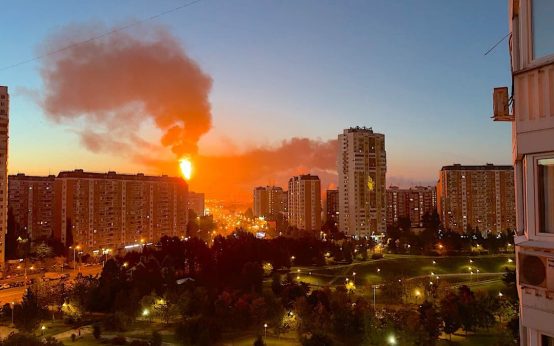 Ukraine Missile and Drone Barrage Hits Russia Amidst Elections
  U.S. Strategic Goals Remain Unmet Amid Prolonged Conflict
  New Photos Reveal Damage from Iranian Strikes in the Middle East