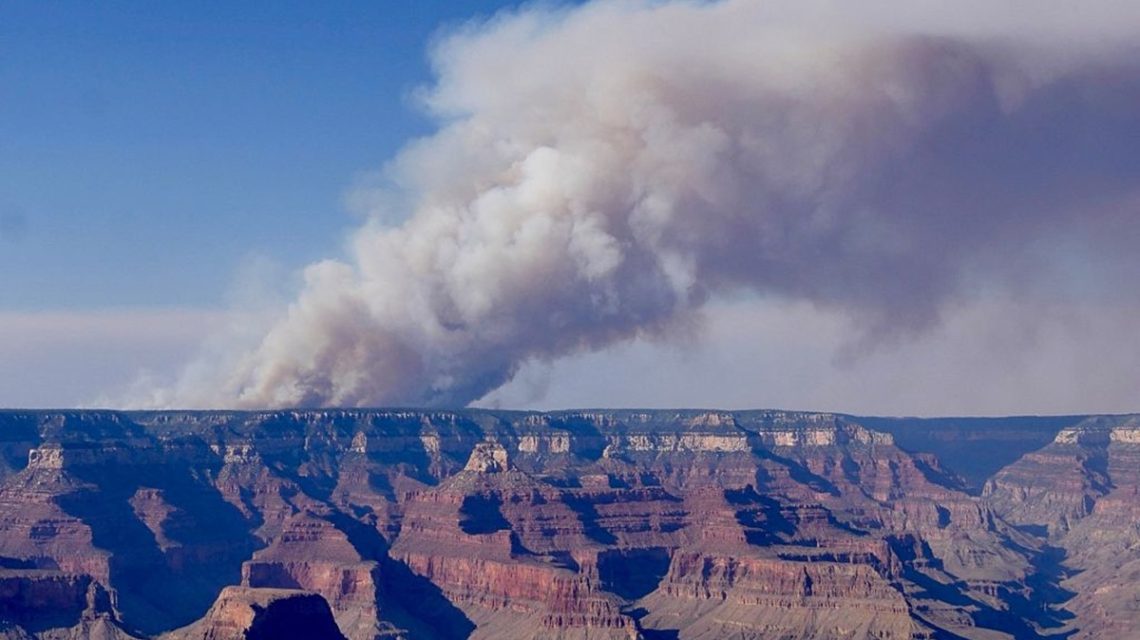
Research indicates that over half of U.S. historic sites listed on the National Register of Historic Places face measurable wildfire exposure. A study from the University of California, Santa Barbara’s National Center for Ecological Analysis and Synthesis (NCEAS) evaluated the wildfire risk for these sites using high-resolution burn probability models. Of the 100,117 analyzed sites, 3,446 are at severe risk.
The university highlights the issue as an “urgent and largely unplanned-for threat to irreplaceable cultural heritage.” Nationally significant sites comprise more than a third of the threatened locations, while most are important at state or local levels.
Recent wildfires have already affected significant cultural spots. In January 2025, the Palisades Fire in Los Angeles devastated the Will Rogers Ranch House. The Eaton Fire destroyed the Andrew McNally House. A few months later, the Dragon Bravo wildfire ravaged Grand Canyon National Park, leading to the loss of the 1927-built Grand Canyon Lodge.
In each of these examples, the buildings were completely lost, and it is uncertain whether any reconstruction efforts will meaningfully restore the cultural and historic value they represented.
Caitlin Fong, a researcher at NCEAS, explained the importance of these sites, noting they anchor community identity and national heritage. Unlike homes, historic places cannot be simply rebuilt, leading to permanent losses once they are destroyed.
Kevin Feak, a certified fire protection specialist, underscores the study’s importance. He points out that wildfire threats are expanding into areas where they were previously not considered a major hazard. Historic structures face higher risks due to features like combustible roofs and aging materials that make them vulnerable to wind-driven embers.
The research identifies high-risk cultural heritage resources concentrated in the western U.S., with emerging hotspots in southeastern and south-central states. This pattern matches historical wildfire-related structural loss, especially in California, Oregon, and Colorado.
Historic buildings and districts account for 90% of the listed resources. Their significance often ties closely with their original structures. Mitigation strategies, such as vegetation management and structural hardening, need implementation on-site to combat the threat.
Wildfire’s potential to obliterate historic properties is alarming. The researchers stress the pressing nature of the problem, noting that climate change might further intensify these risks. Climate change, with increased temperatures, droughts, and fire weather, could broaden hazard zones nationally.
A study in Environmental Research: Climate draws attention to intensifying fire weather severity in various ecosystems globally. Another study in Nature Communications warns of growing wildfire occurrences and intensity. These studies highlight the evolving fire risks and their potential to impact the nation’s cultural heritage significantly.
 Ice Age Mastodon Tooth Unearthed in California Creek
  EPA Dismantles Greenhouse Gas Rules, Causing Concern
  The Unique Challenges of the Pumpkin Toadlet
  How Battery Innovations Transform Renewable Energy
  Data Centers Stir Controversy in Texas Amid Growth Boom
  Urgent Archaeological Efforts in Quinhagak Stay Ahead of Erosion