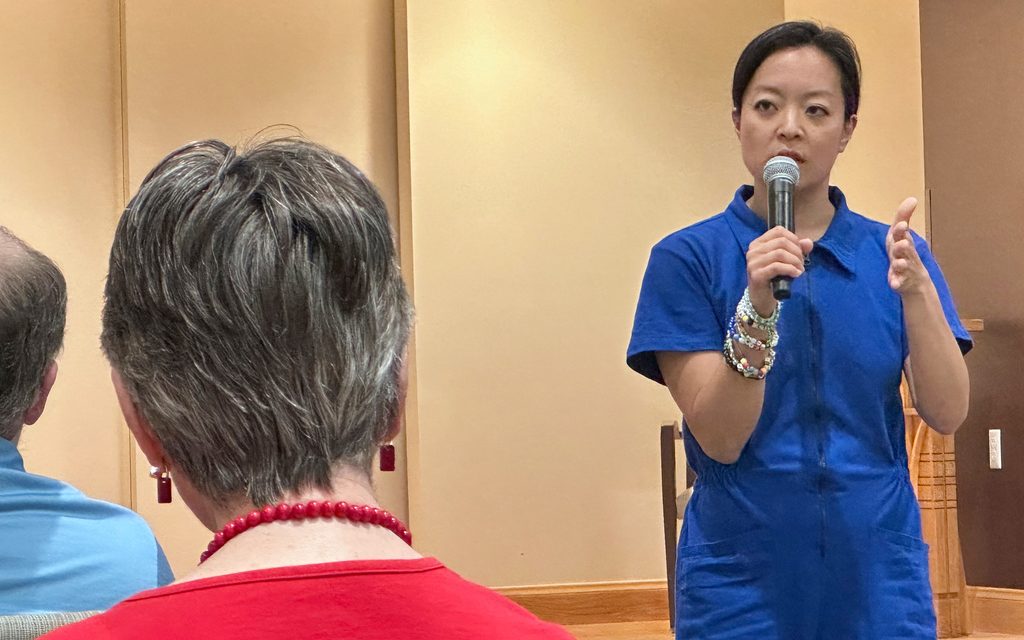
Francesca Hong, a Democratic socialist running for Wisconsin governor, recently engaged with voters in Madison. This event highlights the Democratic Socialists of America’s hopes for significant electoral gains. Their aim is to secure enough victories to implement their bold agenda.
A central issue arises from the Democratic Socialists’ platform, which conflicts with key elements of the U.S. Constitution. As a result, candidates aligned with this philosophy might struggle to genuinely fulfill the oath of office requirements. Despite these contradictions, successful candidates might still take the oath, potentially with reservations.
Article VI of the Constitution mandates that all governmental officials take an oath to support it. However, the Constitution’s wording is minimal, stating only that officials must be bound by an oath or affirmation. The original 1789 oath was brief: “I do solemnly swear (or affirm) that I will support the Constitution of the United States.”
Since then, alterations came, notably during the Civil War, but the enduring version from 1966 remains. It declares, “I do solemnly swear (or affirm) that I will support and defend the Constitution of the United States against all enemies, foreign and domestic; that I will bear true faith and allegiance to the same; that I take this obligation freely, without any mental reservation or purpose of evasion; and that I will well and faithfully discharge the duties of the office on which I am about to enter. So help me God.” The essence remains to “support and defend the Constitution.” This principle poses a significant challenge for newly elected members who identify with the Democratic Socialists of America.
Their platform suggests a radical overhaul of the current system. They seek to abolish the Electoral College, and replace both the President and Supreme Court with entities appointed by Congress. This approach threatens the cornerstone system of checks and balances designed by separate branches of government.
The legislative branch is defined by Article I, the executive by Article II, and the judiciary by Article III of the Constitution. These articles establish a system that provides balance and oversight across governmental branches. The Democratic Socialists’ vision aims to alter this by removing the Senate and expanding the House representation, among other changes. This would dismantle Article I entirely.
Article V of the Constitution prohibits changes that deny states equal Senate representation without consent. Therefore, any attempt to radically change the Constitution without amendments would disregard this provision.
Merrill Matthews, chair of Our Republican Legacy in Texas, argues that any candidate supporting such changes couldn’t genuinely defend the Constitution as they are legally bound to do. Although congressional leadership has limited options to prevent a state-certified member-elect from taking the oath, Congress does hold the power to exclude newly elected members via a majority vote. However, this action is improbable.
Public scrutiny remains a tool for accountability. Congress, the media, and voters have the potential to question how undermining key Constitutional elements equates to defending them.
 A Mother’s Tragic Journey Under Abortion Ban
  U.S. Strategic Goals Remain Unmet Amid Prolonged Conflict
  The Impact of Arts and Closure on Democracy
  U.S. Ambassador Comments on Iran War Duration Amid Political Concerns
  US-China Relations Under Scrutiny: Expert Warns of Escalating Tensions
  No Timeline for End of Iran Conflict