
Imagine managing America’s largest Bible museum and preparing an exhibition for the nation’s 250th anniversary. The task involves selecting artifacts from among 5,000 Bibles and other items to demonstrate the Bible’s influence on America’s founding. Decisions include whether to highlight how different Christian groups leveraged the Bible during the American Revolution, supported or opposed religious rights, or discussed government-led prayer.
The Museum of the Bible, located in Washington, D.C., was founded nine years ago. Its current centerpiece exhibition, “Sacred Liberty,” aligns with the museum’s mission to ignite curiosity in Christian scripture and highlight its significance. According to Senior Curator Anthony Schmidt, the Bible was essential as the founders deliberated over the government’s role and the source of kings’ rights.
Schmidt explains that documents Americans study on July Fourth, like the Constitution and the Declaration of Independence, do not explicitly discuss faith. Ignoring the Bible’s influence, he argues, overlooks a crucial historical context. The exhibit, launched on July 3, showcases the museum’s extensive collection in a bid to narrate a complex history in line with the mission of its evangelical founders, requiring board members to affirm their faith in the Bible’s truth.
Catherine Brekus from Harvard observes that while the exhibition focuses on evangelical interpretations, it misses other narratives. She acknowledges that the Bible shaped revolutionary discourse, yet emphasizes that it’s not the whole story. Mark David Hall of Regent University believes the exhibition corrects the modern trend of downplaying the Bible’s influence, deeming it the most pivotal text during America’s founding period.
The exhibition includes several notable items intended to illustrate the Bible’s role in America’s founding:
- The Aitken Bible: Recognized as the first English Bible printed in North America, it was known as the “Bible of the Revolution.” Although Congress supported Aitken, it didn’t fund the printing or import more Bibles as requested by Protestant clergy.
- Thomas Jefferson’s Letter: Jefferson’s 1809 letter to a Connecticut church praises the Constitution for safeguarding “the rights of conscience.” Known for his advocacy of church-state separation, Jefferson’s ideas coincide with recent Supreme Court decisions that have expanded religious involvement in government.
- Judah Monis’s Textbook: The first Hebrew textbook printed in America, its inclusion highlights early Jewish life. Although Jewish communities participated in early American society, they faced discrimination, such as restrictions from public office or worship.
- Jacob Duché’s Sermon: Duché, the first Continental Congress’s chaplain, delivered a notable sermon seeking divine protection. Despite initially supporting the Revolution, he later withdrew his support, raising questions about the intersection of faith and politics.
These artifacts showcase diverse religious influences during America’s formation, providing a nuanced understanding of its historical landscape.
 Exploring the Lucas Museum of Narrative Art
  Converse Apologizes and Withdraws Controversial Ad Amid Criticism
  Lucas Museum of Narrative Art Unveils in Los Angeles
 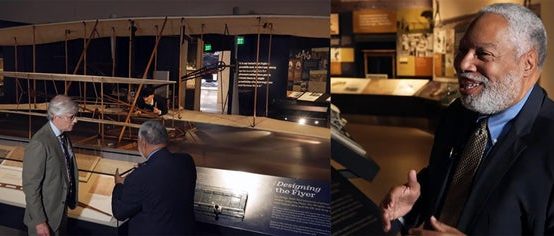 Lonnie G. Bunch III Reflects on His Legacy at the Smithsonian
  A Decade of Impact at the National Museum of African American History and Culture
  Urgent Archaeological Efforts in Quinhagak Stay Ahead of Erosion