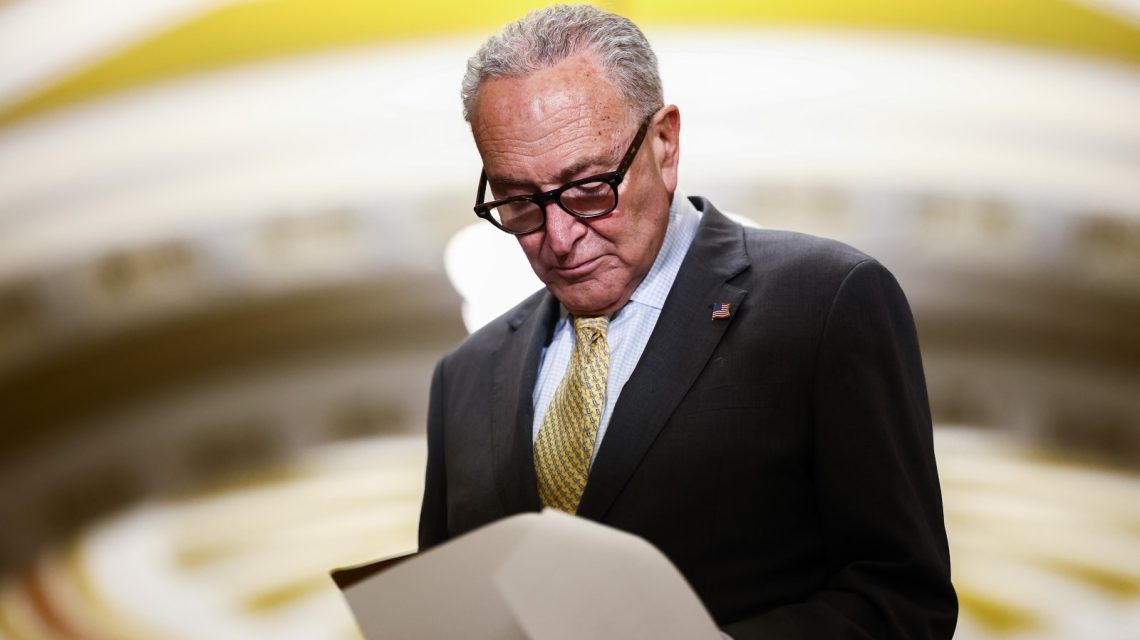
Senate Democrats recently held a two-hour closed-door session to strategize their response to potential interference in the upcoming midterm elections by the Trump administration. Senate Minority Leader Chuck Schumer, representing New York, organized this meeting with nearly a dozen senators as part of a series of exercises designed to address scenarios that might disrupt the electoral process. These scenarios include the use of AI-generated videos aimed at spreading misinformation on and after Election Day and the potential presence of National Guard troops or immigration agents near polling locations.
Schumer emphasized the necessity of preparation, stating, “What these so-called tabletop exercises teach us is that when you’re prepared in advance, you can prevent a lot of bad things from happening, including instances of electoral interference.” His comments followed President Trump’s recent address concerning election integrity, prompting the latest exercise.
We need to take the threats to the 2026 midterms seriously, said Marc Elias, a Democratic election lawyer who was part of the closed-door session. He noted the significance of responding to Trump’s past actions, including his refusal to accept the 2020 election results and the subsequent Capitol insurrection.
One scenario examined in the session involved the response of local authorities if federal immigration agents were deployed near polling places in Texas. Schumer highlighted the need for collaboration with local police departments to preemptively address such issues.
In a joint statement, the Democratic Governors Association, including all 24 sitting Democratic governors, expressed alarm over President Trump’s ongoing efforts to undermine free elections, asserting that Democratic governors are prepared to fight any unlawful attacks on voting rights.
Election Integrity and Threats
The U.S. Constitution assigns states the authority to determine the time, place, and manner of federal elections. Legal experts like Rick Hasen of UCLA agree that the president lacks the authority to cancel or postpone federal elections. Yet, concerns persist regarding possible pressures on state officials to modify election outcomes.
Specifically, a 2021 phone call from Trump to Georgia Secretary of State Brad Raffensperger highlighted such issues, as Trump requested additional votes to overturn his loss in Georgia. Concerns also exist about deploying National Guard troops or immigration agents near polling locations, a possibility not ruled out by some Trump administration officials.
Ari Mittleman, from the nonpartisan group Keep Our Republic, stressed that altering a certified election outcome would require overcoming multiple safeguards, including local election officials, paper records, and audits. Nevertheless, he noted that even small disruptions could lead to extensive litigation and delays.
Risks of Voter Suppression
Former U.S. Attorney and University of Michigan law professor Barbara McQuade identified voter suppression as a significant risk, particularly targeting groups likely to vote Democratic. She noted that actual vote changes are challenging due to the decentralized administration of elections.
McQuade also expressed concerns about rhetoric eroding public trust and leading to political disengagement, making voters susceptible to minority rule. Uncertainties remain, particularly if the SAVE Act, designed to impose proof-of-citizenship and voter ID requirements, is not enacted.
Voter Confidence Data
A Yahoo News and YouGov survey revealed only 23% of Americans feel confident that the midterms will not be “rigged.” Meanwhile, confidence in state and local governments administering fair elections has decreased, especially among Democrats and independents, as shown by an NPR, PBS News, and Marist poll.
Public sentiment also disfavors increased federal control over election administration, with a YouGov and CBS News poll indicating 71% of respondents prefer that states have the final say.
Analysis by States United Action has identified numerous candidates who questioned the 2020 election legitimacy, indicating the enduring influence of the election denial movement. Joanna Lydgate of the group highlighted efforts by Trump and allies to undermine the forthcoming elections, emphasizing the importance of safeguarding state offices that play a critical role in maintaining electoral integrity.
 A Mother’s Tragic Journey Under Abortion Ban
  U.S. Strategic Goals Remain Unmet Amid Prolonged Conflict
  The Impact of Arts and Closure on Democracy
 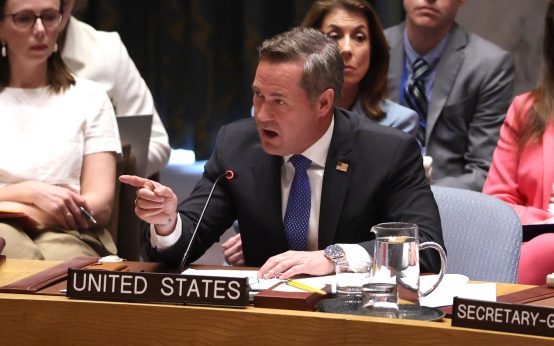 U.S. Ambassador Comments on Iran War Duration Amid Political Concerns
 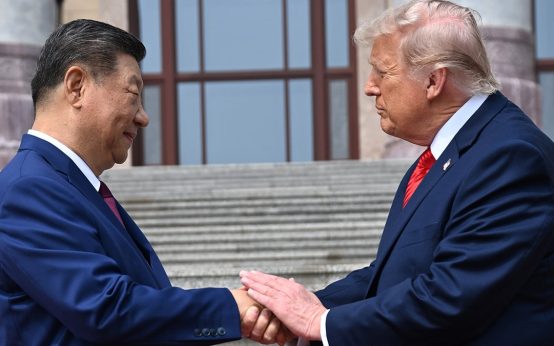 US-China Relations Under Scrutiny: Expert Warns of Escalating Tensions
  No Timeline for End of Iran Conflict