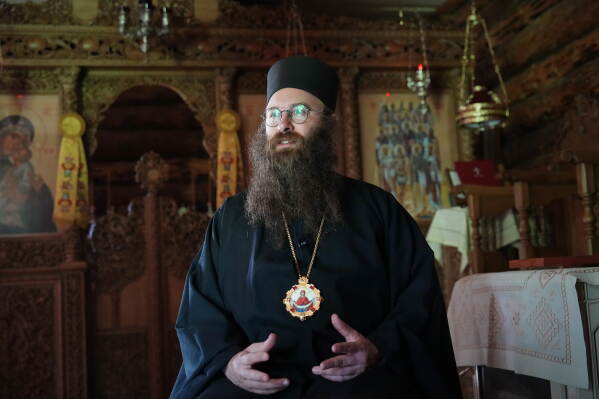
The resonant prayers of the Divine Liturgy fill the air in Estonian, as Bishop Damaskinos, garbed in white and gold, conducts services in a modest chapel. This chapel is tucked away in a new monastery within a farmhouse, founded recently in one of Europe’s most secular regions. This establishment, Kirikla Orthodox Monastery, marks the first of its kind created by the Estonian Apostolic Orthodox Church in decades. Since the dissolution of the Soviet Union, this church has coexisted with another Orthodox church linked to the Moscow Patriarchate, which has a larger following in the Baltic area. Yet, building its own male monastic community within Estonia remained a focus for the Estonian Apostolic Orthodox Church.
Bishop Damaskinos, a 41-year-old abbot, along with Rev. Paisios, is among the first monks residing and praying at the new monastery, situated about 40 kilometers from Tallinn. Although the church has over 60 churches and a convent, Orthodox monks have not lived in Estonia for over 80 years. With the monastery’s return, the daily prayers of Damaskinos and Paisios transcend regional significance. “The monastery’s role extends globally as we pray for the world,” Damaskinos states.
Monastic life, attracting youth interest, offers an alternative lifestyle shielded from external stress. Damaskinos, wearing a straw hat and black cassock, tends the garden while Paisios engages in field work with young volunteers. Their routine, alternating work with spiritual duties, leaves little time for distractions. Despite the demanding schedule, the monks feel rested.
Estonia, with a population of around 1.3 million, exhibits a secular society. However, Priit Rohtmets, a church history associate professor at the University of Tartu, notes a growing interest in religion among young Estonians, free from Soviet-era anti-religious attitudes.
The journey to become a monk begins with spending time as a novice for up to three years, adhering to monastic routines. Once deemed ready by the abbot, a novice takes vows of poverty, chastity, and obedience, assuming a new name and committing to monkhood. In contrast to priests, who can marry before ordination, monks must remain celibate within monasteries. Currently, Damaskinos and Paisios are the only monks in the Kirikla Monastery, but emphasis remains on spiritual devotion. “The spiritual quality of monks is our concern,” says Damaskinos, “ensuring their commitment to global prayer.”
At the monastery, a day begins with solitary prayers at dawn, followed by communal services and daily chores like gardening or construction. Limited leisure only comes after evening services. The Kirikla Orthodox Monastery stands as the sole Orthodox monastery founded by the Estonian Apostolic Orthodox Church in recent years. Attracting young individuals searching for respite from the modern world, the monks occasionally invite visitors, offering an experience of monastic life through social media.
Bishop Damaskinos acknowledges monastic life’s challenges but finds fulfillment in them, hoping visitors recognize the contentment represented by this way of life. While Kirikla is unique, other faiths have established monastic communities in Estonia, such as the Dominican order and a Theravada Buddhist community. Establishing a new monastery in Europe today is uncommon. Still, the Kirikla Monastery’s establishment, even modestly, encourages Orthodox believers and scholars.
Although currently only a farmhouse, donated by a local businessman, houses the monks, future plans include potential income through garden produce or crafts. Damaskinos focuses on fostering a strong brotherhood, viewing it as an ongoing commitment that lays the foundation for monastic presence in Estonia.
The Associated Press supports religious coverage in partnership with The Conversation US, funded by Lilly Endowment Inc.
 The Cost of Challenging Beijing
 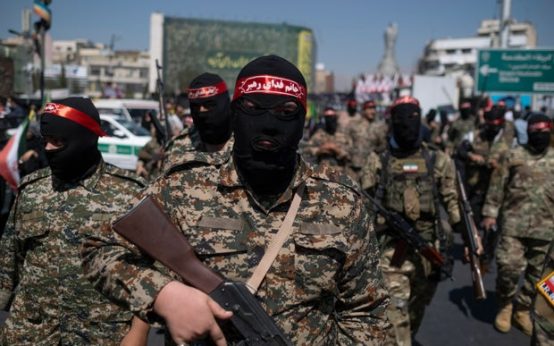 Tensions Escalate in Iran Conflict as Global Leaders Weigh Options
  White House Approves F-35 Sales to Saudi Arabia Amidst Regional Tensions
  Inside the Secret Deals Powering the President’s Push to Deport Migrants to Countries Not Their Own
  Navigating the Challenges of Third-Country Deportations
  Midair Altercation on Bangladesh to London Flight