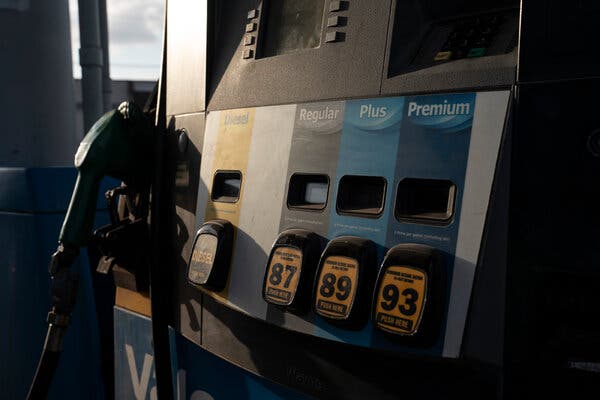
A month ago, drivers celebrated a bit of relief at the gas pumps after the U.S. and Iran agreed on a deal to reopen the Strait of Hormuz. However, that relief quickly dissipated as gas prices began to climb once again.
On Monday, the national average price for gasoline in the U.S. rose to $4 per gallon according to AAA. This increase resulted from renewed tensions with Iran, which disrupted shipping lanes and stressed global refineries already stretched thin.
The price hike reflects a 13-cent increase from the previous week’s average of $3.87 per gallon. It’s reminiscent of the pricing seen earlier in the spring. After a U.S. and Israel-led attack on Iran in March, gas prices in the U.S. escalated to $4 per gallon, a figure not seen since Russia’s Ukraine invasion in 2022. Prices reached over $4.50 in May before easing down post-ceasefire agreement between the U.S. and Iran.
Unfortunately, the initial agreement to cease hostilities did not endure, and conflict has erupted anew. The U.S. recently imposed a naval blockade on Iranian ports within the Strait of Hormuz, a key route for oil transport. This blockade, coupled with regional strikes, has severely impacted shipping activities, further driving energy costs upwards.
On Monday, Brent crude, the international oil benchmark, exceeded $90 a barrel for the first time in over a month. Meanwhile, the U.S. benchmark, West Texas Intermediate, priced at $82 per barrel.
In terms of diesel, the average cost rose beyond $5 a gallon on Thursday, marking a 33% rise since the conflict began. On Monday, diesel was priced at $5.11 a gallon, indicating a 23-cent rise from the week before.
It’s essential to understand that the national average doesn’t capture the price diversity seen across the country. Southern states tend to have prices near $3.60 per gallon, whereas in California, it’s closer to $5.50 a gallon.
This pricing spike poses a challenge for President Trump as the country approaches the November midterm elections. Voter uncertainty regarding the economy is a critical issue. Although the White House celebrated recent economic data showing a dip in consumer prices for June, they remain 3.5% higher than last year. In the Oval Office, President Trump commented, “Prices are coming way down, and we’re doing a great job. And remember that for the midterms.”
Despite these statements, July appears to be delivering contrasting figures. Factors propelling price hikes go beyond just oil costs due to the Middle East conflict. U.S. refineries working at high capacities with limited inventory levels also contribute to the pressures. Furthermore, the heightened demand for fuel amid summer travel exacerbates the situation.
 The Cost of Challenging Beijing
  Tensions Escalate in Iran Conflict as Global Leaders Weigh Options
  White House Approves F-35 Sales to Saudi Arabia Amidst Regional Tensions
  Inside the Secret Deals Powering the President’s Push to Deport Migrants to Countries Not Their Own
  Navigating the Challenges of Third-Country Deportations
  Midair Altercation on Bangladesh to London Flight