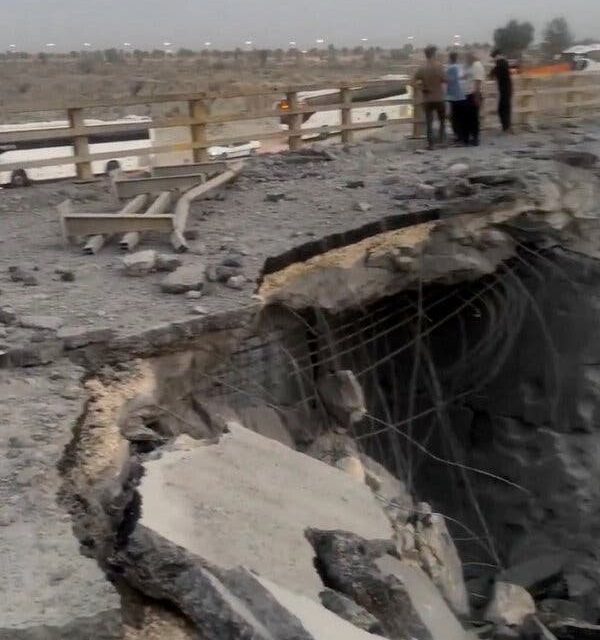
On July 17, 2026, videos and reports in Iranian state media revealed significant damage to bridges, railways, and other infrastructure within Iran. These reports surfaced as the United States and Iran intensified their military engagements. U.S. allies in the region noted retaliatory strikes by Iran.
Videos displayed a damaged section of a bridge in Iran’s Hormozgan Province, confirming the destruction reported by local media. The conflict appeared to widen overnight into Friday, with the U.S. military targeting bridges, rail lines, and a maritime observation tower, according to Iranian state media. In response, Iran claimed to have launched attacks on regional countries hosting U.S. military bases. Kuwait reported that its power and water plants were impacted.
President Trump had previously announced the end of a cease-fire agreement with Iran more than a week ago. Since that announcement, daily exchanges between the U.S. and Iranian forces have taken place. Trump threatened to dismantle civilian infrastructure to compel Iran to agree to a permanent peace and to prevent it from acquiring nuclear weapons. Iranian authorities warned that they would retaliate by targeting civilian infrastructure in nearby countries.
Legal experts noted that targeting essential civilian infrastructure, such as water treatment facilities, could be deemed a war crime. Nonetheless, attacks on railroads and bridges might be considered legitimate if they serve military purposes, such as transporting troops or weapons.
U.S. Central Command, responsible for overseeing American forces in the Middle East, confirmed on Friday that it had struck Iran for the seventh consecutive night. However, it did not specify the targets. Iranian media reported explosions in Sirik, a city housing Iranian naval bases and previously targeted by U.S. attacks.
A statement from Central Command on Thursday night detailed that earlier strikes had targeted several Iranian military sites, including coastal surveillance, air defense installations, military logistics infrastructure, and maritime capabilities. However, the statement did not directly acknowledge Iranian assertions that bridges and railroads had been attacked.
Additionally, Central Command claimed to have destroyed a port surveillance tower in southern Iran. This tower was allegedly used by the Islamic Revolutionary Guards Corps to monitor and target commercial vessels navigating the Strait of Hormuz.
 Google Fined for Breaching EU Privacy Rules
 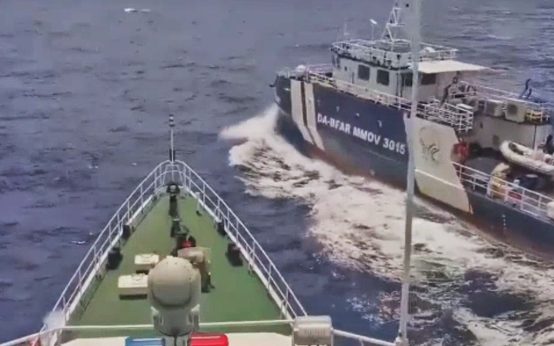 South China Sea Tensions Rise after Collision between Chinese and Philippine Ships
 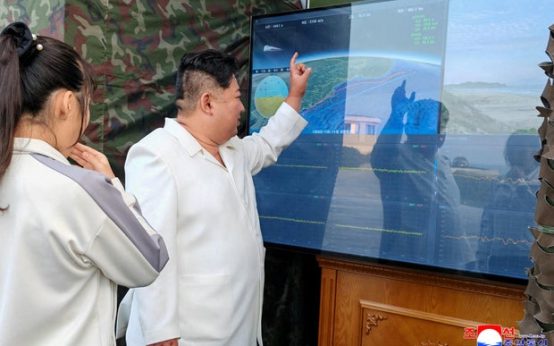 North Korea’s Hypersonic Weapon Test Amid Global Tensions
  Austin Tice: A Search for Answers
  U.S., Denmark, and Greenland Forge New Security Agreement
  Secretary Rubio Discusses Middle East Conflict and NATO Relations