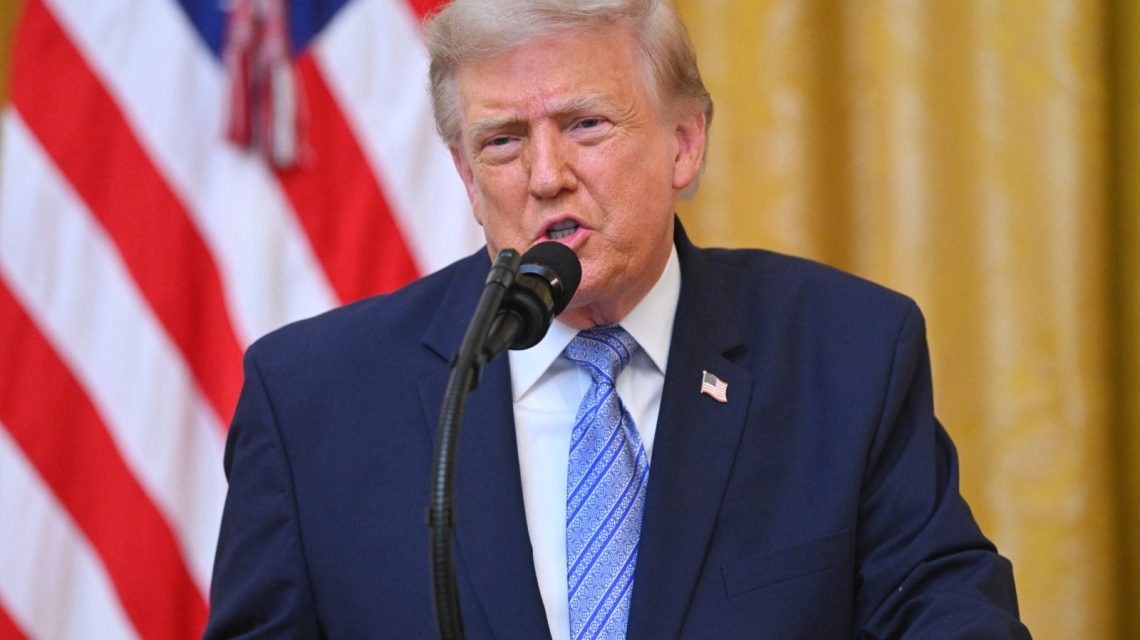
In a televised speech on Thursday, President Donald Trump claimed widespread election interference involving China and the U.S. ‘deep state.’ He used the address to advocate for stronger election security measures, tighter voter registration standards, and further investigation into the 2020 presidential election.
Trump announced the release of documents detailing five ‘major areas of concern.’ He accused China of executing what he termed the largest compromise of election data in history, asserting they obtained 220 million U.S. voter files containing sensitive information. ‘These disclosures reveal an election system so broken and so vulnerable that no one can possibly defend it. It is not defensible,’ Trump stated during his speech.
The speech coincided with some Republicans’ push for changes to federal voting laws in advance of the 2026 midterm elections.
2020 Election Allegations
The allegations that the 2020 presidential election was ‘stolen’ or ‘rigged’ have been thoroughly investigated and repeatedly found lacking credible evidence. Numerous lawsuits contesting the election’s outcome were adjudicated in state and federal courts, including by judges appointed by both Republican and Democratic presidents—including Trump.
These lawsuits were dismissed or ruled against as they failed to present evidence of fraud sufficient to change the election’s outcome. Meanwhile, Trump declared in his speech, ‘Great damage has been done to our country—our elections were left vulnerable to being rigged and stolen, and the trust of the American people was lost. This cannot be allowed to continue.’
A report released in 2022 by a group of conservative legal experts, including former federal judges and Republican election attorneys, concluded that Joe Biden was the legitimate choice of a majority of electors and found ‘absolutely no evidence of fraud’ sufficient to alter the final outcomes.
Independent reviews, recounts, and audits in critical battleground states reaffirmed the certified election results. Investigations by state election officials from both parties, along with the U.S. Department of Justice (DOJ), did not uncover evidence of widespread voter fraud capable of affecting the results.
Assertions involving voting machines, mail-in ballots, and ballot-counting have been repeatedly scrutinized and debunked through legal proceedings, audits, and factual investigations. Despite occasional election irregularities, no credible evidence has demonstrated a coordinated effort that altered the 2020 presidential election outcome. Consequently, the consensus among courts, election officials, and independent investigators is that the election was conducted legitimately and that Biden’s victory was valid. Biden won both the popular vote and the Electoral College decisively, 306 to 232.
Democratic Senator Mark Warner commented to CNN before Trump’s speech, ‘I think Trump realizes if we have a free and fair election this year, he’s going to get whooped.’
In contrast, Republican Senator Tommy Tuberville from Alabama shared with Newsmax, ‘We probably have four or five senators that didn’t legally win. They shouldn’t be up here and it’s just unfortunate that that’s happened.’
Potential China Interference
Trump stated during his address that ‘members of the deep state…in our intelligence agencies worked to actively suppress and downplay information about the extent of China’s sinister election meddling—covering it up from both the president and the American people.’
He further claimed, ‘Hundreds of millions of U.S. voter files are in the hands of foreign governments, our machines and ballot-counting systems are exposed to hacking and manipulation and corruption, China and other countries have been trying to meddle in our elections.’
Before Trump’s remarks, Chinese Embassy spokesperson Liu Chang denied allegations of election interference, stating to Reuters, ‘China has never and will never interfere in the presidential elections of the U.S.’
According to Reuters, Trump officials previously suggested China’s targeting of election infrastructure ahead of the 2020 election, as Trump amplified allegations of potential foreign influence. However, U.S. intelligence agencies, election officials, and courts have not found evidence of China manipulating vote totals or altering voting systems.
Former Principal Deputy Director of National Intelligence Sue Gordon stated on CNN that intelligence should not be treated as a verdict but as the start of a process. Even with new data releases, these do not prove interference claims. The assertion that foreign actors aim to undermine U.S. democracy, rather than a specific president, is longstanding.
Claim: Over 270,000 Non-Citizens Registered to Vote
The White House claims a Department of Homeland Security (DHS) review identified approximately 278,000 non-citizens on state voter rolls and argued that the actual number could be higher due to incomplete data access.
Critics, including the Center for Election Innovation & Research (CEIR), note that although isolated non-citizen voting instances occur, broad allegations are unsupported by thorough investigations. Found cases represent a minuscule fraction—generally no more than a few tenths of a percent of registered voters—and confirmed improper registrations are rare and referred for investigation.
Attention often focuses on inflated initial figures, while actual confirmed numbers are significantly smaller after inquiries. CEIR concludes current election security procedures effectively identify and address ineligible registrations or votes.
Save America Act
Trump emphasized the importance of secure elections as a non-partisan issue, calling Congress to pass the SAVE America Act. He framed it as a ‘landmark’ bill that should easily pass, unless opponents ‘want to cheat.’
Vice President JD Vance tweeted, ‘Election integrity is not a partisan issue, it is an AMERICAN ISSUE. Let us unite and pass the SAVE America Act and ensure every American’s right to vote in a free and fair election is protected.’
Trump has employed various tactics to pressure Congress into passing the legislation, aimed at requiring proof of citizenship for voter registration in federal elections. These strategies included appending the bill to a defense spending package, urging Senate Republicans to circumvent the filibuster, and public advocacy efforts through Truth Social, stressing its priority.
Trump also advocated for additional measures beyond the House-passed bill, like limiting mail-in voting. Proponents argue these reforms would bolster election integrity, while opponents contend they could complicate voting for eligible citizens without substantially addressing non-citizen voting concerns.
Democratic National Committee Chair Ken Martin commented in a statement to Newsweek, opposing Trump’s rhetoric and plans, asserting that Americans are outraged over Trump’s agenda and intend to reject it at the ballot box.
Martin emphasized that while Trump pushes democracy to extremes, Democrats are fighting to preserve voting rights and hold Trump accountable.
Contact Newsweek editors on this story: Gray R. Thomas and Edward T. Cummins.
 Bush and Cornyn: Fundraising Dynamics in Texas Politics
  Lawsuit Filed Against Trump Over Truth Social Subscriber Program
  Political Shifts and Leadership Challenges in U.S. Politics
  Democrats Gain Trust on Economic Management
  UN General Assembly and Middle East Diplomacy Amid Rising Tensions
  U.S. Secures New Greenland Security Agreement