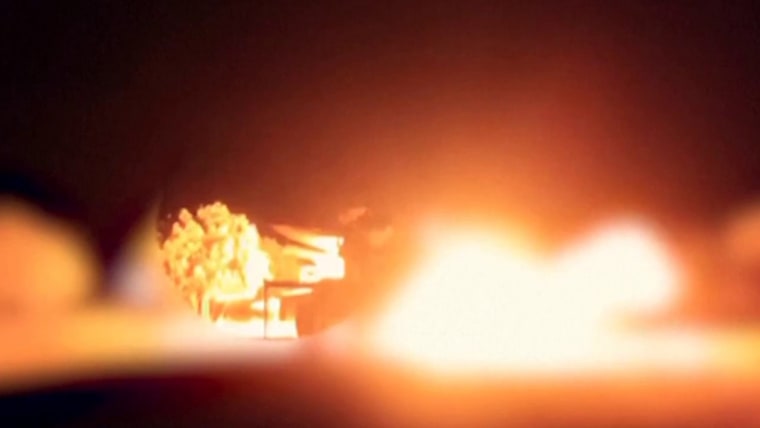
The United States increased its military actions against Iran early Thursday, targeting northern areas. American forces also fired on a ship, accusing it of attempting to break the U.S. naval blockade on Iran. In response, Iran launched missile and drone attacks on Bahrain, Jordan, and Kuwait before dawn, warning potential escalation.
Back-and-forth military actions between the U.S. and Iran, including renewed threats to the Strait of Hormuz, have dismantled the interim peace agreement aimed at ending the Iran conflict. This situation risks leading the region into a full-scale war. Iranian authorities report that U.S. strikes have killed over 35 people and injured more than 300 others.
The U.S. expanded its target range, hitting areas around Tehran for the first time in this latest violence cycle. When the conflict started on February 28, Iran blocked the Strait of Hormuz, causing global increases in oil and commodity prices, thereby leveraging negotiations in its favor.
Col. Ebrahim Zolfaghari, representing the Iranian military’s Khatam al-Anbiya Central Headquarters, escalated threats. He referenced U.S. President Trump’s warning that America could strike Iranian infrastructure.
All the infrastructure in the region will be crushed under the steel blows of the powerful armed forces of the Islamic Republic of Iran should Trump’s threat be carried out,Zolfaghari said.
Zolfaghari emphasized that Iran will not allow U.S. interference in the Strait of Hormuz, declaring it an invincible red line. Rising oil prices pose challenges for the Trump administration and the Republican Party, trying to maintain congressional control in upcoming elections. Washington has struggled to reopen the waterway, leading Trump to reinstate the naval blockade on Wednesday. Attempts at mediation have so far failed.
Trump stated that Iran seemed ready for a peace deal but gave no details. He mentioned that an American citizen, Dena Karari, was released by Iran as a goodwill gesture. Karari, a U.S.-Iranian citizen and nonprofit leader, was reportedly accused of espionage. Iran has not acknowledged her release publicly.
Early Thursday, U.S. strikes targeted areas around Tehran, as well as Semnan province, significant for missile and space program activities. Iranian media reported attacks in additional provinces, including Hamedan, Hormozgan, Khuzestan, and Sistan and Baluchestan.
On Wednesday, U.S. forces executed daylight strikes, showing increased operational tempo. A strategic attack occurred on Greater Tunb Island in the Strait of Hormuz, targeting Iranian defenses. Concurrently, a U.S. aircraft fired on the Curacao-flagged oil tanker Belma headed to Kharg Island, having ignored warnings.
The U.S. also struck a barracks in Sistan and Baluchestan province, reportedly killing soldiers, according to Iranian state TV. In retaliation, Iran attacked U.S.-allied countries Bahrain, Jordan, and Kuwait Thursday, with no immediate damage reports.
Meanwhile, Iraq’s Prime Minister condemned a drone attack on Irbil, stating a commitment to disarm non-state groups, including Iran-backed factions. The ongoing conflict centers on controlling the Strait of Hormuz, challenging the U.S. since Iran’s blockade.
Some ships navigate the route near Oman under U.S. military oversight, outside Tehran’s control. Recent Iranian attacks on these ships have led to retaliatory actions by the U.S. Although reopening the strait by force has been mentioned, experts say a larger military presence would be necessary.
In the meantime, oil prices have surged, with Brent crude oil trading above $85 a barrel, a significant increase from pre-war levels, although still below prior conflict highs.
 Family Seeks Answers Following Elderly Woman’s Death Under Canada’s Assisted Dying Program
  AI Fears Impact Trump-Xi Dialogue Amidst Challenges
  Venezuelan Leadership Highlights U.S. Relations
  Controversy Surrounds Piers Morgan Following Claims in Earl Spencer’s Memoir
  Ontario Synagogue Shooting During Yom Kippur
  Pope Leo XIV’s Upcoming Visit to Latin America