Los Angeles’ Bold Vision Half a Century Ago
In the 1970s, Los Angeles was excited about a concept that promised a unique blend of privacy in travel and an expansive network akin to mass transit, particularly tailored for a car-centric city. Despite growing awareness of car exhaust as a significant contributor to smog in the region and lingering effects from the Arab oil embargo causing issues like gas shortages, and despite worsening traffic congestion, there was a strong push to innovate how Angelenos commuted.
Forget existing problems associated with personal vehicles. Enthusiasm was fueled by a belief that residents would not readily have their daily commutes shifted entirely to buses or trains.
The Proposal for Personal Rapid Transit
Following the bicentennial festivities in 1976, a key proposal came from C.G. Burke, an instructor at USC, who shared his idea of “personal rapid transit” (PRT) in the Los Angeles Times. He suggested this model as a compelling alternative to the region’s early plans for subways and light rail networks.
Burke’s vision involved elevated guideways spanning many major roadways throughout Los Angeles. Instead of trains, travelers would enter electric-powered personal pods, input destinations into computers, and move independently. Though designed to accommodate several passengers, these pods primarily targeted solo travelers, mimicking private car travel.
Conceptually, the emissions-free PRT seemed promising. Burke outlined plans for approximately 232 miles of track, accompanied by 89 stations. These pods offered frequent stops for short journeys, as well as express lanes for longer commutes, capable of speeds reaching 60 mph.
His argument was that public transportation should not equate to an obligatory burden on urban dwellers. Politicians and academics skeptical of traditional rail supported PRT, showcasing scale models resembling something out of a futuristic show. Councilman Joel Wachs asserted its potential, emphasizing its privacy, nonstop ability, and safety.
The Demise of the ‘Perfect Car’ Dream
Concerns quickly emerged surrounding technical feasibility and financial viability, causing skepticism about the proposed solution’s implementation. While Mayor Tom Bradley championed rail developments like the Wilshire Boulevard subway, PRT challenges slowed down ambitions for improvements in public transport infrastructure.
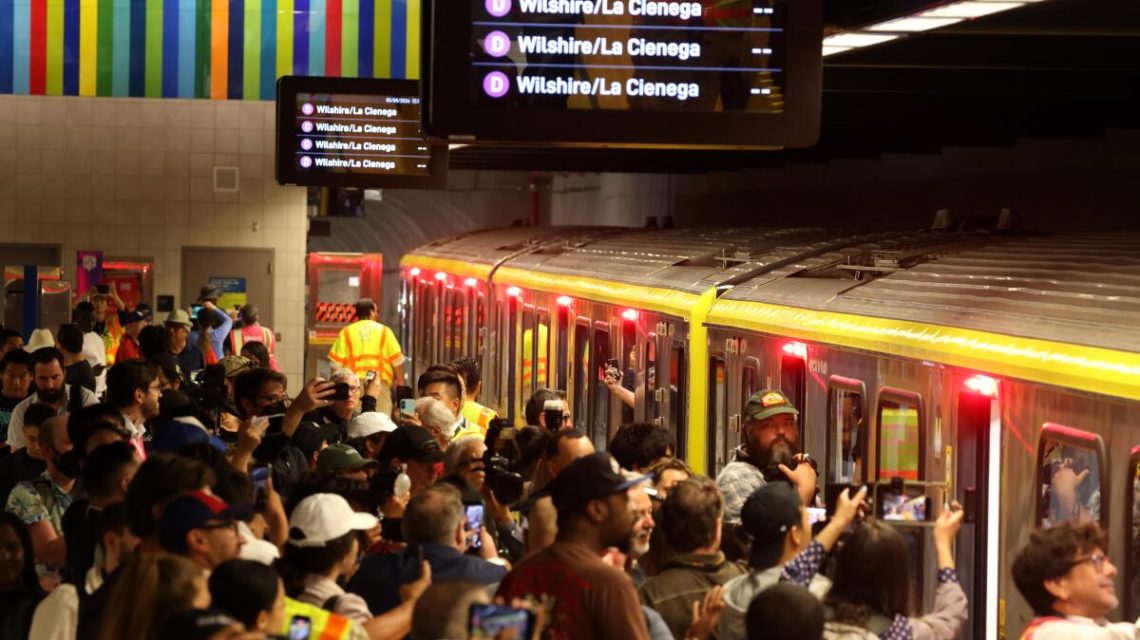
Eventually, Los Angeles witnessed the opening of the Wilshire subway, albeit not in its initial timeline of 1976, but rather in 2026.
Shifts in Transit Discussions
Reflecting on the initial excitement over PRT, there is a clear evolution in perceptions of mass transit over five decades. Voters today show willingness to fund rail networks, although single-person car commutes still dominate, and current rail and bus ridership leaves much to be desired.
Now, conversations focus on the protracted timeline of new transit projects, such as the LAX people mover system, which has incited considerable public frustration. Despite delays, the consensus acknowledges L.A.’s need for airport mass transit improvements.
Modern iterations of PRT like self-driving cars highlight the potential transformation in urban commute logistics; however, their impact remains underestimated.
Associated Developments in California
Alongside transit discussions, California faces various regional developments:
- Courthouse weddings have become fiercely competitive, with places like Santa Barbara and Beverly Hills as popular venues.
- A ‘dangerous heat’ wave predicted to grip Southern California, expecting extreme temperatures and increased health risks.
- Potential legislation on permanent daylight saving time continues, integrating insights from voter-approved Proposition 7 from 2018.
- Seismic activities north of Los Angeles draw attention alongside research on predicting coastal cliff collapses.
Community and Commentary
Recent tragic narratives bring to light challenges faced by immigrants impacted by geopolitical variables, as highlighted by columnist Gustavo Arellano. Meanwhile, debates surround significant infrastructure projects, including water management controversies.
In entertainment discussions, Los Angeles engages in immersive dining experiences and new cinematic narratives, while educational undertakings explore high school specializations.
Observations and Community Engagement
Readers are encouraged to discuss their personal observations through interactive channels like email, contributing to ongoing community dialogues.
 Secure Your Internet Connection with Consistent VPN Usage While Traveling
  The Impact of Extended Job Searches on Mental Health
  Concerns Over AI’s Impact on Higher Education Learning
  Los Angeles Multifamily Housing Market Challenges and Decline
  Google Fined for Breaching EU Privacy Rules
  AI-Powered Malware Raises Concerns Over Security