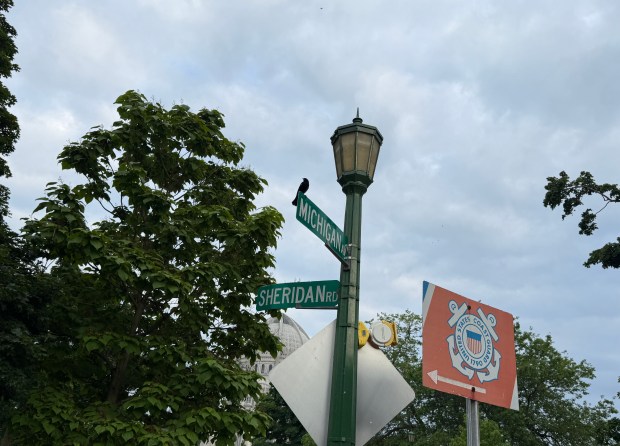
Teri Weber frequently enjoys walks along Sheridan Road in Winnetka, catching views of Lake Michigan. However, on a recent walk, she was startled when red-winged blackbirds suddenly swooped at her. Weber, a Winnetka resident, described the experience: “The first one came from behind, and then the second one came toward my face.” She quickly ducked, waved her hat, and shouted to deter the birds.
Many others have shared similar experiences. Weber’s social media post about the incident gathered 50 responses. At least six other locals reported being dive-bombed by these birds. Nancy Davidson from Wilmette commented on Weber’s post, saying she was attacked twice while exercising on Sheridan Road. “I was surprised, as the bird came out of nowhere,” Davidson said. “I had no prior knowledge of this species.”
JP McNamara, Marketing and Communications Manager for the Wilmette Park District, explained the behavior. In spring and summer, male red-winged blackbirds become territorial during early nesting season and may act aggressively. The birds aim to ward off threats, not cause harm. They are active in Illinois during these months, McNamara added.
While the behavior can be startling, it is generally intended to deter potential predators rather than cause injury.
Experts affirm that this behavior is typical during the species’ breeding season. Bridget Kiernan, a horticulturist at the Chicago Botanic Garden, noted an increase in aggressive behavior from these birds. “Red-winged blackbirds are adept at what they do,” Kiernan stated, highlighting their successful defense tactics.
Red-winged blackbirds often nest near water, wetlands, and urban areas. The dive-bombing incidents peak in June after chicks hatch, diminishing by July’s end. Leah Pietrusiak, another local resident, shared her experience near Humboldt Park, where she was attacked recently. “I took a walk early one morning, and the bird suddenly hit my head,” she recounted.
Despite the seasonal pattern of attacks, Weber believes local authorities can take preventive measures, like preventing nest building in public spaces. Once the birds lay eggs, removing nests becomes illegal under the Migratory Bird Treaty Act of 1918 and the Illinois Wildlife Code. Early intervention is crucial.
Kiernan advises residents to take protective actions, like wearing a wide-brimmed hat and shielding the head if a bird starts dive-bombing. Familiarizing oneself with the bird’s warning calls can also help anticipate and avoid trouble.
Red-winged blackbirds are very vocal and give off warning calls when they sense there is any danger.
A National Park Service audio of the bird’s sounds is available online for those interested.
 Carnival Panorama Passenger Jumped Overboard During Final Leg of Cruise
  Nikole Hannah-Jones Reflects on Educational Choices for Her Daughter
  Life and Challenges at Chennai’s Kasimedu Fishing Harbour
  Chicago Bears Eye Potential Move to Indiana: A Look at the Developments
  Amazon Offers Discounts to Employees at Whole Foods
  Inside the American Airman Rescue Mission in Iran