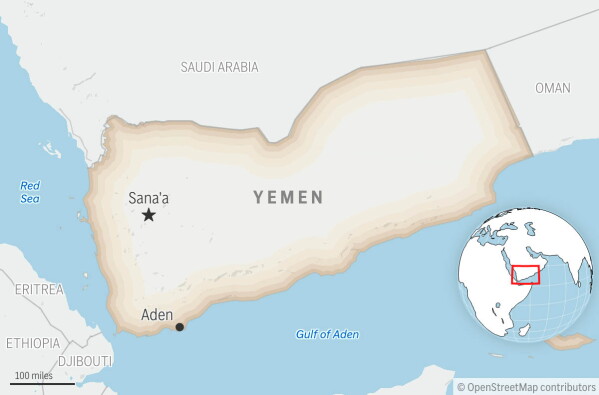
The Iran-backed Houthi rebels launched missiles and drones targeting Saudi Arabia’s Abha International Airport. This action followed airstrikes in Yemen earlier that day. No casualties have been reported, marking a significant escalation not seen since previous Saudi-led strikes on Houthi regions several years ago.
Saudi officials have not yet commented on these airstrikes. Houthi military spokesman Brig. Gen. Yahya Saree, through a Telegram video statement, advised airlines to avoid Saudi airspace. He emphasized that these warnings are crucial until the blockade on Sanaa International Airport is removed.
Yemen’s internationally recognized government stated the strikes aimed to block an Iranian aircraft from landing. This event is the first major confrontation between the Houthis and Saudi Arabia after a period of calm. During an emergency meeting, U.N. Security Council members expressed concerns over potential further escalation. U.N. Assistant Secretary-General for political affairs Khaled Khiari urged all parties to engage in dialogue guided by the U.N.
“Yemen and the wider region cannot afford another cycle of escalation,” Khiari said.
For years, a Saudi-led coalition has been engaged in conflict with the Houthis in Yemen. Brig. Gen. Yahya Saree indicated on Telegram that Saudi Arabia’s airstrikes signify the end of a “de-escalation” phase. He issued a stark warning that such actions will not go unpunished.
The recent strikes have particularly aimed at “closing it to humanitarian flights,” essential for patients and stranded individuals needing transit via Sanaa International Airport. Yemen’s civil conflict began in 2014 when the Houthis captured the capital, Sanaa, and large parts of northern Yemen, forcing the government into exile.
U.S.-backed Saudi Arabia and the UAE entered the conflict a year later to reinstate the Yemeni government. However, tensions between these allies have risen, with the UAE recently stepping back from the conflict. Maj. Gen. Turki al-Malki of the Saudi-led Coalition confirmed on a platform known as X that ballistic missiles launched by the Houthis were intercepted without revealing additional specifics.
The recent airport attack follows escalated tensions this month, as the Houthis claimed Saudi Arabia prevented an Iranian plane from transporting a Houthi delegation for Iran’s Supreme Leader Ayatollah Ali Khamenei’s funeral.
Yemen’s defense minister, Gen. Taher al-Aqili, announced that strikes on the airport’s runway aimed to prevent the Iranian plane, transporting Houthi officials, from ensuring their return. A video statement from al-Aqili communicated that the patience for foreign aircraft violating Yemeni airspace was running out and hinted at possible retaliation.
Houthi sources said that the plane had to redirect and land at Hodeida Airport. Footage on Houthi-controlled media showed a missile striking Sanaa airport’s runway and a resulting explosion.
The Yemeni government declared all airports closed indefinitely and instructed evacuations of the Sanaa airport and nearby regions. Rashad al-Alimi, head of Yemen’s Presidential Leadership Council, reported that Iran requested an Iranian airline, Mahan Air, flight to Sanaa and this request was denied citing aviation laws and sovereignty concerns.
Hans Grundberg, U.N.’s special envoy for Yemen, remains concerned about possible wider conflict escalation, asking involved factions to maintain Yemen’s relative calm post-2022. Houthi areas last experienced similar targeting before a U.N.-negotiated truce came into play in 2022.
 The Cost of Challenging Beijing
 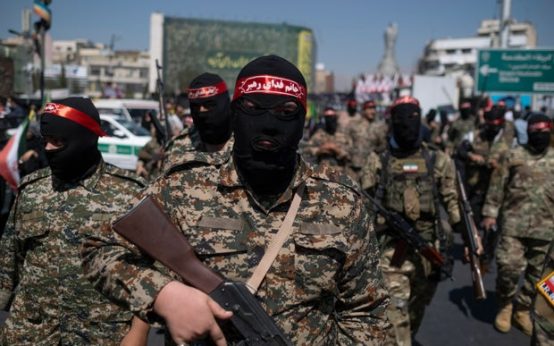 Tensions Escalate in Iran Conflict as Global Leaders Weigh Options
 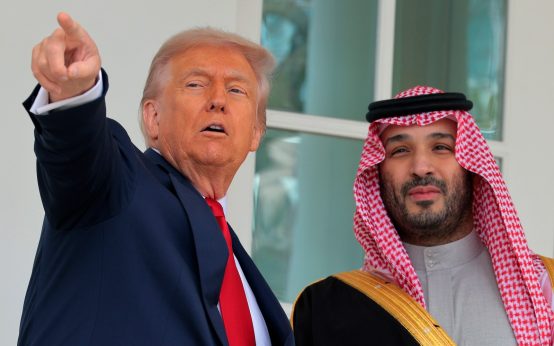 White House Approves F-35 Sales to Saudi Arabia Amidst Regional Tensions
  Inside the Secret Deals Powering the President’s Push to Deport Migrants to Countries Not Their Own
  Navigating the Challenges of Third-Country Deportations
 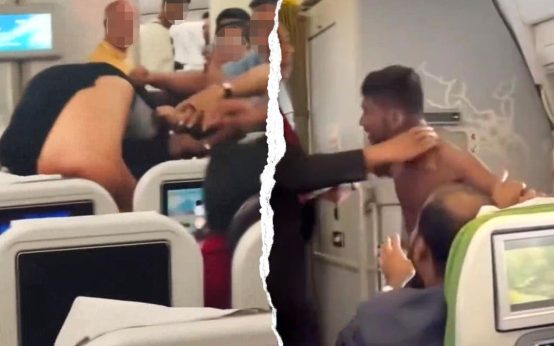 Midair Altercation on Bangladesh to London Flight