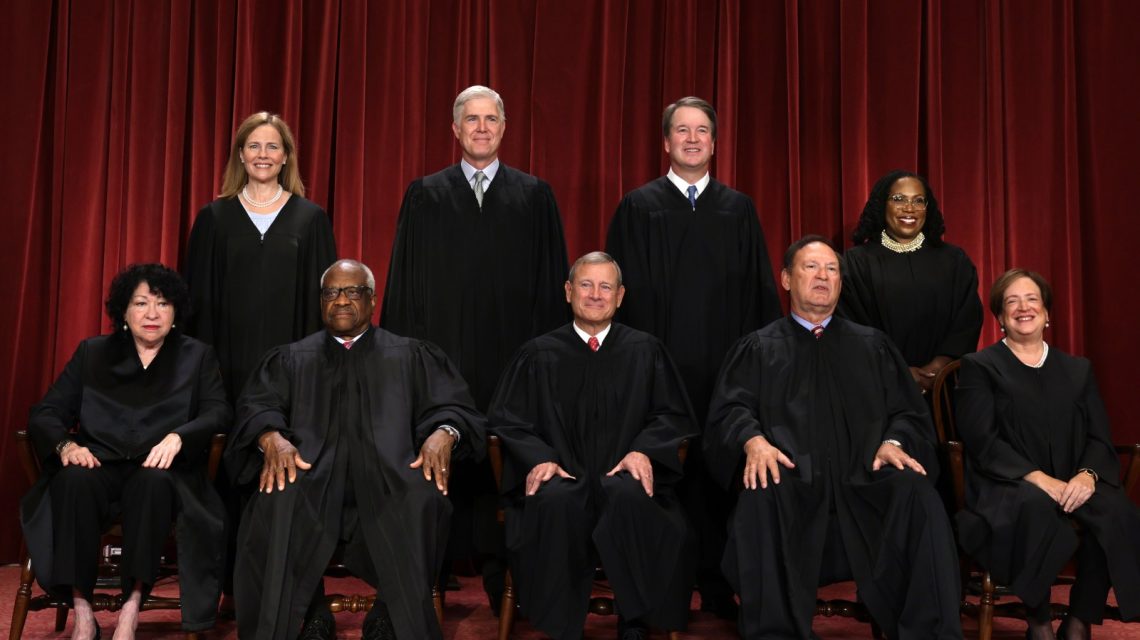
The American public’s view of several conservative Supreme Court justices has become more negative in the past year, according to a new national poll. The YouGov/The Economist survey highlights a shift in opinions about Justices Clarence Thomas, Amy Coney Barrett, and Brett Kavanaugh. Among these, Barrett experienced the largest drop in favorability, with more respondents rating her as ‘very unfavorable.’ Thomas and Kavanaugh also saw declines, with Kavanaugh’s net favorability decreasing by two points year over year, similar to Chief Justice John Roberts.
This change in perception occurs as overall approval for the Supreme Court has fallen. The court faces significant skepticism from the public, with opinions sharply divided along party lines. Democrats tend to view the court’s conservative justices more negatively, while Republicans still rate them positively.
What the Poll Shows
The poll, released on Tuesday, reveals the Supreme Court’s approval rating at 36% and its disapproval rating at 50%. It also finds that 9% of respondents consider the court ‘too liberal,’ whereas 44% see it as ‘too conservative.’
The poll follows significant rulings on birthright citizenship and presidential power. Asked about the court’s impact on presidential power, 45% of respondents believe it gives too much power, 29% say the amount of power is right, and 9% think it grants too little. About 17% are unsure.
The survey, conducted from July 3 to July 6, included 1,603 U.S. adults and has a margin of error of 3.3%.
Breakdown of Supreme Court Justices’ Favorability
Chief Justice John Roberts, appointed by former President George W. Bush, has a favorability rating of 25% and an unfavorable rating of 36%. In July 2025, his numbers were 27% favorability and 36% unfavorable. His net approval now stands at -11%, compared to -9% last year.
Brett Kavanaugh’s current favorability is 27%, with an unfavorable rating of 37%. A year ago, he had a favorability of 31% and an unfavorable rating of 39%. His net approval decreased to -10% this year from -8%.
Justice Neil Gorsuch has a favorability rating of 23% and an unfavorable rating of 30% this year. Last year, he was rated 25% favorably and 33% unfavorably, showing a slight improvement in net favorability from -8% to -7%.
Justice Elena Kagan, who was appointed by President Barack Obama, has a 30% favorability rating and a 24% unfavorable rating, resulting in a net favorability of 6%. This is an improvement from last year’s -3%.
Justice Sonia Sotomayor also shows an increase, with a current 37% favorability and a 26% unfavorable rating, leading to a net favorability of 11%, up from 4% the previous year.
Justice Samuel Alito, another Bush appointee, has a favorability of 25% against a 32% unfavorable rating, resulting in a net approval of -7%. Last year, his figures were 28% favorable and 33% unfavorable.
Amy Coney Barrett stands at a 23% favorability and a 38% unfavorable rating, making her net favorability -15%, down from -9% last year.
Clarence Thomas has a favorability rating of 29% with 41% unfavorable, resulting in -12% net approval, down from -9% last year.
Justice Ketanji Brown Jackson, appointed by President Joe Biden, reaches a 34% favorability with a 26% unfavorable rating, resulting in a net favorability of 8%, an improvement from last year’s 2%.
Last year’s poll ran from June 30 to July 2, 2025, involved 1,043 U.S. adults, and had a margin of error of 4.3%.
Analyst Insights on Barrett’s Favorability
According to Dave Aronberg, a former Palm Beach County State Attorney, Justice Barrett’s significant drop in favorability isn’t solely linked to one ruling or President. Instead, it’s the cumulative effect of what many view as an activist court perceived as political. Decisions like overturning Roe v. Wade and changes to the Voting Rights Act have undermined public trust. Both Democrats and Republicans express frustration with Barrett’s rulings, negatively affecting her approval ratings.
Newsweek contacted the Supreme Court on Tuesday for a comment but has yet to receive a response.
For additional details, contact Newsweek editor Edward T. Cummins.
 The Impact of Arts and Closure on Democracy
  U.S. Ambassador Comments on Iran War Duration Amid Political Concerns
  US-China Relations Under Scrutiny: Expert Warns of Escalating Tensions
  No Timeline for End of Iran Conflict
 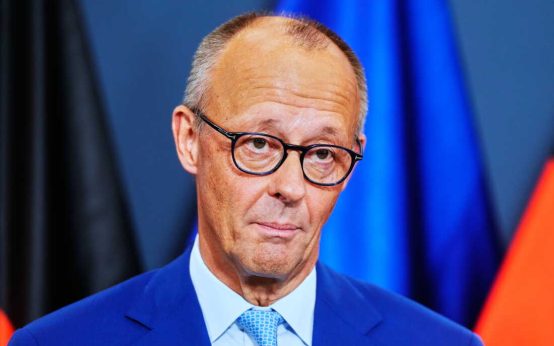 German Chancellor Merz Vows to Pursue Reforms Despite Election Setbacks
  The Technology Rivalry: Trump’s Meeting with Xi and the AI Ecosystem Clash