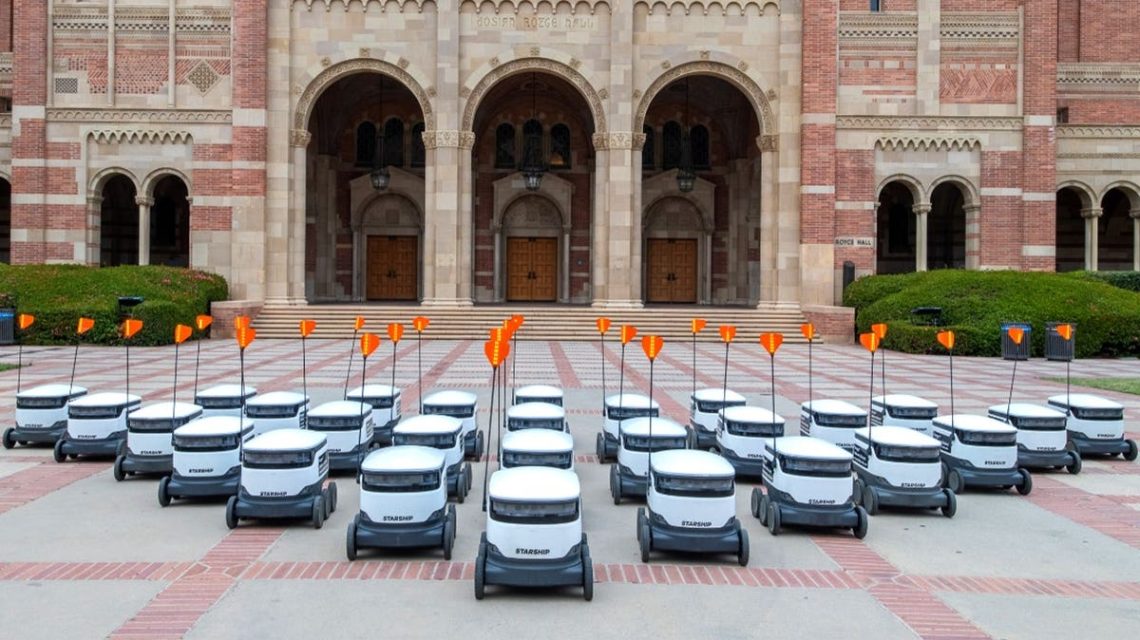
Starship Technologies, known for its autonomous delivery robots, announced it will phase out its U.S. university campus operations. More than 1,200 robots will shift to focus on grocery chains and hot food delivery across cities in the United States and Europe.
Robots Move from Campuses to Cities
These robots, often seen waiting at crosswalks, became part of the college environment. Now, they will face the challenges of bustling city sidewalks. The question arises: will city residents embrace these robots as warmly as students did?
Reasons for the Shift
Starship decided to redirect focus due to the predicted growth in grocery delivery services. In Finland, around 20% of grocery deliveries are completed by Starship robots, a model the company plans to expand. This shift represents a significant change from the company’s origins on college campuses, which served as a testing ground for the technology.
Campuses as a Testing Ground
In 2019, George Mason University became the first U.S. campus to offer robot deliveries, sparking interest from other universities. During the pandemic, the appeal of contactless delivery increased. However, Starship plans to continue service on campuses through 2026-2027, allowing for a smoother transition away from the university model.
Challenges on City Sidewalks
The urban environment presents new challenges. Delivery robots will share space with pedestrians, strollers, and wheelchairs. Reports have already highlighted issues with robots creating accessibility problems in some areas. These concerns emphasize the need for careful design and operation in public spaces.
Grocery Delivery Differences
Delivering groceries involves different logistical needs than campus deliveries. It typically includes heavier items and more frequent routes. Starship asserts its robots can deliver groceries at a lower cost than traditional couriers, attracting attention from retailers seeking economical last-mile delivery solutions.
Impact on Public Spaces
Starship’s changes reflect a broader trend in delivery automation. Ensuring robots don’t obstruct sidewalks or create safety issues is crucial. Public acceptance will depend on how well these robots integrate into everyday urban life.
Estonia’s Role
Founded in Tallinn, Estonia, Starship maintains its engineering and AI development team there, highlighting Estonia’s ongoing importance to the company.
Implications for Urban Residents
As these robots appear near grocery stores and apartments, observe their interaction with pedestrians and adherence to local regulations. Report any problems to local authorities or the delivery company. Privacy concerns also emerge, as these robots use sensors and cameras in navigation.
Starship Technologies’ strategic shift from campuses to cities marks the next phase in autonomous delivery. Success depends on how well these robots balance cost-saving benefits with the demands of shared public spaces.
 Data Centers Stir Controversy in Texas Amid Growth Boom
  The Technology Rivalry: Trump’s Meeting with Xi and the AI Ecosystem Clash
  Ways to Protect Your Finances from Cyber Threats
  Interview with Nvidia CEO Jensen Huang: AI Outlook and Business Strategy
  Concerns Rise Over Addictive Design of Sports Betting Apps
  Seton Hall National Security Graduate Fellowship Provides Hands-On Experience