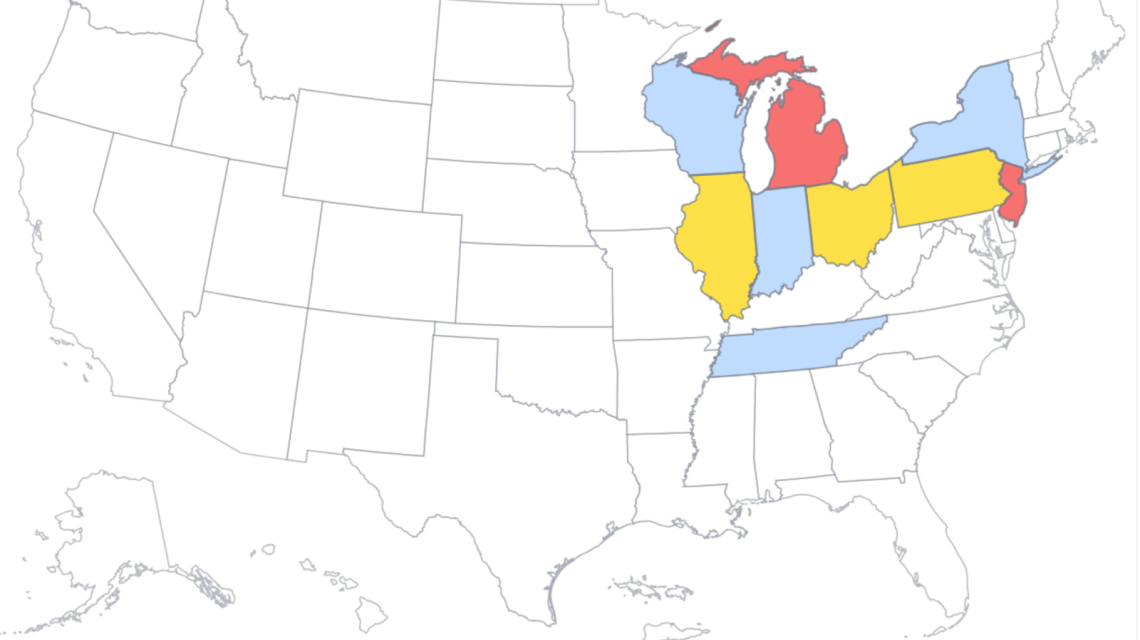
On Saturday, nearly 1 million homes and businesses experienced power outages due to a combination of a vast heat wave and severe weather, disrupting Independence Day celebrations. As the nation celebrated its 250th anniversary, the tracking website PowerOutage.us reported around 838,000 customers without power, particularly in the Midwest and Northeast. At one point, the outages exceeded 950,000 customers.
These widespread power outages posed life-threatening conditions for many as intense heat impacted a large portion of the country, leaving millions without air conditioning or refrigeration. The National Weather Service (NWS) issued warnings for parts of the East Coast, Mid-Atlantic, and Midwest. They cautioned that heat index values could exceed 100 degrees Fahrenheit, with some areas expecting temperatures between 110 and 115 degrees.
Michigan Hardest Hit by Grid Stress
Michigan faced significant outages, with approximately 383,000 customers left without electricity. Other states heavily impacted included:
- New Jersey: about 179,000 customers out
- Pennsylvania: about 63,000 customers out
- Illinois: about 50,000 customers out
- Ohio: about 50,000 customers out
- Wisconsin: about 18,000 customers out
- New York: about 15,000 customers out
- Tennessee: about 12,000 customers out
Utility companies indicated that these figures are subject to change as crews work to restore service and new storms cause additional outages.
Parades Canceled, Emergency Services Strained
Extreme weather conditions led organizers to cancel or modify major July 4 events in at least nine states and the District of Columbia. In Washington, D.C., officials canceled America’s National Independence Day Parade due to a predicted heat index of up to 115 degrees. The Great American State Fair was temporarily closed but later reopened in the evening. DC Fire and EMS treated 44 patients for heat-related issues; seven required advanced life support.
In Philadelphia, a semiquincentennial parade with 250 elements representing all 50 states was canceled after initially being shortened. Western states faced heightened wildfire risks, resulting in burn bans and the cancellation of fireworks displays. Colorado canceled shows in places like Colorado Springs, Pueblo, and Cañon City.
Infrastructure Under Pressure
The NWS warned that extended heat waves can stress power, water, and transportation infrastructure. In New York City, Con Edison reduced voltage in Westchester County, the Bronx, and parts of Queens to avoid grid overload from increased air conditioning demand. Dry ice was distributed to help residents preserve food and find temporary relief.
The intense heat wave, aligned with power outages, impacted millions from the Midwest to the Northeast and Mid-Atlantic. NWS alerts emphasized the risk to power, water, and transportation systems while increasing the potential for heat-related health issues.
Forecasters warned of continued severe weather and extreme heat throughout the holiday weekend. Emergency management officials advised residents in affected areas to minimize outdoor exposure, check on vulnerable individuals, and use local cooling centers.
Contact Newsweek editors for this story: Matthew Robinson and Anthony Murray.
 American Public Opinion on Press Freedom
  St. Laurence High School’s Transformative Journey
  Significant Events in Chicago History on September 21
  Presley Gerber Passes Away at 27 in Rehab Facility
  Shooting of DoorDash Delivery Driver by ICE Agent Raises Questions
  Growing Concerns Over Food Safety and National Security