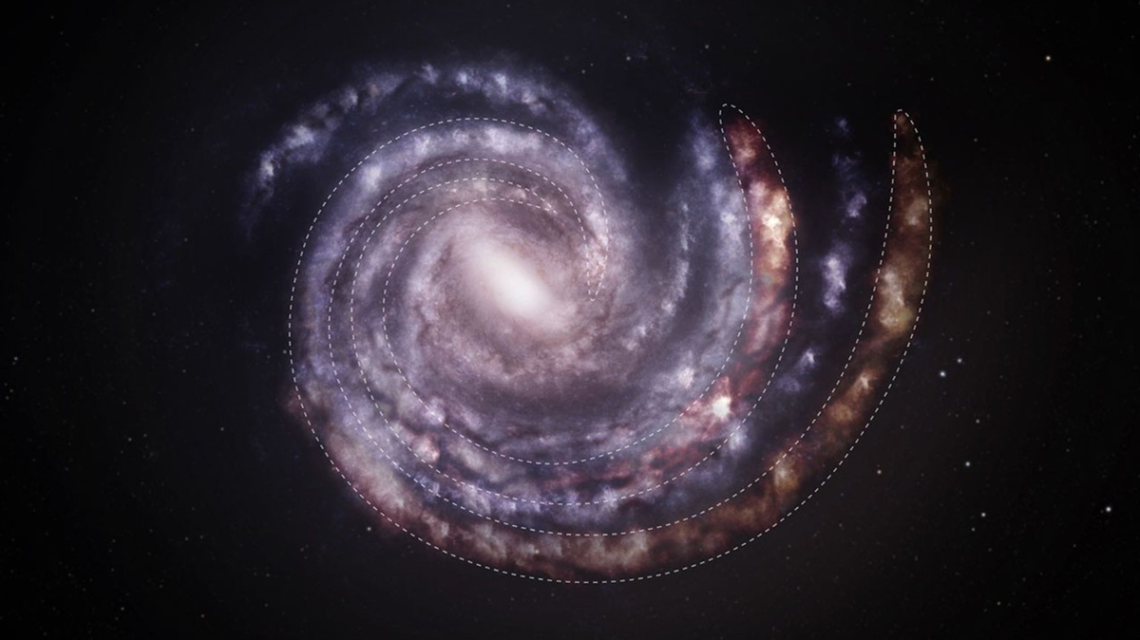
Recent research has extended our understanding of the Milky Way galaxy’s spiral arms. Astronomers have found that these arms may stretch further into space than previously thought. To achieve precise distance measurements of dust clouds within these arms, scientists used data from two advanced telescopes orbiting Earth: NASA’s Chandra X-ray Observatory and the European Space Agency’s XMM-Newton.
The research team took advantage of gamma-ray bursts from distant galaxies. As X-rays emitted from these bursts traveled through the Milky Way, they encountered dust clouds. This interaction created rings of light that permitted precise measurements. Beatrice Vaia, who led the study, described this geometric approach as direct, unlike other methods relying on uncertain assumptions about the galaxy’s rotation.
Mapping the Milky Way has presented challenges due to Earth’s position inside one of its arms. Despite a century of effort, gaining an accurate map has proven difficult. The advancement in studying gamma-ray bursts offers a promising solution unhindered by Earth’s location. This could alter our understanding of our galaxy’s mass distribution, affecting estimates of mass and arm width.
Despite these advancements, the technique depends on rare gamma-ray bursts. Only a few suitable events have been recorded in the past 25 years. Andrea Tiengo, a co-author of the study, expressed continued interest in identifying more such events.
 Ice Age Mastodon Tooth Unearthed in California Creek
  The Unique Challenges of the Pumpkin Toadlet
  Animal Self-Medication Insights
  Carlo Rovelli’s Perspective on Physics and Ultimate Reality
 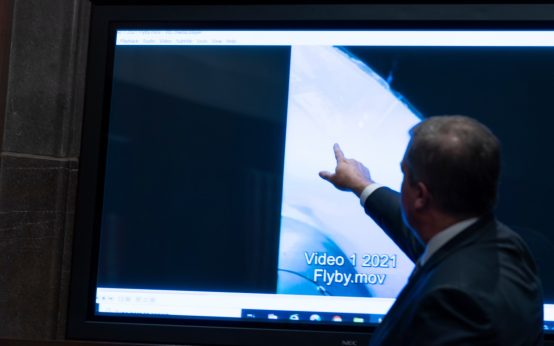 Department of Defense Legal Waiver Promotes UAP Disclosure
  Ancient Ring Offers New Insight on Pontius Pilate’s Authority