
Connected ball technology played a pivotal role in a highly contested World Cup match between Croatia and Portugal. This advanced system nullified Croatia’s late equalizer against Portugal by identifying a barely detectable touch, crucial in determining an offside play.
Portugal secured a 2-1 victory in Toronto and progressed to the round of 16, as Croatian fans felt aggrieved over the disallowed goal. The decision was based on technology that showed Igor Mantanovic marginally headed the ball, placing Mario Palasic in an offside position during the lead-up.
FIFA’s Technological Insights
FIFA leveraged a soccer ball embedded with “advanced sensors” to ensure accuracy. The sensors are designed to detect any slight contact, enabling officials to make swift and precise judgments. The official World Cup ball, named “Trionda” and produced by Adidas, includes an “inertial measurement unit (IMU) sensor”. This sensor functions at 500Hz, capturing data 500 times per second to monitor the ball’s movements in three dimensions and the precise moment of player contact.
The technology integrates with stadium cameras, transmitting data instantly to video assistants. This information aids in evaluating offsides and other instances like handballs and penalties.
Reliability of the Technology
Though the decision was contentious, as replays were visually inconclusive on Mantanovic’s contact, technology provided clarity. Referee Espen Eskås consulted the sideline monitor, observing what FIFA termed a “heartbeat graphic” indicating the ball’s touch through a spike in the data.
According to Professor Manos Tentzeris from Georgia Tech, the ball’s position is 99.99% precise, facilitating exact player positioning, down to the shoe tip, which can determine offsides.
This system was previously employed in the 2022 World Cup and tested during events such as the Arab Cup and Club World Cup, demonstrating its reliability and impact.
Impact on the Game
The technology also influenced Euro 2024 when Denmark’s Joachim Andersen was caught handling the ball, leading to a penalty for Germany. Post-match reactions from coaches Kasper Hjulmand of Denmark and Zlatko Dalić of Croatia highlighted concerns about these decisions affecting the joyous essence of football.
Contributing writer: Maura Carey, Atlanta
Reporter: James Robson
 Travis Kelce Sparks Excitement at Arrowhead Stadium
  Dallas Cowboys Defeat Washington Commanders Amid Player Injury
 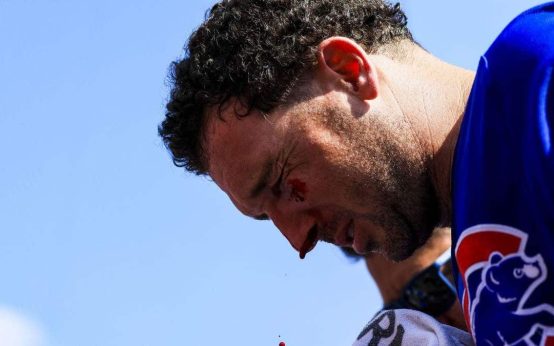 Chicago Cubs’ Alex Bregman Suffers Facial Injury from Foul Ball
 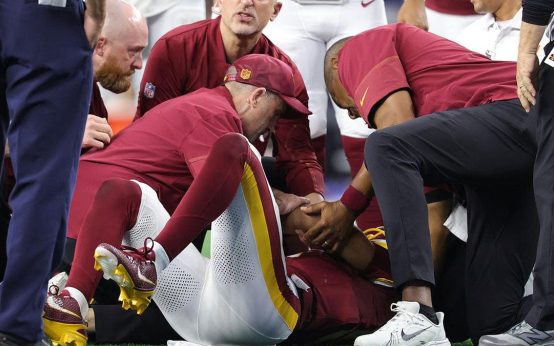 Washington Commanders Face Major Setback as QB Jayden Daniels Suffers Elbow Injury
  Data Centers Stir Controversy in Texas Amid Growth Boom
  Indiana Fever’s Struggles Against Washington Mystics