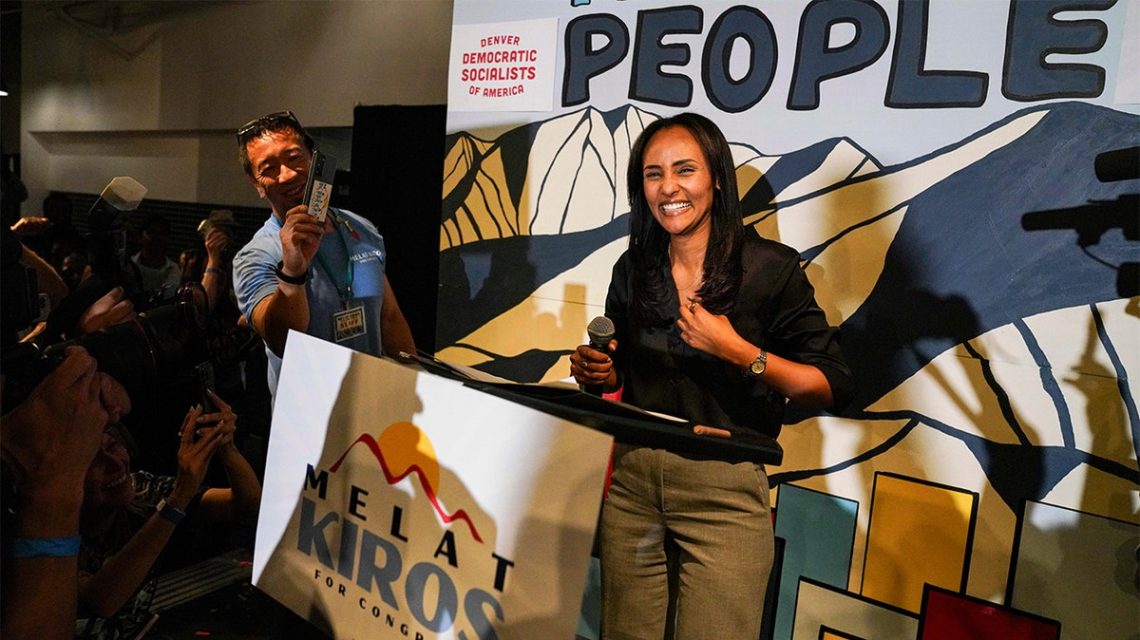
The Democratic Socialists of America (DSA) continue to make significant political moves across the country. Following notable ballot-box victories in New York City congressional primaries, the group achieved another surprising win in a firmly Democratic U.S. House district in Denver, Colorado.
Democratic Representative Diana DeGette, who began her congressional tenure in 1997, was unseated by first-time candidate and former attorney, Melat Kiros, aged 29. This win happened shortly after Darializa Avila Chevalier, a 32-year-old community organizer from New York City, ousted Rep. Adriano Espaillat and state Assembly Member Claire Valdez won a congressional primary to succeed Rep. Nydia Velázquez.
Kiros’ victory, along with those of Chevalier and Valdez, demonstrates an emboldened left-wing challenging the Democratic center-left. DSA-backed candidates are leveraging a momentous opportunity to reshape the Democratic Party’s future.
“Progressive politics that prioritize working-class needs can succeed in any location,” stated Hasan Piker, a prominent left-wing commentator, during Kiros’ victory event in Denver.
Colorado’s 1st Congressional District, with a strong Democratic base, was the scene of the latest DSA triumph. Ahead of the election, then-Vice President Kamala Harris had secured this district by a wide margin in 2024.
The DSA celebrated this achievement via social media, affirming their commitment to significant causes such as abolishing ICE and securing universal childcare.
Kiros, who lost her legal position after an essay critical of Israel, received support from the Justice Democrats, a group previously influential in the election of prominent figures like Alexandria Ocasio-Cortez and Ilhan Omar.
Her victory speech emphasized a fearless approach toward setting a new direction, not only for the Democratic Party but also as a broader message to the nation and figures like Donald Trump.
The right criticized Kiros for comments regarding U.S. foreign policy’s role in events like 9/11.
Progressive successes extended beyond Denver, as Manny Rutinel won in Colorado’s 8th Congressional District. Latino voter concerns over immigration policies were a central theme, aiding Rutinel as he competes against Republican incumbent Gabe Evans in a closely watched race.
Senate and gubernatorial nomination battles also showcased the tensions within the Democratic Party between its progressive and moderate wings. Senator John Hickenlooper faced a strong primary challenge from former state Senator Julie Gonzales, a progressive, but ultimately won, maintaining his Senate seat as the preferred candidate for the general election against Republican Mark Baisley.
In the gubernatorial race, Attorney General Phil Weiser won against U.S. Senator Michael Bennet. Weiser, appealing to leftist voters, portrayed Bennet as not aggressive enough against the Trump administration.
Political strategist Joe Caiazzo noted the effectiveness of progressive coalitions in gaining media attention, while Republican attacks on Democrats as radicals intensified. This evolving dynamic suggests substantial implications for upcoming elections and challenges the Democratic Party’s cohesion.
 The Impact of Arts and Closure on Democracy
  U.S. Ambassador Comments on Iran War Duration Amid Political Concerns
  US-China Relations Under Scrutiny: Expert Warns of Escalating Tensions
  No Timeline for End of Iran Conflict
  German Chancellor Merz Vows to Pursue Reforms Despite Election Setbacks
  The Technology Rivalry: Trump’s Meeting with Xi and the AI Ecosystem Clash