
Safeer Mohammed Koorimannil operated in a scam center in Myanmar, posing as a young Singaporean woman named Ella. Koorimannil managed numerous profiles online, communicating with over 100 individuals at once during a typical shift. Under constant supervision and threat, he targeted approximately 50,000 victims from 17 countries in a month. These included various professionals from Kurdistan, Turkey, Russia, and other nations.
The scams utilized AI-powered software developed with models from American tech firms, a trend highlighted by both Safeer and the AP investigation. This AI-powered fraud operation represents a new era in scamming, escalating the scale and speed of these activities. American technology contributes significantly to the global scam industry, although companies like OpenAI and Google emphasize efforts to disrupt these scams.
Records show U.S.-based internet service providers and Starlink lend their infrastructure to these operations in Myanmar. American companies face criticism for not doing enough to prevent such abuses. The current regulatory environment lacks the necessary business and legal incentives to curb these activities.
If there’s no disincentive, no cost to actually facilitating scamming, then why would I spend a dollar to prevent scamming?– Sascha Meinrath, Palmer chair in telecommunications at Penn State University.
Global Impact and Investigations
Globally, countries like the United Kingdom, the EU, and Australia are establishing regulations to deter scams, with American tech companies being urged to collaborate more on a voluntary basis. In the U.S., the Scam Center Strike Force was established, targeting these scams by disrupting social media and email accounts linked to such activities.
Despite these measures, technology from AI companies remains exploited in these scams, generating massive illicit profits. This raises questions about how much more can be done to protect individuals. OpenAI and Google assert they have mechanisms against misuse and are working to detect and eliminate fraudulent activities.
Challenges of AI and Tech Monitoring
The misuse of AI in scam operations shows how easily these technologies can be repurposed. Tools like KT and 007TG, using AI for translation and content generation, reflect a larger issue of technology dual-use, with both legitimate and criminal applications.
OpenAI claims a 95% accuracy rate in detecting scams, though it recognizes the challenge in preventing them. As AI tools gain broader applications, their use in generating realistic characters and managing fake scenarios becomes more sophisticated, complicating efforts to dismantle these operations.
Internet Infrastructure and Global Connections
The investigation reveals the significant role U.S. internet infrastructure plays in enabling scams, with many connections routed through American service providers. ISPs are under scrutiny for their part in inadvertently facilitating these activities by not proactively monitoring content.
Companies like AT&T and Oracle are taking steps to address the problem, though the solutions require balancing privacy standards and proactive monitoring. The challenge remains substantial given the profitability of maintaining the status quo.
Starlink’s Role and Responses
Musk’s Starlink, a prominent internet provider in Myanmar, faces criticism for its user base at scam compounds. Starlink initially reduced its services in response to international pressure but has since regained its market position. Its services remain integrated in operations at scam centers, raising concerns about accountability and responsiveness.
Senator Maggie Hassan’s congressional investigation presses SpaceX to address this issue more effectively, although Starlink claims zero tolerance for abuse, asserting collaboration with law enforcement to curtail scams.
Even after crackdowns, scammers adapt by relocating their operations, bringing their technology along. New compounds emerge, continuing operations with Starlink’s services, showing the resilience and adaptability of these networks.
 Community Colleges in Chicago Prepare for AI’s Role in Workforce
  Air Traffic Communication Breakdown Disrupts Northeast Airports
  AI Fears Impact Trump-Xi Dialogue Amidst Challenges
 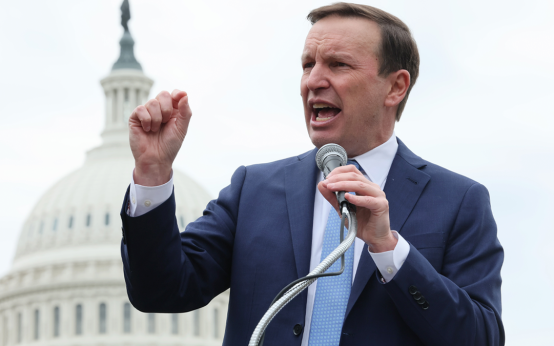 Senator Murphy Calls for Internet Regulation to Prevent Influence of Demagogues
  House Breaks Early Amid Concerns Over Unregulated AI
  Expansion of Data Centers Fueled by AI Development