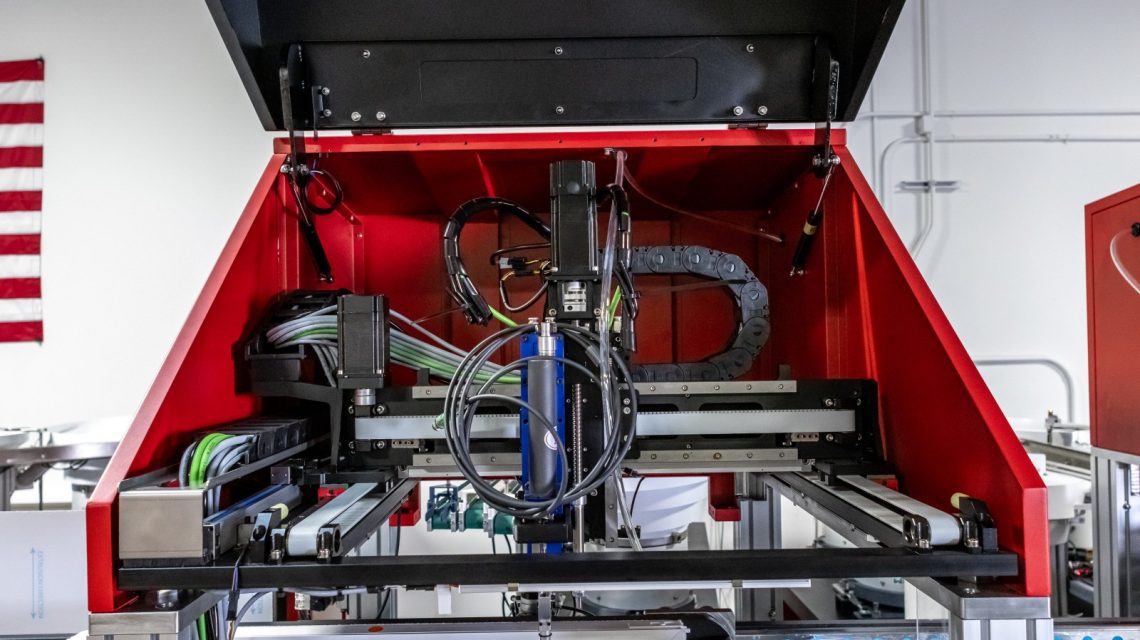
Artificial intelligence (AI) often finds itself both exaggerated and underestimated, sometimes by the same individuals. The excitement generally concentrates on the capabilities of AI models in speech, creativity, and simulation. However, the significant development is AI’s future path: integrating with robotics, advanced manufacturing, and physical systems involved in creating, transporting, and assembling in real-world conditions.
This transition raises essential questions: how will AI collaborate with robotics? What are the implications when systems optimized for performance enter environments where precision, safety, and accountability are crucial? Moreover, who bears the responsibility if an error occurs? These topics will be explored in Edinburgh at the “World of Tomorrow” event, hosted by Launchpad Build AI, an AI software firm located in El Segundo, California with an R&D base in Edinburgh. This gathering includes senior leaders from industry, government, defense, and investment.
Shift from Theory to Deployment
The landscape is shifting with AI moving from theoretical discussions to practical implementation. Enhanced inference allows models to operate at lower costs and seamlessly fit into real-world systems. Companies like NVIDIA, TSMC, and Nebius are building the necessary infrastructure to run robotics on an industrial scale. Concurrently, manufacturers and robotics companies are embedding AI into environments like warehouses and assembly lines where machines must observe, decide, and act efficiently.
Economic demands are driving this transformation. The U.S. workforce remains smaller by 1.7 million people compared to February 2020, according to the U.S. Chamber of Commerce, while manufacturers face recruitment challenges. In the U.K., the need for reindustrialization is growing. Capgemini estimates that British companies will invest $650 billion by 2028, despite persistent fragility in supply chains. In Lloyds Bank’s Business Barometer survey, 37% of U.K. firms reported supply chain disruptions attributed to a volatile trading landscape.
For U.S. and European governments, manufacturing capacity now ties into resilience, industrial sovereignty, and national security, as rivalry over chips and essential infrastructure heightens. Jon Quick, CEO of Launchpad Build AI, mentioned to Newsweek that while reindustrialization is widely desired, comprehending the intersection between AI and manufacturing remains challenging. Establishing a practical middle ground is difficult.
Gaining Competitive Advantages
Companies that effectively use AI tools to maintain factory operations, diminish labor reliance, and bolster manufacturing resilience could secure a significant advantage as early adopters. In sectors like manufacturing, logistics, and defense, systems face messy inputs, fluctuating conditions, and older machinery never meant to interact with software. This tension is noticeable in industries like car production, warehouse automation, and industrial inspection. Companies strive to integrate AI vision systems, robotics, and legacy production lines without disrupting operations.
Unlike chatbots, which can fabricate responses, a robotic arm cannot afford to err. If an AI system misinterprets a component, halts a production line, or makes incorrect decisions, liability becomes critical—responsibility may fall on the model maker, hardware provider, systems integrator, or utilizing company. While software failures are inconvenient, failures on a factory floor can halt production, damage equipment, or endanger workers.
That context highlights the importance of the “World of Tomorrow” event. With approximately 50 attendees, it includes chip, computing, and simulation firms like Nvidia, TSMC, and Nebius; industrial, defense, and technological leaders from Lockheed Martin UK, BAE Systems Air, Leonardo, Ericsson Ventures, Booz Allen Hamilton; along with investors and advisers such as J.P. Morgan, Lavrock Ventures, Squadra Ventures, Bain, and Orrick. Scottish government and economic-development representatives will be involved too. This assembly aims to shape AI market funding, governance, and understanding across the spectrum.
Discussion topics encompass AI’s potential and limitations within factory settings, shifts in liability and intellectual property as systems make impactful decisions, and methods to transform technical promises into operational benefits. The next AI phase won’t favor the loudest claims, but will reward companies that render technology effective in the physical realm.