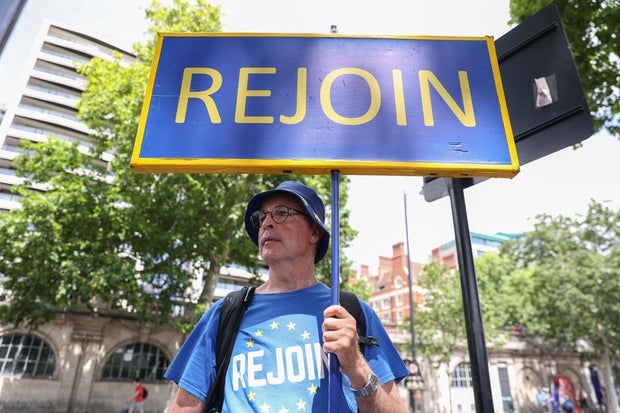
In June 2026, a survey by YouGov revealed that many British citizens now view Brexit as a mistake, ten years after the UK decided to leave the European Union. The public referendum, termed ‘Brexit’, has resulted in widespread regret among Britons.
One individual who campaigned to remain in the EU expressed dissatisfaction with the outcome, citing economic challenges and the loss of freedom of movement. The sentiments were echoed by others who feel that the nation remains divided with little positive to show from the decision.
“Brexit has split Britain down the middle, and nothing good has come of it since,” said a campaigner.
On the referendum’s tenth anniversary, many gathered in London for the National Rejoin March, advocating for the UK to consider rejoining the EU. This movement signifies a growing disenchantment with the outcomes of the referendum.
Political and Economic Ramifications
Since Brexit, the UK has faced ongoing political challenges. Over the past decade, the country has seen seven prime ministers attempting to manage its repercussions. Significant economic effects have been compounded by global issues, including the COVID-19 pandemic and conflicts in Ukraine and the Middle East.
The Office for Budgetary Responsibility reported a reduction in British productivity, imports, and exports as a direct result of Brexit. Government data analysis indicates that the economy contracted by 6% because of the departure from the EU. London Mayor Sadiq Khan, an advocate for remaining in the EU, remarked, “The consequences are worse than we feared.”
Divided Opinions
Despite these challenges, many Brexit supporters maintain their stance. Two-thirds of those who voted for Brexit continue to believe it was the right decision. They argue that the transition’s mishandling by successive governments, rather than the move itself, is to blame for ongoing issues.
Nigel Farage, a central figure in the Brexit campaign and leader of the Reform UK party, believes leaving the EU was crucial. He noted that the establishment failed to act on the people’s wishes, creating long-term issues with the implementation.
The “Vote Leave” campaign had promised that Brexit would allow Britain to regain control over borders. However, following labor shortages, the then Prime Minister Boris Johnson relaxed immigration restrictions, leading to increased non-EU migration. A steel manufacturer and Brexit advocate acknowledged his disappointment but urged people to embrace the opportunities Brexit presents.
Future Prospects and Public Opinion
Public opinion in the UK is shifting. Initially, Brexit won with 51.9% of the vote. Yet, since then, demographic changes and shifting attitudes have altered the landscape. Many older Brexit supporters have passed away, while younger, more EU-friendly voices are becoming eligible to vote.
Recent polls suggest a strong interest among Britons, especially among the younger generation, to consider rejoining the EU. Three-fifths of Gen Z support a new referendum on EU membership. Despite this shift, political appetite for another referendum remains low.
While political figures like Andy Burnham aspire for the UK to rejoin the EU eventually, he and others believe revisiting the debates of the past may not be constructive at this moment.
 The Growing Threat to Drone Experts in the Russia-Ukraine Conflict
  Twitch Streamer Hasan Piker’s Controversial Opinions on Hamas and Israel
  CNN Defends Use of Anonymous Sources in Iran War Reporting
  Colombian President Prioritizes Energy Security in New Administration
  Israel Enhances Naval Strength with Advanced Submarine
  Generational Shift in Voter Dynamics and Its Impact on the Democratic Party